In the folds of a quiet field near Erfurt, Germany, the land can feel as still as it has for centuries. Wind brushes over the grass, and in the gentle rhythm of seasons turning, the surface of the earth seems unremarkable—until a moment of discovery reminds us that what lies beneath can be as resonant as what stands above.
Recently, archaeologists using a blend of long‑forgotten texts and modern scanning techniques have identified what may be one of the long‑lost burial pits from the era of the Black Death, the pandemic that reshaped Europe in the mid‑14th century. Nearly 700 years after the plague swept through towns and villages, carving a deep scar in human history, stones and soil have given way to a long‑hidden repository of human remains.
The Black Death, remembered in chronicles and grim tales, was more than an event of disease; it was a force that reshaped landscapes and communities. In Erfurt alone, historical accounts speak of thousands of victims laid to rest in hastily dug pits outside city walls—burials borne of necessity and sorrow as village by village was overcome with loss. For centuries, the precise locations of those burial grounds remained elusive, like whispers lost in the wind, waiting for the attentive eye to listen.
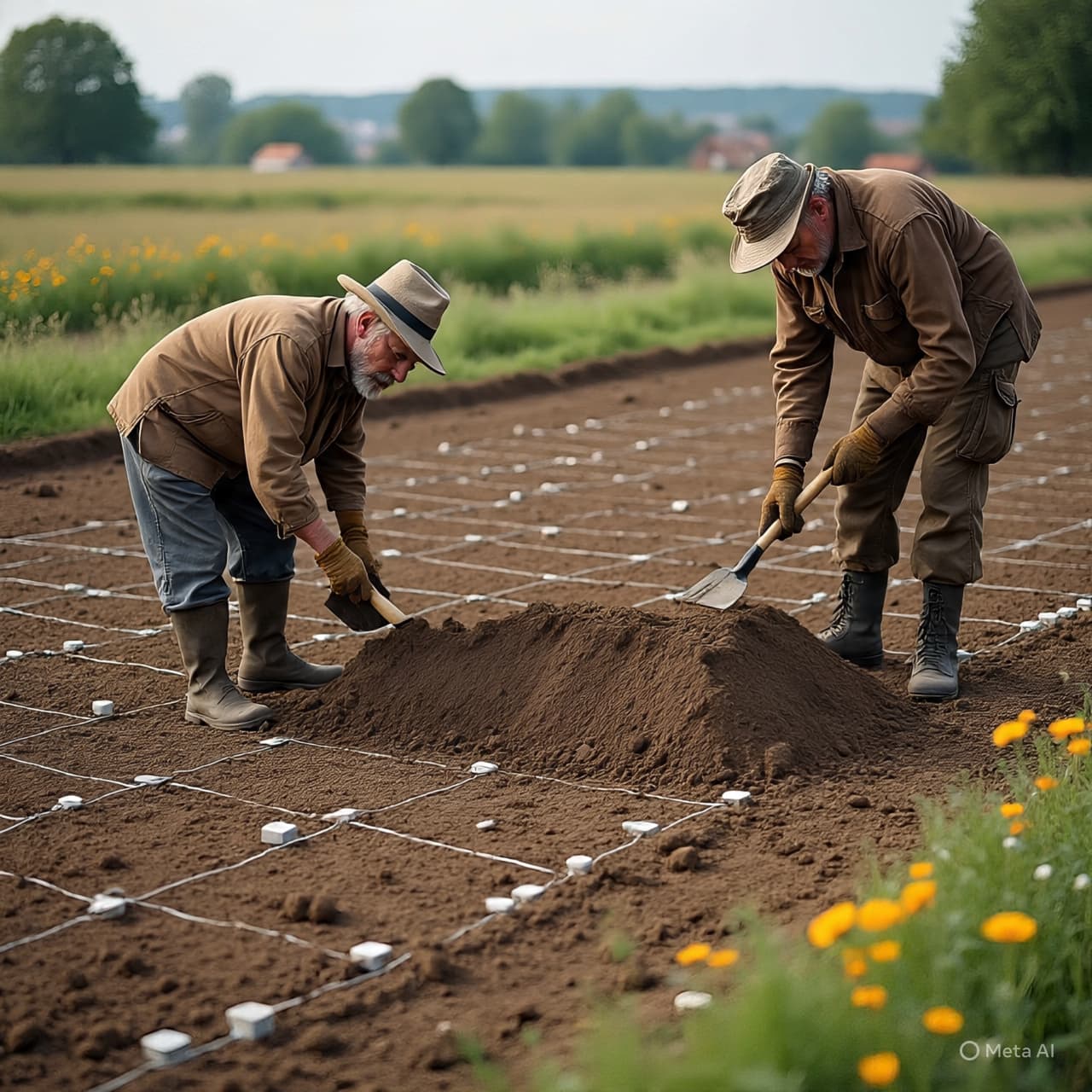
This new identification, near the deserted medieval village of Neuses, blends the old and the new. Geophysical surveys, sediment analysis, and historical records have acted together as instruments of remembrance, allowing researchers to “read the landscape as an archive.” What they have mapped is a large depression in the earth that aligns with medieval burial practices, and beneath its surface, the outlines of human remains now emerge through careful investigation.
The find invites a kind of still contemplation. These are silent witnesses of a time when humanity grasped for answers in the face of unfathomable loss. The pits of death from the 1350s were practical responses to an overwhelming crisis—deep holes in the ground to house those whose lives were claimed by a pandemic without cure. Today, the unearthing of bones centuries later becomes part of a broader effort to understand how societies confront mortality, how memory is buried and recovered, and how the echoes of tragedy linger in the land itself.
Though archaeologists have not yet fully excavated the site, the pattern of remains and the historical context suggest that this may well be one of the famed “plague pits” described in records from the time. Further study could reveal not only the identities of those buried—a thread of individual stories woven into the larger tapestry of medieval life—but also insights into the movement and impact of the plague itself.
In a broader sense, this discovery underscores the way human history is layered beneath our feet, waiting for moments when patience, science, and curiosity converge. Landscapes that seem unchanged can conceal profound narratives, from burial pits of crisis to the subtle remains of everyday life in antiquity.
In straight news language, researchers in Germany have identified a large burial pit near Erfurt that may represent one of the mass graves used to inter plague victims during the Black Death around 1350. The find, uncovered with geophysical survey and historical analysis, aligns with medieval records and could offer new archaeological insight into the pandemic’s mortality and burial practices.
AI Image Disclaimer: Visuals are AI-generated and serve as conceptual representations.
Sources
Reuters Popular Mechanics Daily Galaxy News Minimalist UNIAN
Published by Banx Network. This article is part of the Banx decentralized media programme, powered by the BXE token on the XRP Ledger.