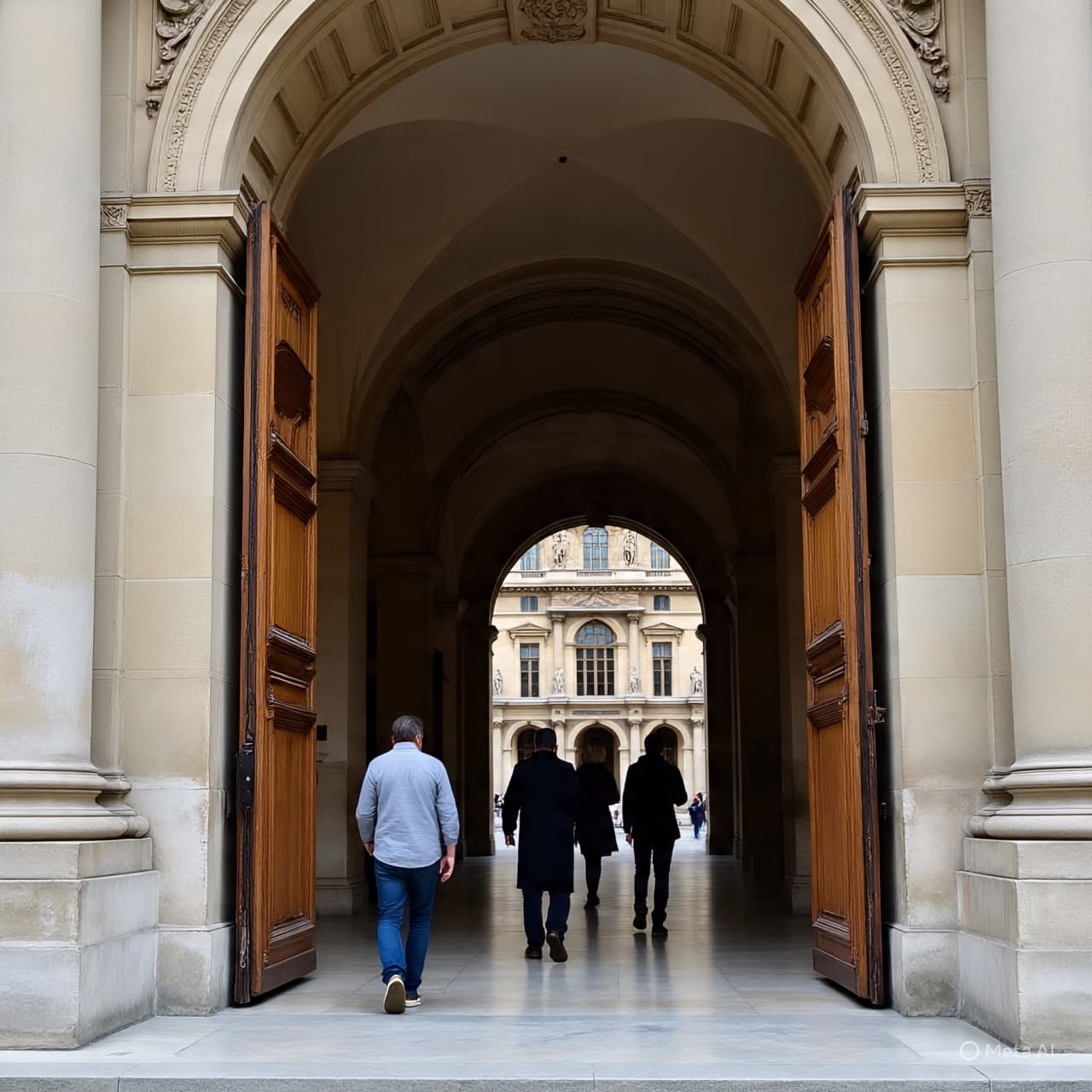
The doors of the Louvre are opening again — not fully, and not without hesitation. After days of disruption triggered by staff walkouts, the world’s most visited museum will partially reopen, even as workers voted to extend their strike over long-standing concerns about working conditions.
For visitors, the reopening offers a cautious return to familiar halls and iconic artworks. For employees, it marks a compromise that stops short of resolution. The vote to continue industrial action underscored a message museum staff have repeated for months: that prestige and foot traffic have outpaced the resources needed to sustain them.
The dispute centers on staffing shortages, crowd management, and the strain placed on frontline workers as visitor numbers rebound strongly. Employees say they are increasingly asked to manage dense flows of tourists with limited personnel, raising concerns about safety, burnout, and the preservation of the artworks themselves.
Museum management has acknowledged operational pressure but argues that a partial reopening is necessary to maintain public access and financial stability. Officials say talks with unions are ongoing and emphasize that the decision allows some galleries to function while negotiations continue.
The result is an uneasy balance. Certain sections of the museum will remain closed, tours are limited, and visitors are advised to expect disruptions. The Louvre’s vast scale allows for selective access, but the closures serve as a visible reminder that the institution’s global image depends on an overstretched workforce.
Strikes at major cultural institutions are rare, but not unprecedented. What makes this moment notable is its timing. As Paris continues to market itself as a global cultural capital, the strain behind the scenes has become harder to conceal. The Louvre’s success — measured in attendance figures and international recognition — has amplified the pressures faced by those tasked with protecting and presenting its collection.
Union representatives say the vote to extend the strike reflects frustration with incremental responses to systemic issues. They argue that temporary fixes do not address the long-term imbalance between visitor volume and staffing capacity.
For now, the museum operates in a state of partial normalcy. Paintings hang as they always have. Visitors move through select corridors. Yet the pause introduced by the strike has altered the rhythm of the place, reminding the public that cultural institutions are not static monuments, but workplaces shaped by human limits.
Whether negotiations can turn this partial reopening into a full return remains uncertain. What is clear is that the Louvre’s challenges extend beyond its walls, touching broader questions about how major cultural landmarks adapt when their success begins to strain the people who sustain them.
Published by Banx Network. This article is part of the Banx decentralized media programme, powered by the BXE token on the XRP Ledger.