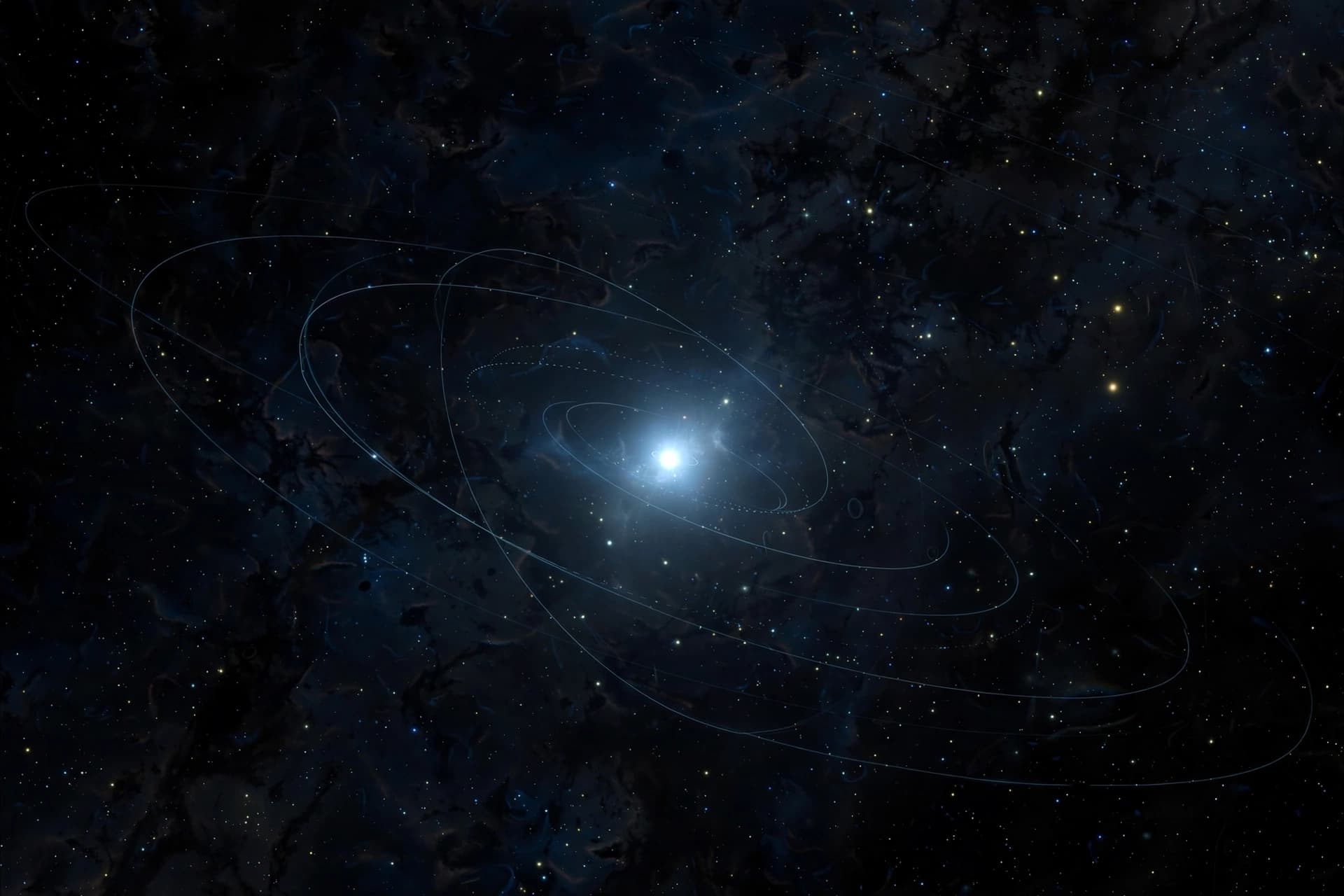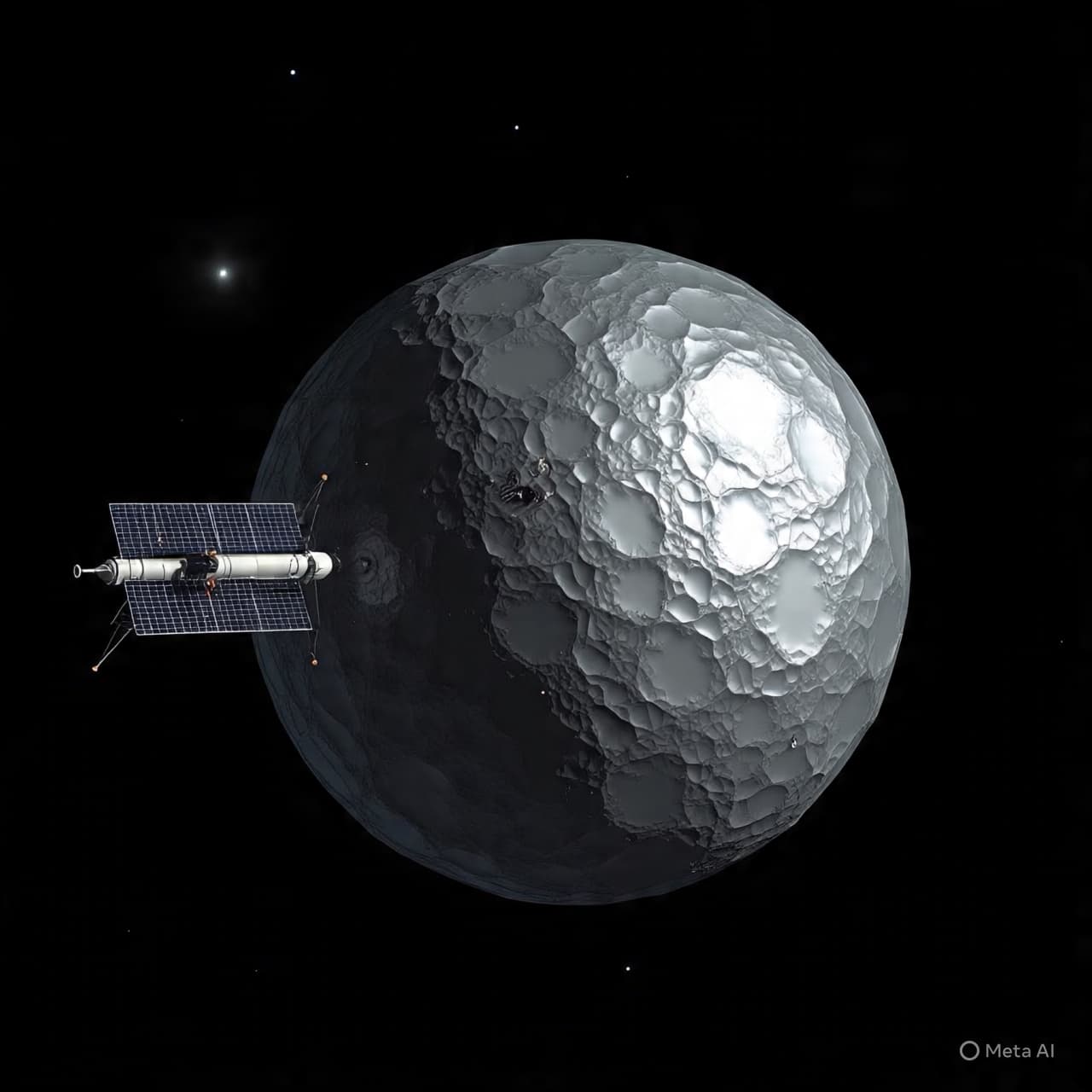
Far beyond the familiar sweep of blue skies and drifting clouds, where sunlight thins into something colder and more distant, there are worlds that seem almost imagined—objects that do not fit easily into the landscapes we know. Among them drifts Psyche, a silent body of metal and memory, orbiting quietly between Mars and Jupiter.
It is not a planet in the traditional sense, nor a fragment easily explained. It is something older, perhaps more elemental—a remnant of formation itself.
The mission sent to meet it, NASA Psyche Mission, carries with it a different kind of question. Not simply what Psyche is, but what it once was. Scientists suspect that this unusual asteroid may be the exposed core of an early planetary body, stripped of its outer layers by ancient collisions. If true, it would offer a rare opportunity: a direct look into the kind of metallic heart that lies hidden within rocky planets, including Earth.
Launched by NASA, the spacecraft is now on its long journey through deep space, expected to arrive at its destination later this decade. Along the way, it travels through a region where remnants of the solar system’s early formation still linger—debris that never quite assembled into full planets, holding within them clues to processes that unfolded billions of years ago.
Psyche itself stands apart from these remnants. Unlike most asteroids, which are largely rocky or icy, it appears to be composed primarily of metal—iron and nickel, materials more commonly associated with planetary cores. Its surface, though still not fully understood, may hold patterns shaped by cooling magma, impacts, and the slow passage of time.
The spacecraft will not land. Instead, it will orbit, mapping the asteroid’s gravity, magnetic field, and composition. Each measurement will add to a picture that is still incomplete, a puzzle assembled piece by piece across millions of kilometers.
There is something almost reflective about the mission. To study Psyche is, in a sense, to study the hidden interior of worlds—including our own. The Earth’s core, buried thousands of kilometers beneath the surface, remains inaccessible, known only through indirect observation. Psyche offers a rare external counterpart, a place where what is usually concealed may lie exposed.
Yet even as the mission promises insight, it also carries uncertainty. If Psyche is not a stripped core, but something else—perhaps a mixture of metal and rock formed under different conditions—then the findings may reshape existing theories rather than confirm them. In exploration, answers often arrive alongside new questions, expanding the horizon rather than closing it.
The journey itself unfolds slowly. Years pass between launch and arrival, and even longer before the data is fully understood. It is a pace that contrasts sharply with the immediacy of life on Earth, yet it mirrors the scale of the questions being asked—questions measured not in days, but in epochs.
As the spacecraft moves farther from home, the distance grows almost abstract. Signals take longer to travel, the Sun appears dimmer, and the connection to Earth becomes more tenuous. Still, the mission continues, guided by trajectories calculated with precision, carrying instruments designed to read a world that has remained untouched for billions of years.
Somewhere in that vast quiet, Psyche waits—not actively, not consciously, but simply as it has always been. A body of metal, shaped by forces long past, holding within it the possibility of understanding something fundamental about how planets begin and what remains when their surfaces are stripped away.
When the spacecraft finally arrives, it will not uncover a single secret, neatly revealed. Instead, it will begin a conversation across time—between what we observe and what we imagine, between the surface of knowledge and the deeper structures that lie beneath.
And in that exchange, the metal world may offer not just answers, but a new way of seeing what has always been hidden at the heart of things.
Published by Banx Network. This article is part of the Banx decentralized media programme, powered by the BXE token on the XRP Ledger.