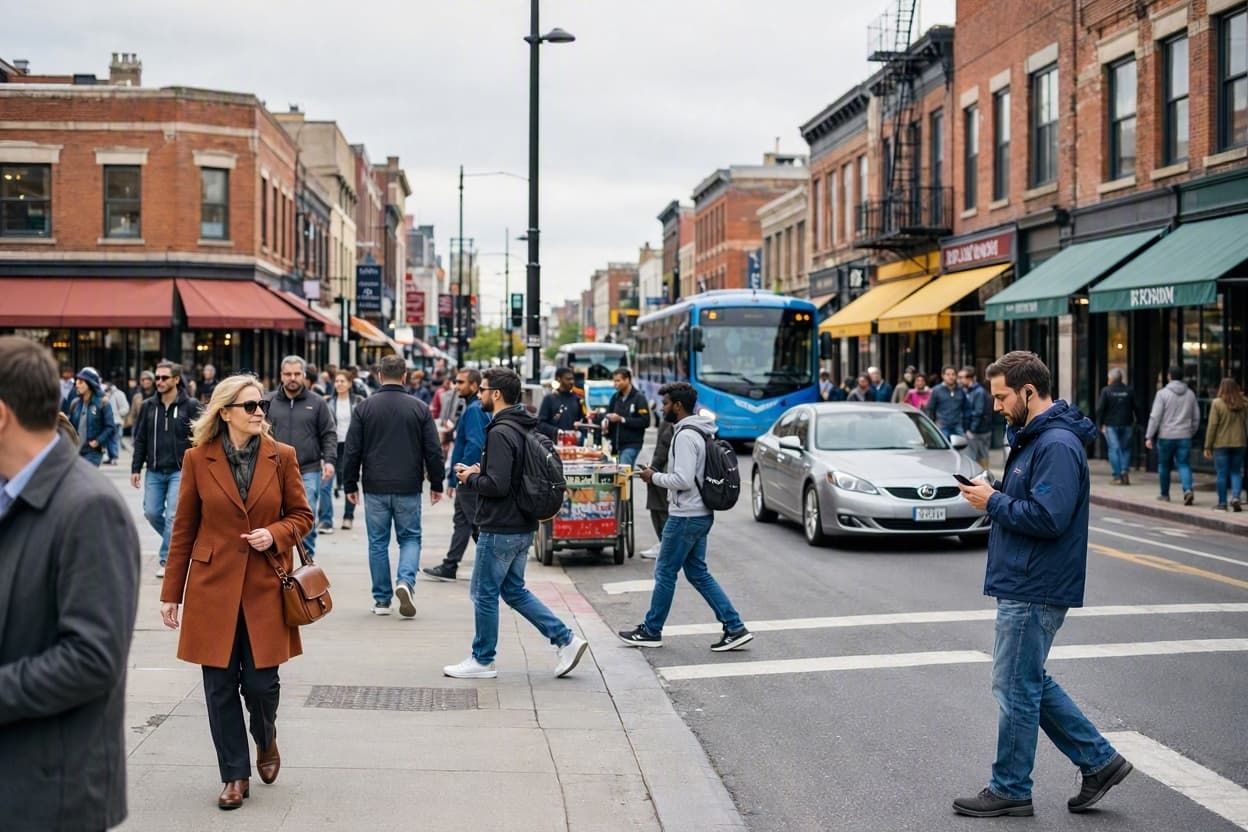
There was a moment at dawn when the horizon seemed to hold its breath, as if hesitant to let the sun rise while so much tremored below it. In capitals and desert plains, the light cast long, thin shadows over cities where life had grown accustomed to tension’s quiet pulse. People walked through markets and coffee stalls with eyes lifted, listening for sounds that might signal another tremor or another distant boom, as if the wind itself carried whispers of a war that refused to stay distant.
In recent days, those whispers have turned to a deeper rumble. In statements that crackled across screens and social feeds, former President Donald Trump addressed the mounting conflict between the United States and Iran with a tone that was both urgent and stark. He warned that the world had not yet seen “the big wave” — a larger onslaught yet to come if Tehran pressed its retaliatory strikes harder than ever before. The words—posted on social media and echoed in Washington briefings—were simple but heavy, like shadows stretching before a storm’s arrival.
The stir of tension did not rise overnight. It followed the dramatic opening of a military campaign that claimed the life of Iran’s Supreme Leader, Ayatollah Ali Khamenei, and reverberated through the capitals of the Middle East. In response, both sides exchanged strikes that touched Israel, U.S. bases in the Gulf, and cities far from direct battle lines. Trump’s warning — that the United States would use a force “never seen before” should Iran escalate — fell into the uneasy quiet of midnight screens and late-night radios, blending dread and resolve in one breath.
Along the sandy corridors that stretch from the Persian Gulf to Beirut’s skyline, the conflict has drawn in neighbors and global onlookers alike. U.S. Defense officials, speaking to lawmakers, outlined an offensive that has struck over a thousand targets, dismantled missile sites, and tested air defenses in ways that few imagined possible. And while some American voices describe the effort as a finite campaign focused on disabling key threats, others acknowledge the cost: service members lost, wounded, and the growing specter of a wider engagement.
Yet even amid discussions of strategy and objectives — hulls of ships sunk or command centers shattered — there are places where the rhythm of everyday life knits itself back together. Market vendors call out their wares, children play in alleys that bear the patina of centuries, and conversations drift from bread prices to whatever news has trickled through the static. In these moments, the wider sweep of geopolitical weight seems to rest gently back on shoulders already worn by hopes and disappointments. Hope persists for diplomacy, for a return to quieter days, even as leaders warn that further strikes loom and that operations could stretch for weeks.
Under the thin glow of streetlights, and later under the unforgiving sun of desert skies, this moment lives in the delicate space between caution and catastrophe. The world watches, measures every word and echo, and bears witness to how nations and peoples find their paths through uncertainty. And as the sun finally crowns the morning, there is a quiet, resolute belief — in cities, villages, and homes — that each new day might yet find a way back from the precipice of war.
AI Image Disclaimer
Illustrations were created using AI tools and are not real photographs.
Sources
Reuters Associated Press The Guardian Time Jang News
Published by Banx Network. This article is part of the Banx decentralized media programme, powered by the BXE token on the XRP Ledger.