In the cold, twilight waters far above the Arctic seafloor, the Greenland shark has drifted for centuries — a mottled, slow‑moving beast that seems almost part of the ocean’s shadow. Long thought to be blind, lethargic, and among Earth’s most ancient creatures, this enigmatic shark is now revealing secrets more subtle and surprising than many had imagined.
For decades, scientists and storytellers alike spoke of Greenland sharks as if they were relics from another age, estimates suggesting individuals might live for centuries, perhaps even up to 500 years. At the heart of that assumption were ingenious methods of age estimation: because these sharks lack the hard calcified structures other fish use to register years, researchers turned to proteins in the eye lenses — tissues formed before birth and preserved through life — using radiocarbon dating to place some sharks’ ages at between roughly 272 and 512 years. Even on the lower end, that lifespan makes them the longest‑lived vertebrates on Earth.
But longevity has never been the shark’s only mystery. For years, parasitic copepods clinging to their eyes and the dim light of their deep‑sea habitat led scientists to assume these animals were nearly blind. Now, recent research paints a different picture. Detailed analyses of retinal structure, gene expression, and visual cell function show that Greenland sharks retain the capacity to detect light and contrast even after lifetimes measured in centuries. Rather than drifting blindly through the deep, their visual systems appear adapted for the muted world they inhabit, sustained by genetic pathways and repair mechanisms that preserve sight far longer than expected.
These new insights do more than reshape understanding of a single species; they force a reevaluation of assumptions about life in extreme environments. The shark’s slow growth, late maturity — females may not reproduce until around 150 years old — and hidden sensory capabilities reflect adaptations to cold, deep waters that challenge human expectations about physiology, aging, and perception. Yet vast gaps remain in knowledge, particularly about where they reproduce and how they may respond to a warming Arctic that is rapidly altering habitats once thought stable and remote.
In contemplating the Greenland shark, we confront both the limits of human knowledge and the persistence of nature’s designs. A creature that may have swum oceans while generations of humans lived and died now reminds us that age, perception, and mystery are woven together in the ocean’s depths, urging patience, humility, and continued curiosity in the face of the deep’s quiet, enduring rhythms.
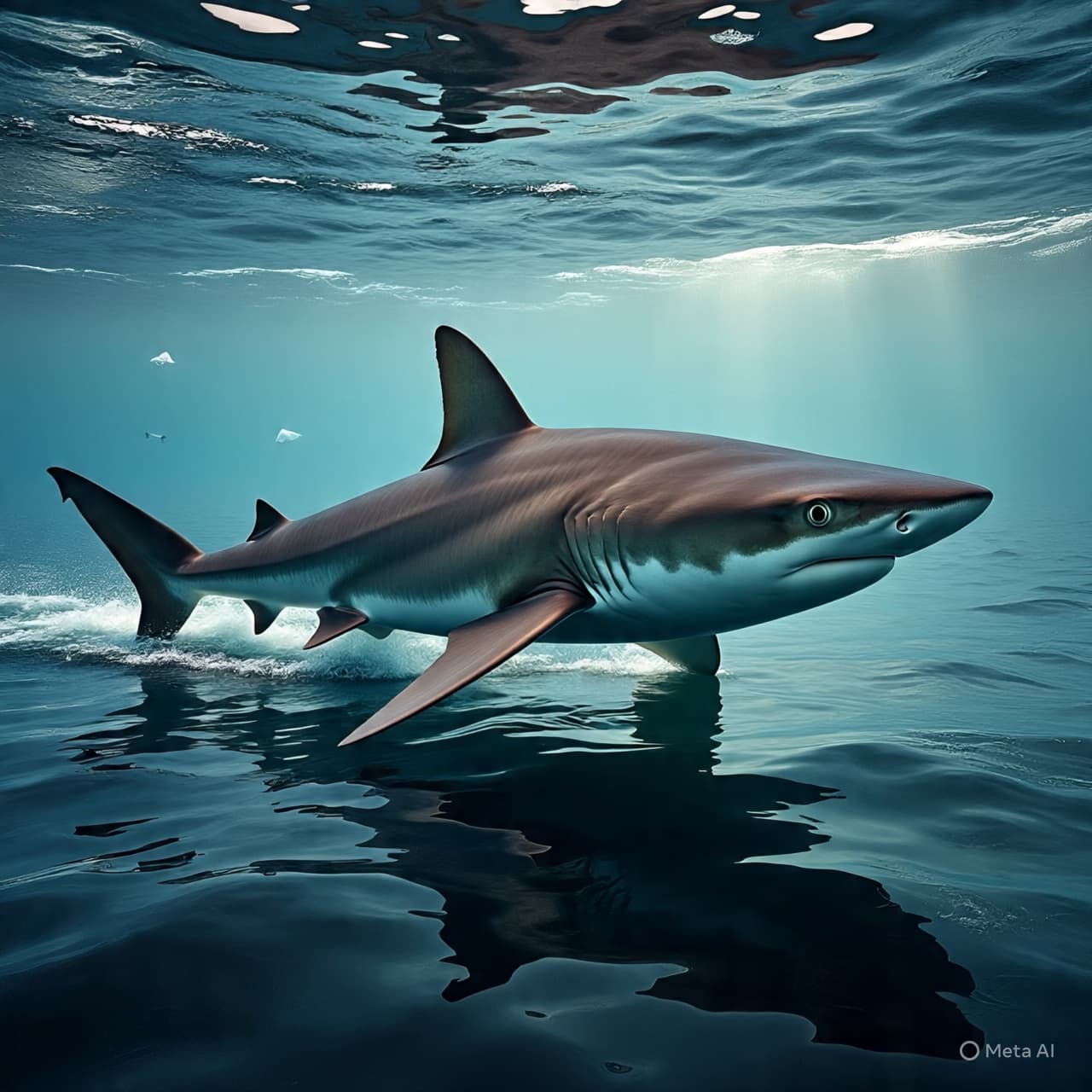
AI Image Disclaimer Visuals are AI‑generated and serve as conceptual representations.
Sources Scientific research on Greenland shark longevity and vision; marine biology journals; deep‑sea observation studies.
Published by Banx Network. This article is part of the Banx decentralized media programme, powered by the BXE token on the XRP Ledger.