There is something quietly enchanting about looking up at the night sky and knowing that many of those distant worlds are not alone. Planets, much like old storytellers, travel with companions — some rocky and scarred, others icy and mysterious. Their moons circle faithfully, each one carrying a history written in craters and shadows.
And sometimes, the vastness of space invites us not only to study it, but to play within it.
A space-themed word search built around the moons of our solar system may seem like a simple pastime, yet it opens a gentle doorway into astronomy. As eyes scan across letters in search of hidden names, curiosity begins to orbit naturally. Words like Europa or Titan are no longer distant abstractions; they become discoveries waiting to be found between rows of text.
Our own Moon, Earth’s steady companion, often feels familiar. But beyond it lies a remarkable family of satellites. Ganymede, the largest moon in the solar system, even surpasses the planet Mercury in size. Callisto carries the scars of countless impacts, a quiet archive of cosmic history. Around Saturn, Enceladus sends plumes of water vapor into space, hinting at hidden oceans beneath its icy crust.
A word search puzzle becomes more than a grid when these names appear. Each word contains a story. Io, with its fiery volcanoes, reminds us that even moons can be restless. Triton orbits in a retrograde path, moving against the spin of its planet as if quietly defying convention.
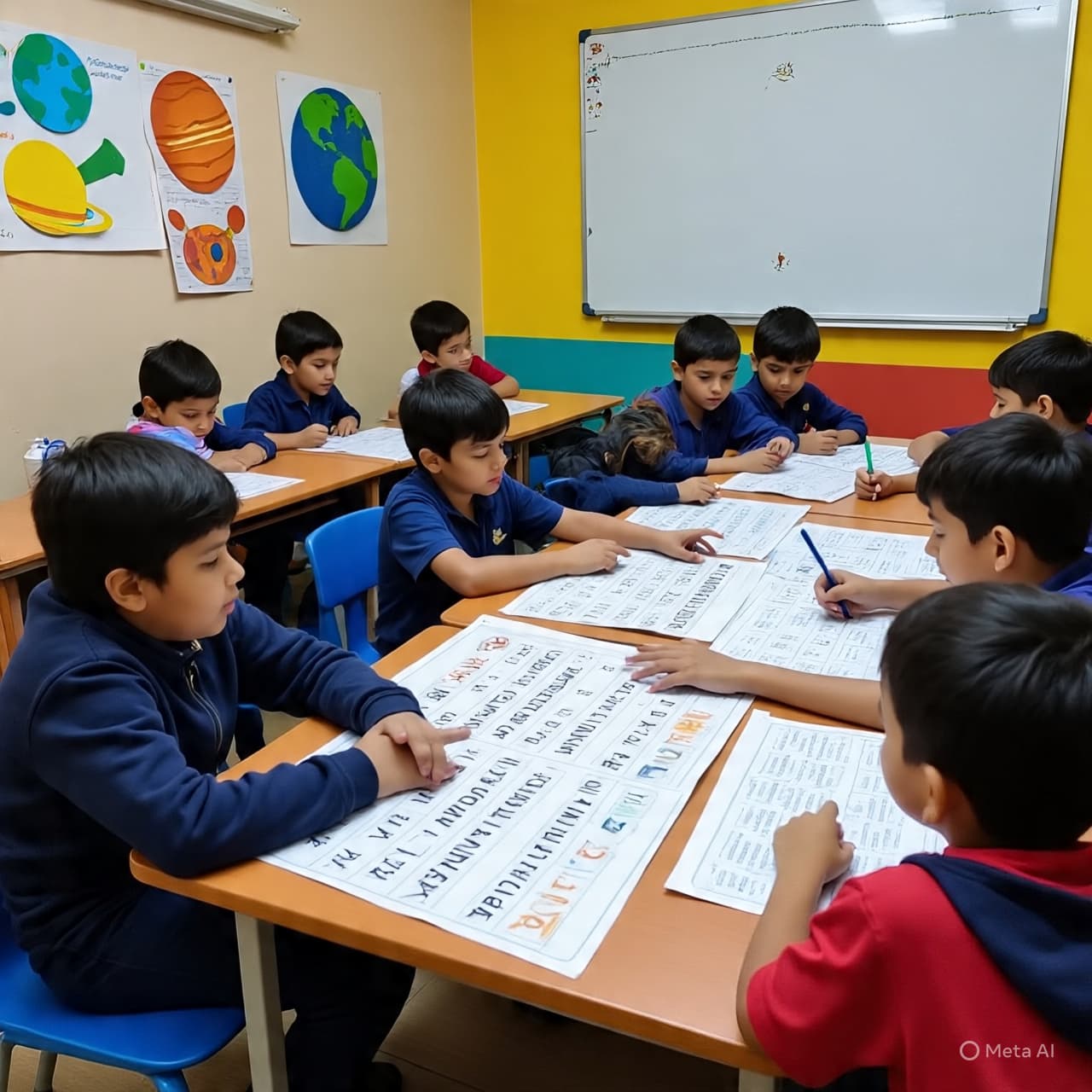
In classrooms and living rooms alike, such puzzles offer a moment of stillness in a fast-moving world. They encourage patience, focus, and a sense of exploration. Children may first encounter these celestial names as letters to circle, but soon questions follow: Why does Titan have lakes? Could Europa harbor life? What makes Ganymede unique?
Through play, learning unfolds naturally.
Space agencies such as NASA and the European Space Agency continue to study these moons with spacecraft and telescopes, seeking answers about habitability, geology, and the origins of our solar system. Missions to Jupiter’s icy moons and Saturn’s enigmatic companions are expanding our understanding year by year. What once were mere points of light are now worlds with landscapes, atmospheres, and evolving mysteries.
A word search may not launch rockets, but it can launch imagination. It invites participants to trace the hidden pathways of language much like astronomers trace the orbits of moons. Each discovered word is a small triumph — a reminder that exploration begins with attention.
In a time when screens flash and notifications compete for every glance, there is something refreshing about searching quietly for “Europa” or “Titan” across a page. It is a modest act of curiosity, yet it connects us to the vast architecture of our solar system.
The moons continue their silent revolutions around distant planets. Meanwhile, here on Earth, puzzles inspired by them offer a gentle way to look upward with renewed wonder.
As interest in space science grows, educators and families are increasingly turning to interactive tools to spark engagement. Word searches themed around planetary moons are becoming part of that effort, blending entertainment with astronomy. The names remain constant in the sky, and the invitation to explore them remains open.
AI Image Disclaimer
Illustrations were produced with AI and serve as conceptual depictions.
---
Sources
NASA European Space Agency (ESA) National Geographic BBC Science Focus Space.com
Published by Banx Network. This article is part of the Banx decentralized media programme, powered by the BXE token on the XRP Ledger.