There was a time when territorial ambition arrived on paper — charts spread across tables, lines drawn carefully, decisions carried by ink and seal. Today, ambition can appear first on a screen, glowing briefly before being shared, reshaped, and absorbed into the wider current of attention.
President Donald Trump’s latest remarks on Greenland arrived not through formal declaration but through fragments: leaked private messages, digitally generated images, and a vow that there would be “no going back.” The materials themselves were striking — AI-created mock-ups depicting imagined futures, circulated alongside text exchanges that blurred the boundary between speculation and resolve. Together, they suggested not a policy document, but a mood.
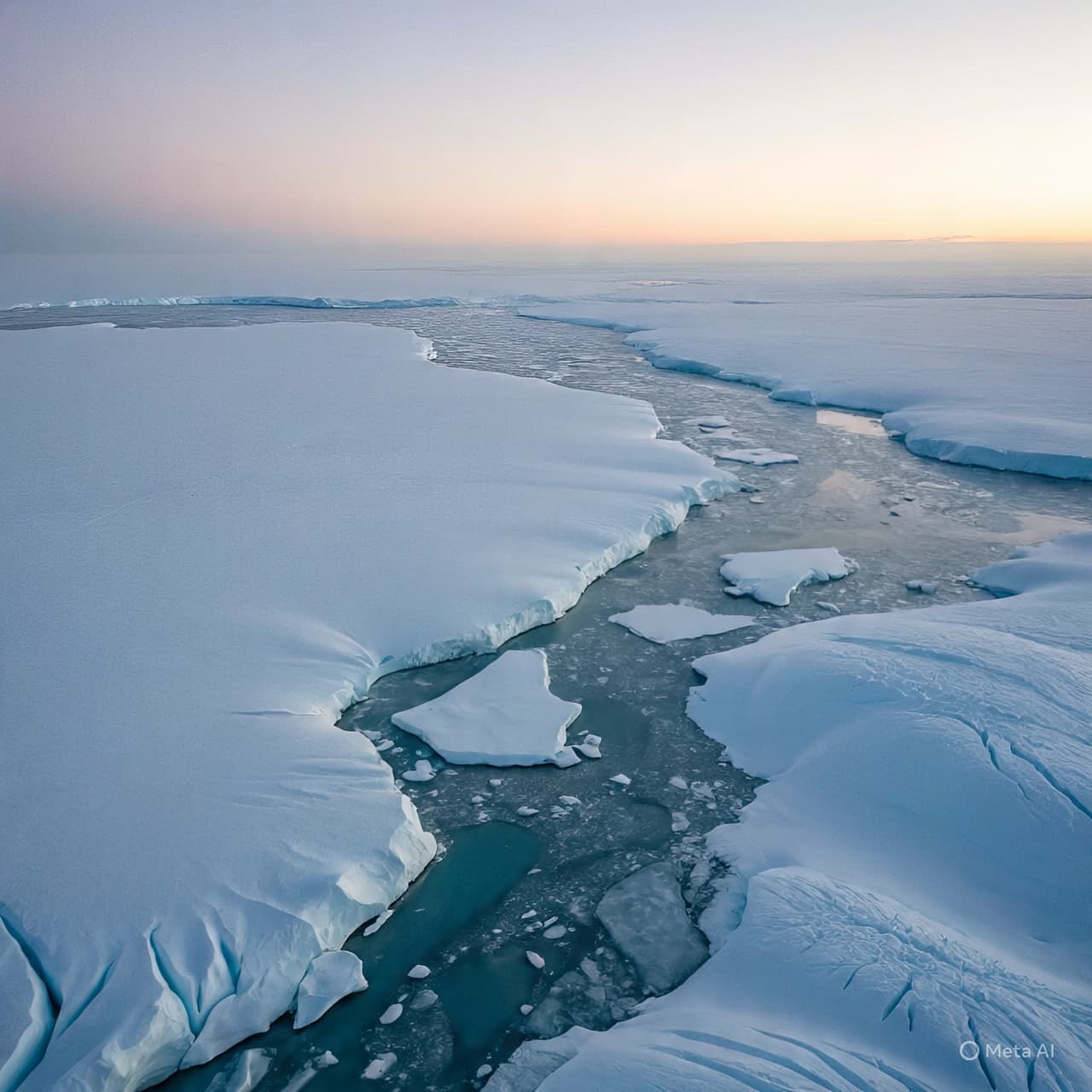
Greenland, vast and largely untouched, has long occupied a peculiar space in global imagination. Its ice holds minerals, its geography commands strategic routes, and its remoteness invites projection. Past suggestions of U.S. interest were once dismissed as rhetorical excess. Now, the repetition — and the medium — has shifted how the idea travels.
By sharing visuals rather than outlining plans, Trump reframed the conversation. Images do not argue; they imply. They invite viewers to step into a future already rendered, where questions of sovereignty, consent, and alliance recede behind the clarity of a finished picture. The effect is subtle but powerful, particularly in a political culture increasingly shaped by spectacle.
Officials in Denmark and Greenland have reiterated familiar positions: the island is not for sale, its people retain the right to determine their own future. No formal action has followed Trump’s statements. Yet the language of finality — “no going back” — alters the atmosphere. It transforms a recurring idea into a declared direction, even in the absence of steps to support it.
What makes this moment distinct is not escalation on the ground, but escalation in presentation. Leaked texts carry the intimacy of private conviction. AI mock-ups lend a sense of inevitability, as if the future has already been previewed. Together, they compress distance between thought and outcome, leaving little space for pause.
In international politics, ambiguity is often strategic. But so is repetition. When a claim is restated across formats — spoken, written, visual — it acquires weight through familiarity. Over time, the extraordinary risks becoming merely unfinished.
Greenland itself remains unchanged by these signals. Ice continues its slow drift, communities endure long seasons, and governance follows established rhythms. The island does not respond to images. But the world around it does, and in that response, expectations begin to shift.
Whether this episode marks a turning point or another cycle of assertion will depend on what follows the images. For now, what stands out is the method: a future hinted at, rendered before it exists, and released into public view not as policy, but as suggestion.
In that space — between pixels and possibility — uncertainty deepens. And with it comes a quieter realization: power today is not only exercised through action, but through the stories that make action seem already decided.
AI Image Disclaimer
Visuals are AI-generated and serve as conceptual representations.
Sources (names only)
Reuters Associated Press BBC News The New York Times Financial Times
Published by Banx Network. This article is part of the Banx decentralized media programme, powered by the BXE token on the XRP Ledger.