
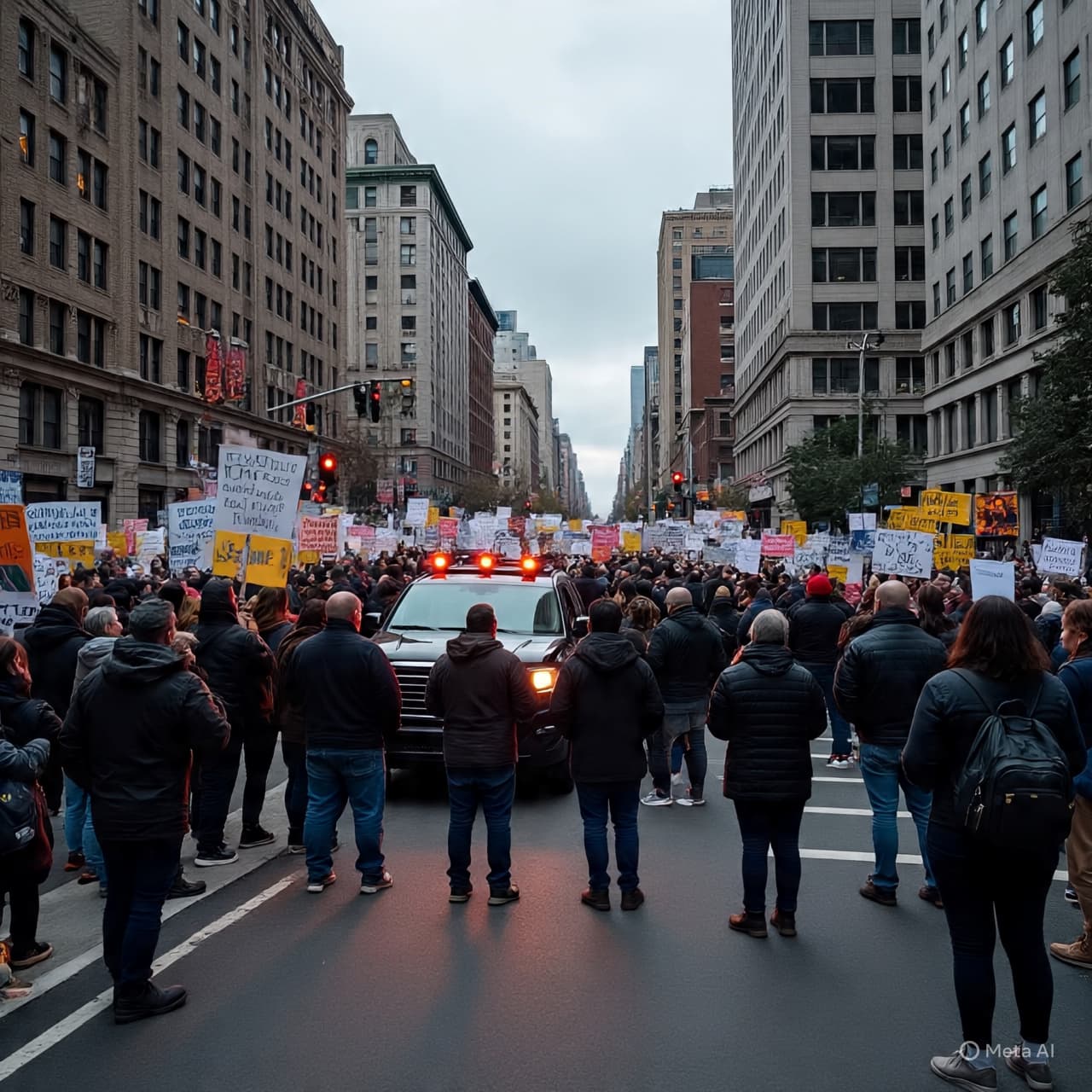
The winter air over Minnesota carries a particular stillness this time of year. Snow settles quietly along courthouse steps, and the Mississippi moves beneath a thin sheet of light, steady and indifferent to the arguments unfolding above it. Yet in recent weeks, beneath that calm exterior, a different current has been moving through the state — one shaped by questions of authority, conduct, and the boundaries of enforcement.
What began as a broad federal immigration initiative evolved into a series of encounters that unsettled communities across the Twin Cities. Federal immigration officers, operating as part of an intensified enforcement effort, carried out actions that drew both support and alarm. Some incidents unfolded near schools and residential areas, others during protests where tensions rose quickly and chemical irritants were reportedly deployed. Seventeen separate episodes are now under review.
Hennepin County Attorney Mary Moriarty announced the launch of a state-level investigation examining whether certain actions taken by federal immigration officers may have crossed legal lines under Minnesota law. The inquiry, described as part of a broader transparency effort, could potentially lead to criminal charges. It represents a rare and delicate moment: a local prosecutor scrutinizing the conduct of federal agents.
Federal officials have maintained that officers were acting within the scope of their lawful authority and have asserted that federal immunity protects them from state prosecution when performing official duties. The legal terrain is complex, shaped by longstanding doctrines about federal supremacy and the limits of state power. Yet the county attorney’s office has emphasized that immunity does not extend to actions that exceed lawful authority.
For many residents, the investigation feels less like a clash of institutions and more like a search for clarity. Videos circulated online. Accounts surfaced from bystanders and journalists. The prosecutor’s office opened channels for community members to submit evidence. The result is a mosaic of perspectives — fragments of lived experience now being assembled into a legal review.
Minnesota has often been a place where civic debate unfolds in measured tones, where public trust is built gradually through participation and oversight. This moment tests that balance. It asks whether enforcement and accountability can coexist without eroding one another, whether authority exercised in the name of order must itself answer to order.
As the investigation proceeds, the state finds itself in a reflective pause. The winter landscape remains unchanged — lakes frozen at their edges, streets salted against the ice — but the conversation beneath the surface has deepened. Courtrooms may soon determine whether lines were crossed. Until then, Minnesota waits, suspended between jurisdiction and judgment, watching to see how law responds when it turns inward upon itself.
AI Image Disclaimer
Visuals are AI-generated and serve as conceptual representations.
Sources
Associated Press Reuters The Wall Street Journal CNN
Published by Banx Network. This article is part of the Banx decentralized media programme, powered by the BXE token on the XRP Ledger.


