A hospital can be a place of treatment, but it can also become a bridge between economies. Medical expertise, pharmaceutical products, equipment and specialized services increasingly move across borders alongside patients and investment.
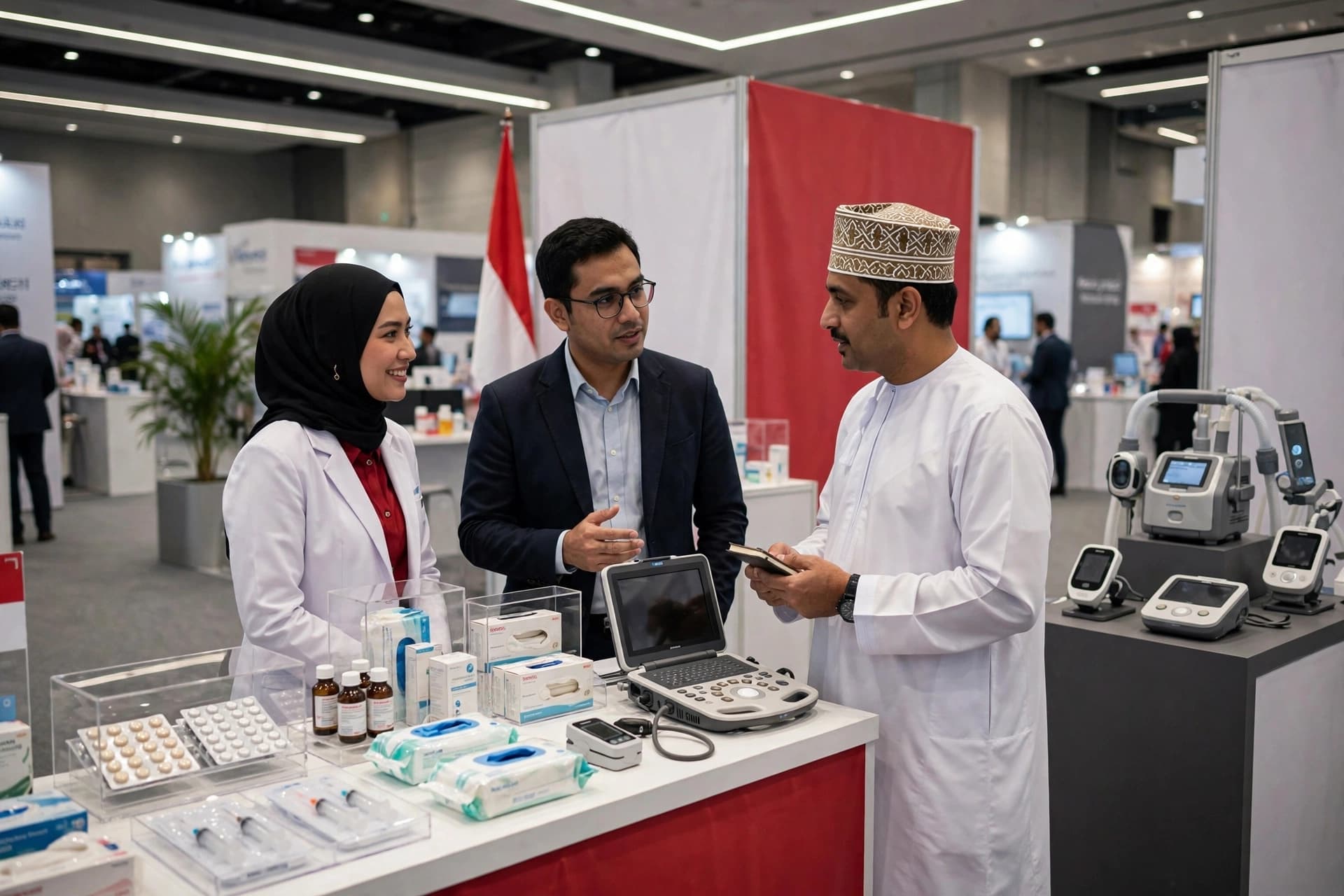
Indonesia brought that wider healthcare landscape to Muscat through an Indonesian Pavilion at the Oman Health Exhibition 2026, held from September 21 to 23. The initiative was organized with support from the Indonesian Embassy in Muscat to promote national healthcare and pharmaceutical businesses in Oman and the broader Middle Eastern market.
Three Indonesian hospitals participated: Harapan Kita National Cardiovascular Hospital, Murni Teguh Hospital and Siloam Hospitals. Five additional companies from the health and wellness sector also joined the exhibition, including pharmaceutical and healthcare-related businesses.
The Indonesian delegation was seeking more than product visibility. According to Ambassador Andi Rahadian, the exhibition offered opportunities to expand exports, pursue healthcare projects in Oman and attract Omani investment into healthcare services in Indonesia.
Technology transfer was another area of interest. Indonesian representatives highlighted possible cooperation involving technology, human-resource development and the placement of skilled Indonesian workers in Oman. Such arrangements can connect commercial activity with the exchange of technical knowledge and professional expertise.
The exhibition also opened a conversation around medical tourism. Indonesia has been developing healthcare destinations and specialized medical services, while Oman and other Gulf markets have populations with established demand for international healthcare services.
The Indonesian Embassy said it saw potential to attract Omani visitors to Indonesia for medical, health and wellness tourism. The idea extends the relationship beyond pharmaceutical trade, linking hospitals, tourism services and other parts of the healthcare economy.
Oman’s healthcare market also fits into the country’s longer-term development plans. Oman Health Exhibition 2026 brought together medical professionals, healthcare organizations and companies involved in medical equipment, pharmaceuticals, laboratory technology and healthcare services.
The Indonesian participation therefore offered a concentrated meeting point for several industries. Pharmaceuticals can move through distributors, hospitals can form institutional partnerships, medical equipment companies can seek buyers, while technology and professional services can create longer-term cooperation.
The relationship has continued beyond the exhibition itself. Discussions between Indonesian health-sector representatives and the Oman Chamber of Commerce and Industry have included medical tourism, preventive medicine, genetic medicine, research, pharmaceuticals, medical supplies and devices.
For Indonesian companies, entering a Gulf market involves more than presenting products. Regulatory requirements, local partnerships, distribution networks and clinical standards all influence whether an opportunity becomes an actual commercial relationship.
Still, the Muscat exhibition provides a visible starting point. Indonesian hospitals and healthcare companies now have another setting in which to introduce their capabilities, while Omani institutions gain an opportunity to examine services and products from a growing Southeast Asian healthcare market.
Published by Banx Network. This article is part of the Banx decentralized media programme, powered by the BXE token on the XRP Ledger.