
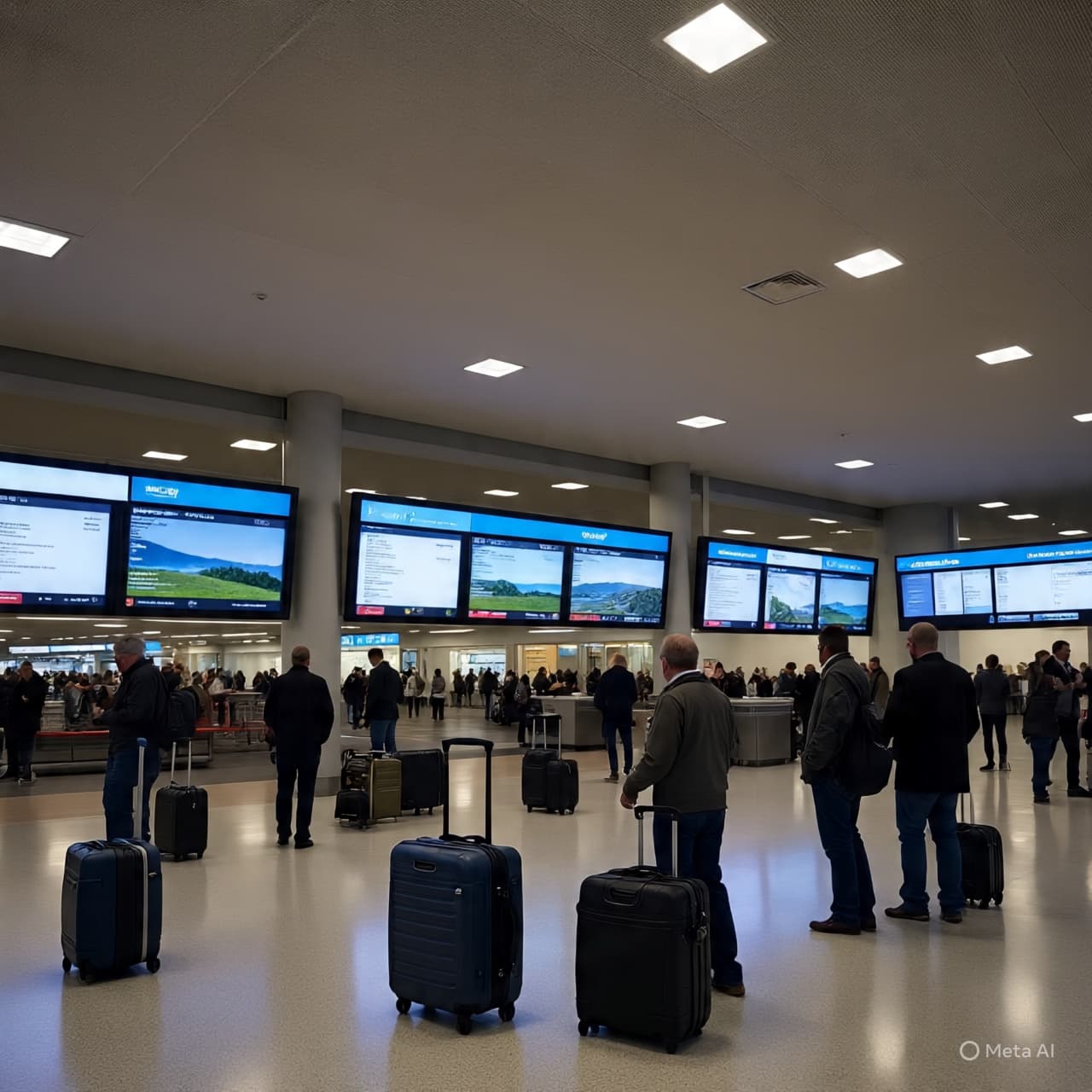
There is a particular stillness that belongs only to air travel interrupted.
It begins far from land, when the aircraft’s forward motion—so steady, so unquestioned—softens into a different arc. The map on the seatback screen, once tracing a clean line across the Pacific, bends unexpectedly toward home. For passengers bound for island afternoons and family reunions, the change is first abstract, then intimate: a captain’s voice, a technical explanation, the slow recognition that the journey has shifted from destination to return.
That was the experience for hundreds of Air New Zealand passengers after several Pacific-bound flights from Auckland were forced to turn back or were later cancelled following separate engineering issues. The most widely affected services included flights to Rarotonga and Samoa, both of which were turned around on Sunday after faults were detected mid-flight. At least one Fiji service had also been disrupted in the preceding fortnight, leaving some travelers stranded in Auckland for days as replacement seats were found.
What lingers in these moments is not simply the inconvenience, but the peculiar emotional geography of being almost there. One Rarotonga flight reportedly turned back less than an hour before arrival after crew identified an issue that could not be repaired at the destination because no engineer or spare part was available. The aircraft, already close to island airspace, had to retrace the ocean it had just crossed.
Airlines have long understood that disruption carries costs beyond the seat itself. A turned-around flight ripples outward into hotel nights, missed transfers, forfeited tours, family pickups, and the quiet expenses of waiting. In response, Air New Zealand says some affected Pacific passengers may be eligible for refunds or reimbursement, depending on the circumstances of their booking and the additional costs they incurred. The carrier’s disruption guidance also notes that prepaid extras such as seat selection and extra baggage can be refunded if they are no longer usable on the rebooked service.
There is something gently modern in how such remedies are framed. The reimbursement is not only about the fare, but about the ecosystem of travel built around it—the airport transfer arranged in advance, the island accommodation waiting on a fixed check-in time, the ferry or domestic hop linked to an international arrival. The ticket is merely the visible center of a much wider arrangement of commitments.
For passengers, the practical advice remains almost ritualistic: hold onto receipts, monitor rebooking options in the app, and document every added expense caused by the disruption. In the era of digital travel, proof often matters as much as the delay itself.
Yet even in the logic of reimbursements, there is a quieter human story. A Pacific trip often carries more than leisure—it can mean weddings, funerals, family visits, church gatherings, or the rare chance to bridge distances that geography keeps large. A technical issue is, by aviation standards, routine caution. For the traveler, it is a delay measured instead in missed embraces and postponed arrivals.
In straight terms, Air New Zealand says passengers affected by recent Pacific-bound flights that were turned around because of engineering issues may be able to claim ticket refunds, reimbursement for eligible out-of-pocket expenses, and refunds for unused prepaid extras, while the airline works through rebookings.
AI image disclaimer Visuals are AI-generated and serve as conceptual representations.
Source check (verified credible coverage exists): NZ Herald RNZ 1News Air New Zealand Newstalk ZB
Published by Banx Network. This article is part of the Banx decentralized media programme, powered by the BXE token on the XRP Ledger.



