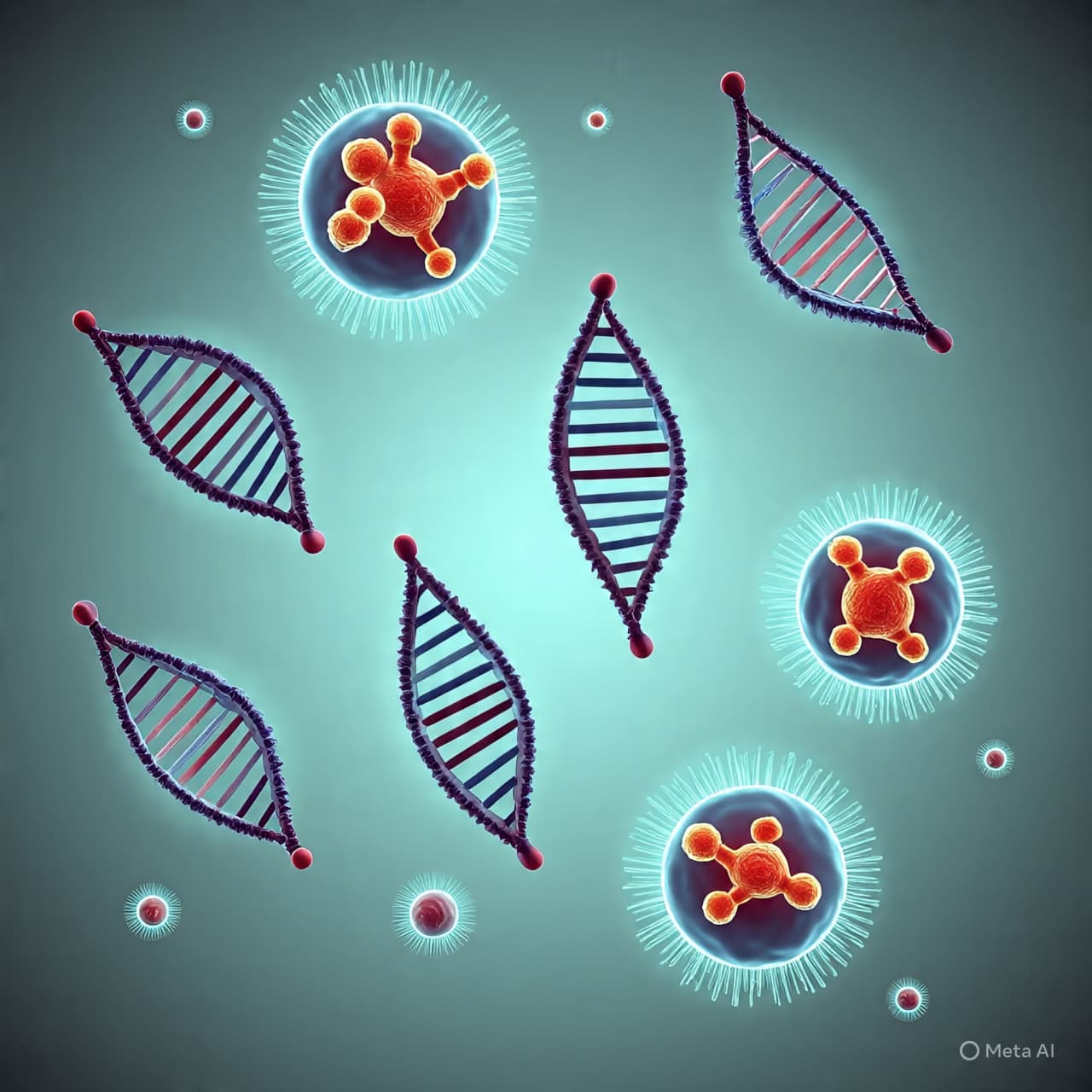
The immune system is often described as a defense, but it is also an archive. Long after an infection fades or a season changes, traces of experience remain, etched not in scars or symptoms, but in the molecular markings that guide how immune cells behave. These markings do not alter DNA itself. Instead, they sit atop it, adjusting volume rather than rewriting text. This is the epigenome, and it tells a story that is neither purely inherited nor entirely learned.
New research suggests that this story is written by two distinct authors. Genetics lays down the initial framework, quietly influencing how immune cells are structured and how they are primed to respond. Environment, meanwhile, edits the margins over time. Together, they shape the human immune cell epigenome in ways that are complementary but clearly separable, revealing how biology balances fate with exposure.
By examining multiple types of immune cells across individuals, scientists have found that genetic variation strongly influences stable epigenetic patterns, particularly those tied to fundamental immune functions. These genetic effects are consistent, present regardless of age or circumstance, and shared across many immune cell types. They form a kind of baseline identity, an inherited tendency that guides how the immune system is organized at its core.
Environmental influences leave a different signature. They appear more selectively, often shaping epigenetic patterns in specific immune cell populations rather than across the entire system. Factors such as infection history, lifestyle, and external exposures introduce variability, fine-tuning how certain cells respond to stress, pathogens, or inflammation. These changes are more dynamic, reflecting not who a person is at birth, but what they have encountered along the way.
What emerges is a layered model of immunity. Genetics establishes the architecture, defining the range of possible responses. Environment then works within that range, nudging the immune system toward adaptation. The two forces rarely compete; instead, they occupy different territories within the epigenome, each leaving marks that are recognizable in both scale and function.
This distinction matters. It helps explain why individuals with similar genetic backgrounds can experience vastly different immune-related outcomes, and why identical exposures do not affect everyone in the same way. It also reframes immune health as neither predetermined nor endlessly malleable. Some aspects of immune behavior are deeply rooted, while others remain responsive to change, shaped continuously by lived experience.
Understanding this balance opens new paths for medicine. If genetic influences define long-term immune tendencies, they may help identify baseline risks. Environmental epigenetic changes, by contrast, may offer opportunities for intervention, revealing how prevention, treatment, or lifestyle shifts could recalibrate immune responses without altering DNA itself.
In the end, the immune epigenome reads like a quiet ledger. Part of it is written before birth, steady and enduring. The rest accumulates slowly, shaped by time, place, and encounter. Together, they form a record of how the body learns to exist in the world.
AI Image Disclaimer Illustrations were created using AI tools and are not real photographs.
Sources Nature Broad Institute National Institutes of Health Wellcome Sanger Institute
Published by Banx Network. This article is part of the Banx decentralized media programme, powered by the BXE token on the XRP Ledger.