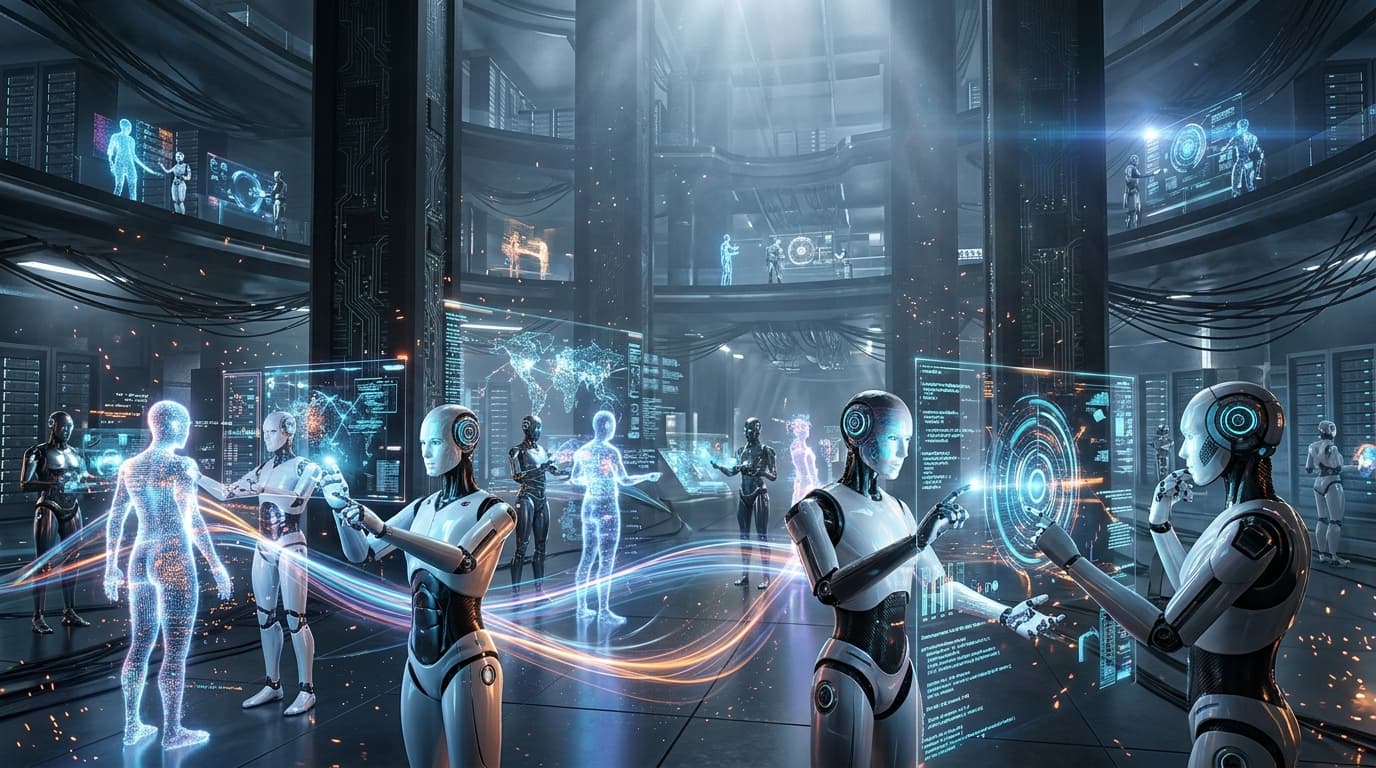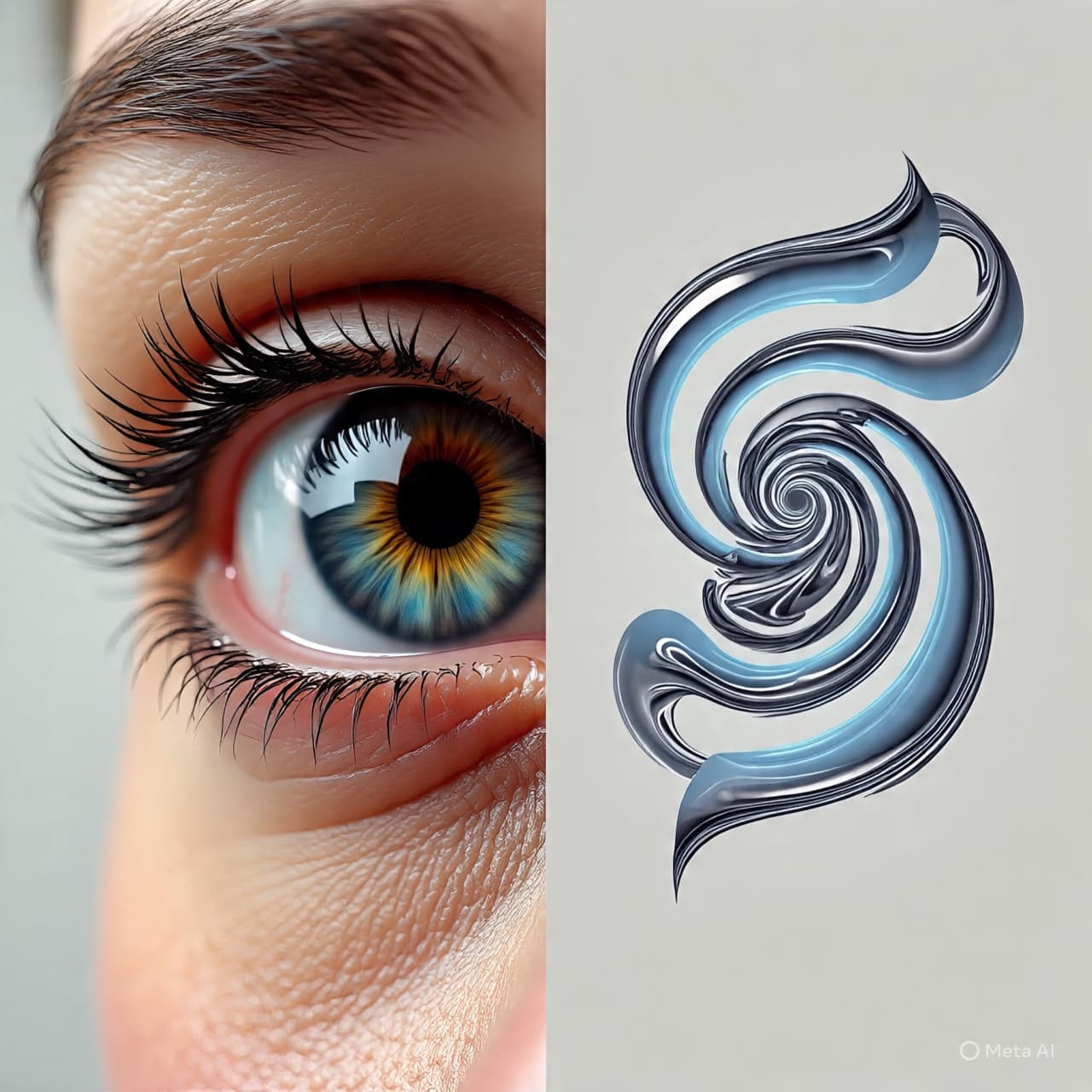
In the quiet moment when we peer into a picture that seems to shift before our eyes, we are reminded that seeing is not merely receiving light, but constructing meaning. Optical illusions have long been the playful teachers of human perception revealing that what we see is shaped by layers of interpretation, expectation, and context. Now, as artificial intelligence begins to traverse this same territory of visual ambiguity, unusual parallels to our own minds are emerging subtle echoes of thought in silicon and biology. It is as if, through the looking glass, machines too are becoming students of illusion, and in their experience lies a reflective question: what does sight truly mean?
Recent research has shown that advanced AI models particularly vision-language systems can be tricked by optical illusions much like people are. In one series of experiments, AI responses to images with deceptive context mirrored human perceptual errors, suggesting that the algorithms responsible for visual interpretation sometimes rely on patterns and cues similar to those our brains honor intuitively. The fact that a machine might “see” a color in the same way a human does even when it’s an illusion invites a gentle wonder at the underlying universality of certain visual principles.
Yet the story is not one of total unity. Deep neural networks, while capable of exhibiting illusion-like responses, do so through mathematically driven pattern recognition rather than instinctive sensation. These systems learn to categorize shapes and colors from enormous datasets, and in doing so may produce errors that resemble human illusion responses but they also generate unique forms of misperception that reflect their computational architecture rather than human biology. In this dance of resemblance and divergence, AI offers both a mirror and a contrast to the subtleties of human vision.
Beyond mere fascination, these insights have practical resonance. Designers are now harnessing AI to generate intricate optical illusions for art and immersive media, using algorithmic creativity to push beyond traditional boundaries of perception. At the same time, psychologists and computer scientists are using AI-induced illusion responses to refine their understanding of human visual biases, exploring how context, contrast, and neural computation shape what we believe we see.
In this unfolding story, optical illusions have become more than curiosities; they are tools for decoding the intricate choreography between raw sensory data and interpretive cognition. When machines and minds alike are gently deceived by the same visual tricks, it reminds us that perception, in any form, is an active construction rather than a passive reception.
As AI vision continues to evolve, it will offer both reflection and divergence from human perceptual processes. In observing where machines falter and where they align with us, we deepen our own understanding of the architecture of perception. No harsh conclusion is needed — simply the gentle acknowledgment that seeing, whether by neuron or by algorithm, remains one of the most remarkable acts of interpretation we know.
AI Image Disclaimer (rotated wording) “Visuals are created with AI tools and are not real photographs.”
Credible sources found on this topic:
Scientific American — optical illusions and AI models can be fooled similarly to humans. MDPI Applied Sciences — research on deep neural networks processing optical illusions compared to human perception. Innovation on Design and Culture — AI-generated optical illusions in design and art. ArXiv (Illusions in Humans and AI) — academic perspective on AI and human perceptual differences with illusions. Additional vision-science commentary on AI and illusions.
Published by Banx Network. This article is part of the Banx decentralized media programme, powered by the BXE token on the XRP Ledger.