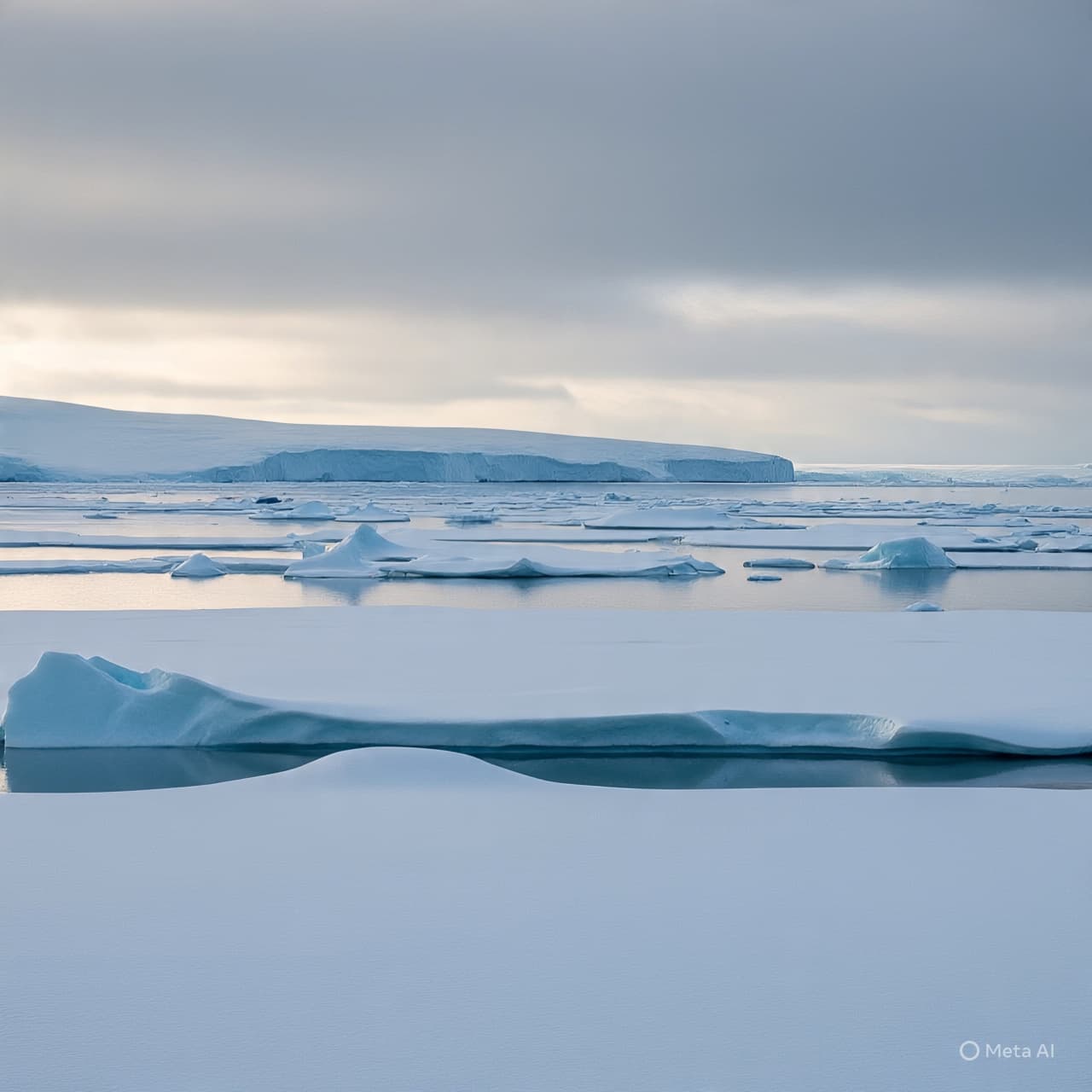
The Arctic moves at its own pace. Ice drifts, reshapes, retreats, and returns, indifferent to the passing arguments of warmer places. Greenland, vast and pale beneath long northern skies, exists largely beyond the daily consciousness of most Americans, a land more often imagined than encountered. Yet in recent weeks, its name has surfaced again in conversations far from its shores, carried south by political suggestion and then met with a quieter, more measured response.
In living rooms and offices, in surveys conducted not with spectacle but with routine regularity, Americans were asked to consider the idea of their country asserting control over this distant island. The responses did not arrive as a wave of enthusiasm. Instead, they settled like frost, thin but widespread. Polling shows that most Americans oppose President Donald Trump’s push to take control of Greenland, an idea he has raised repeatedly as part of his broader vision of American strength and strategic reach.
The numbers, while precise, suggest something less rigid than rejection and more akin to hesitation. Only a small share of respondents expressed support for such a move, while a clear majority voiced opposition. This resistance crossed partisan lines, though it was strongest among Democrats and independents. Even among Republicans, opinion appeared divided, reflecting an uncertainty about whether distant territory should become the focus of national ambition.
Embedded in these responses are concerns that stretch beyond Greenland itself. Many respondents indicated discomfort with the use of military force to pursue territorial aims, and others pointed to the potential strain such efforts could place on longstanding alliances. Greenland’s status as an autonomous territory within the Kingdom of Denmark, a NATO ally, lingers quietly in the background of these considerations, shaping opinion without demanding it.
The poll results do not read as a manifesto. They resemble instead a pause — a moment in which the public seems to weigh geography against consequence, distance against duty. Greenland’s mineral wealth, its strategic location in a warming Arctic, and its symbolic appeal as a frontier all surface in political rhetoric. But among the broader public, the idea appears to drift at arm’s length, observed rather than embraced.
In this sense, the polling reflects not indifference but restraint. Americans, faced with the question of expanding national control into the Arctic, appear inclined toward caution. The idea of ownership over ice fields and fjords does not easily displace concerns about diplomacy, stability, and the limits of power.
In straightforward terms, recent polls show that a majority of Americans oppose President Trump’s push to take control of Greenland. Support remains limited, opposition is broad, and concerns about military force and international alliances feature prominently in public opinion. The issue continues to circulate in political discourse, but for now, the public response remains largely reserved.
AI Image Disclaimer Visuals are AI-generated and serve as conceptual representations.
Sources (Media Names Only) Reuters Associated Press The Guardian CNN Axios
Published by Banx Network. This article is part of the Banx decentralized media programme, powered by the BXE token on the XRP Ledger.