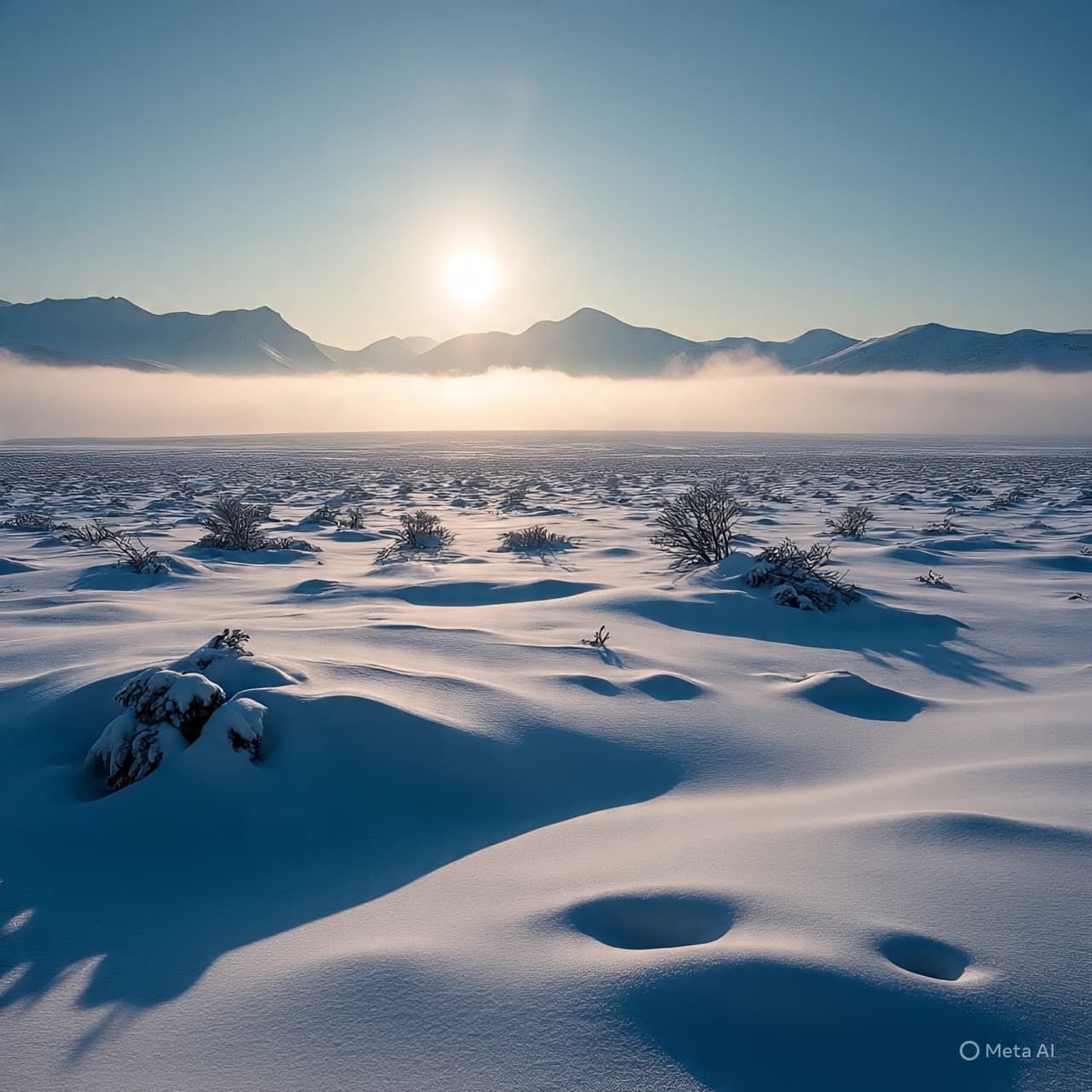
Greenland, from a distance, looks like stillness. Ice fields stretch beyond the eye, light moves slowly across snow, and time appears to settle rather than pass. It is a place where scale dwarfs speech, where geography feels older than politics. Yet even landscapes accustomed to silence can find themselves drawn into conversation.
When asked how far he would go to secure Greenland for the United States, President Donald Trump offered no map, no boundary, no reassurance. “You’ll find out,” he said — a phrase light in tone, but heavy in implication. It was not an answer so much as an invitation to speculation, leaving intention suspended in the air.
The idea of acquiring Greenland is not new. Trump raised it years earlier, framing the vast Arctic territory as a strategic asset — rich in minerals, pivotal for security, positioned along emerging polar routes. Denmark, which governs Greenland, rejected the notion outright. Greenland’s own leaders reaffirmed their autonomy, emphasizing that the island is not a commodity. The episode faded, but it did not fully disappear.
Now, revived through suggestion rather than declaration, the question returns in a different global climate. The Arctic is warming faster than the rest of the planet. Shipping lanes are opening. Competition over resources and influence has sharpened. In this context, Greenland becomes less an abstraction and more a symbol — of reach, of ambition, of how nations speak about power when certainty feels thin.
Trump’s refusal to clarify leaves room for multiple readings. To supporters, ambiguity can signal leverage, a way to keep options open. To critics, it suggests recklessness, or at least indifference to the norms that have governed relations among allies. To diplomats, it introduces friction where predictability once lived.
What matters is not only the question of Greenland itself, but the method of posing it. In international affairs, words often function as weather vanes. They hint at direction before movement begins. A sentence unfinished can unsettle more than one fully explained.
Denmark remains a NATO ally. Greenland remains self-governing, its future tied to its people as much as to distant capitals. No policy has been announced, no action outlined. Yet the absence of clarity has its own gravity. It pulls attention, invites reaction, and forces others to prepare for outcomes not yet named.
In the Arctic, ice shifts quietly. Cracks form long before they are visible from above. So too in politics: moments of uncertainty often mark the early stages of change, not because decisions have been made, but because the language around them has altered.
For now, Greenland remains where it has always been — vast, cold, and patient. The question is not whether it will move, but whether the world around it is learning to speak more carefully, or simply choosing not to speak at all.
AI Image Disclaimer
Illustrations were created using AI tools and are not real photographs.
Sources (names only)
Reuters Associated Press BBC News The New York Times The Guardian
Published by Banx Network. This article is part of the Banx decentralized media programme, powered by the BXE token on the XRP Ledger.