
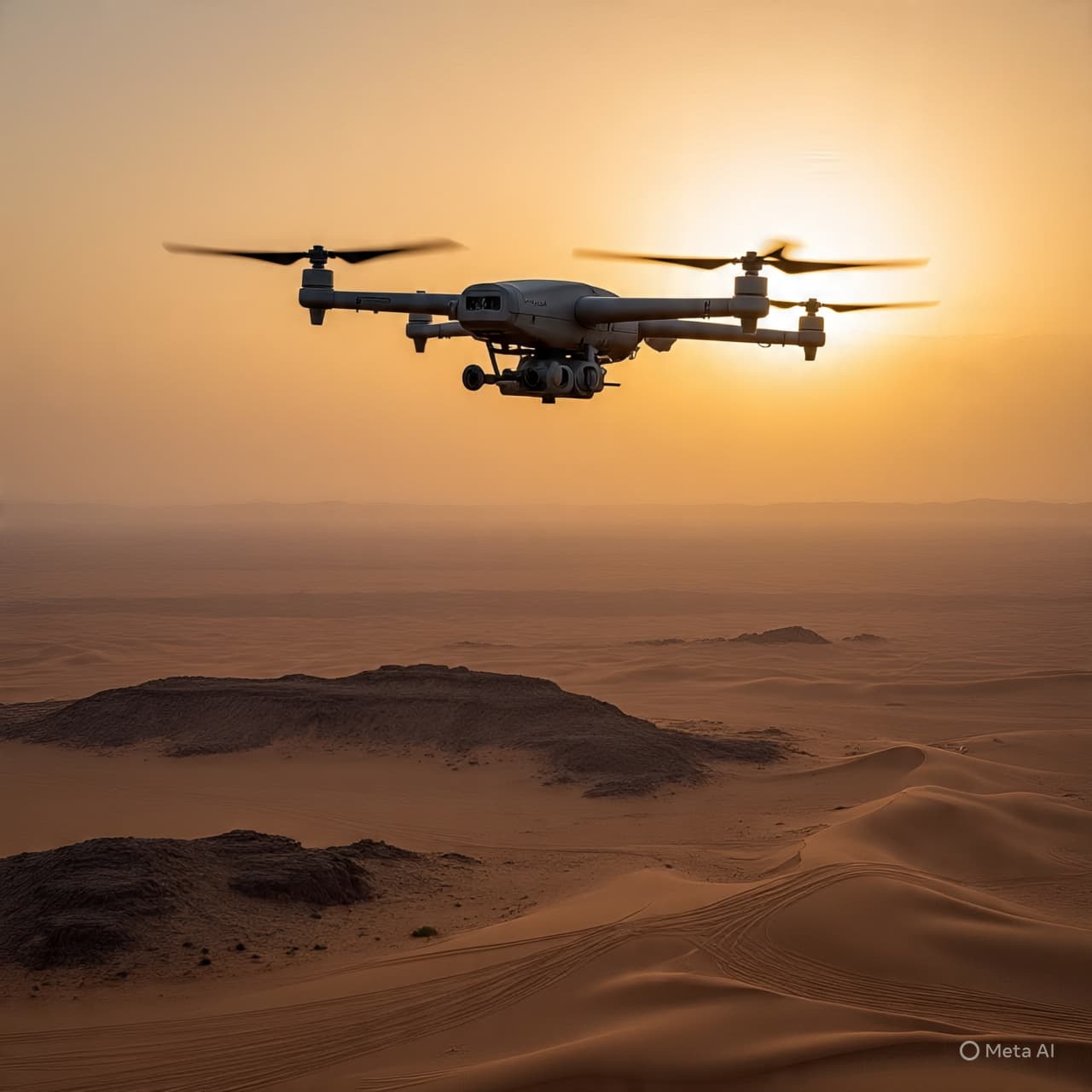
Key Highlights
- Drones symbolize asymmetry in modern warfare, especially in the Middle East.
- The cost disparity between drones and interceptors poses strategic challenges.
- The U.S. is developing lower-cost countermeasures to address drone threats.
The landscape of modern warfare is increasingly defined by the presence of drones, which, despite their seemingly fragile appearance, wield significant power on the battlefield. In recent years, Iran's drone program has emerged as a key player in this evolving dynamic, showcasing how relatively inexpensive unmanned aerial vehicles (UAVs) can challenge advanced military systems. Analysts estimate that many of Iran's drones cost tens of thousands of dollars, while the interceptor missiles designed to neutralize them can run into the hundreds of thousands or even millions of dollars per shot.
This cost-exchange challenge has become a critical factor in military confrontations, particularly in the Middle East. When drones are deployed against military installations or commercial vessels, defenders must make rapid decisions about whether to absorb the risk or deploy costly interceptors. In most instances, the latter prevails, leading to a scenario where a high-value missile is used to eliminate a target that costs a fraction of its price. This imbalance raises questions about the sustainability of such military strategies in the long term.
Military planners have recognized the need to adapt to this new reality. Advanced air defense systems, originally designed to counter traditional aircraft and ballistic missiles, are now tasked with intercepting swarms of inexpensive drones. As unmanned systems proliferate, the challenge for defenders is to avoid expending premium munitions against budget platforms. The U.S. military has responded by accelerating research into lower-cost countermeasures, such as directed-energy weapons and electronic warfare tools, which promise to neutralize drone threats at a fraction of the cost.
For nations like Iran, the affordability of drone technology is not just an economic advantage; it is a strategic one. Drones can be constructed from commercially available components, allowing for sustained operations without the financial burden associated with traditional military hardware. In a prolonged conflict, the ability to replenish an arsenal cheaply can determine the outcome of attrition warfare.
The implications of this shift extend beyond the battlefield. Insurance markets are recalibrating their risk assessments in light of the growing prevalence of inexpensive drone threats. Regional allies are re-evaluating their defense inventories, aware of the potential for stockpile depletion in the face of sustained drone attacks. Legislators are engaged in debates over procurement budgets, weighing the costs of billion-dollar defense systems against adversaries that innovate at lower costs.
As the sun sets and air defense crews monitor their systems, the stark imbalance between the costs of drones and interceptors remains evident. Each interception is a reminder of the evolving nature of warfare, where the economic calculus of deterrence, security, and assurance plays a crucial role. The future of asymmetric warfare is unfolding, marked by the quiet hum of drones and the thunderous response of interceptors, raising critical questions about sustainability and the long-term viability of current military strategies.
Published by Banx Network. This article is part of the Banx decentralized media programme, powered by the BXE token on the XRP Ledger.



