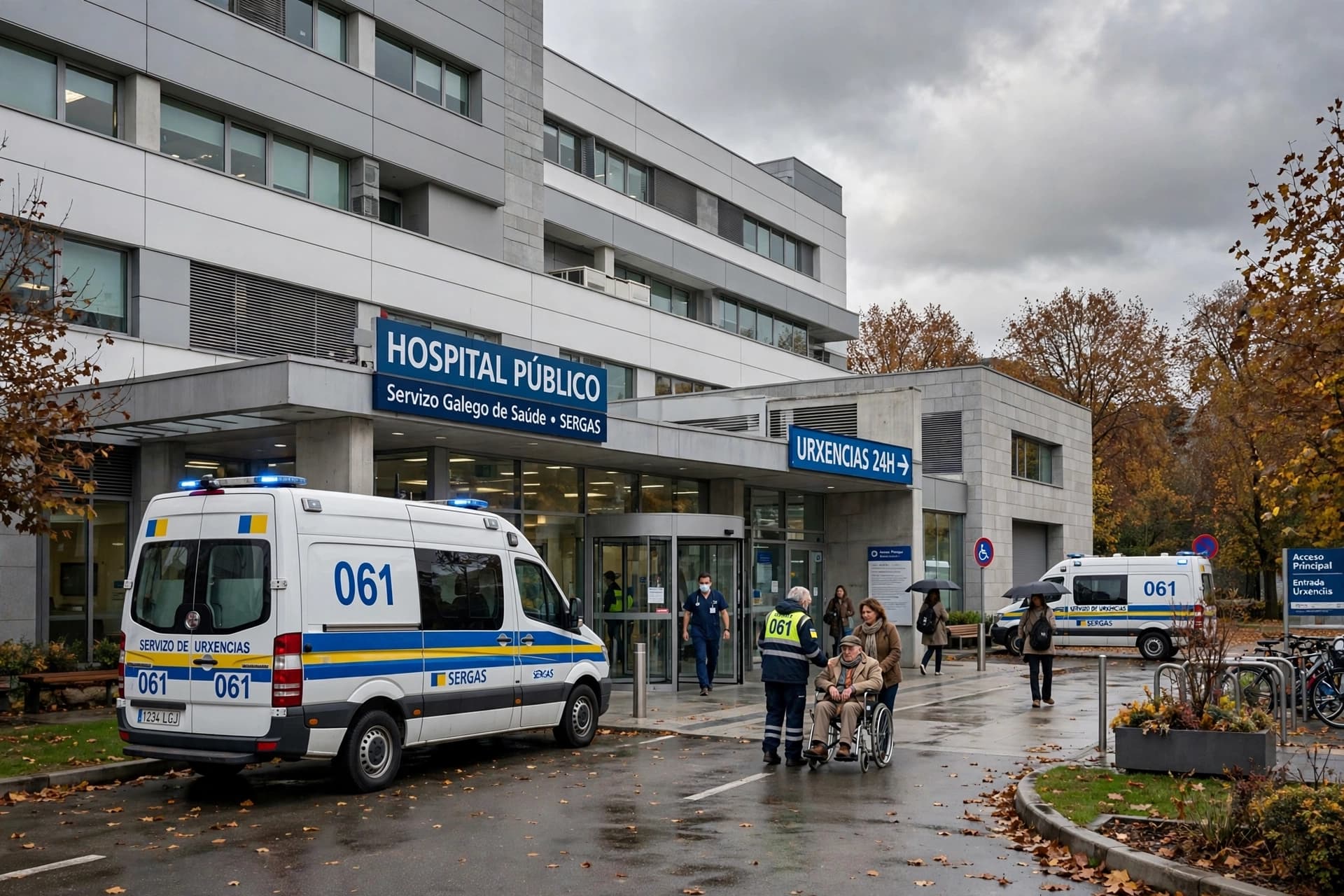
In Galicia, official data for the first half of 2026 show that waiting times increased across several areas of the public healthcare system. The average wait for surgery reached 89.5 days, 20.2 days longer than a year earlier.
The number of patients waiting for surgery also increased. At the end of June, 57,690 people were on the surgical waiting list, 8,457 more than at the same point in 2025, representing an increase of 17.2%.
Hospital consultations experienced a similar movement. The average waiting time rose to 69.8 days, an increase of 12.5 days compared with the same period of the previous year. Diagnostic tests reached an average wait of 100.1 days, up 16.4 days.
The figures come from the Galician health service, Sergas, and cover the first six months of the year. They provide a more recent picture than the December 2025 figures, when Galicia’s average surgical waiting time was lower at around 73 days.
The increase has not been uniform across every medical specialty or hospital. Official data show significant differences between areas, with some services recording longer queues while others reduced the number of patients waiting or shortened their delays.
At the regional level, ophthalmology, traumatology, urology and several other specialties account for substantial numbers of patients waiting for treatment. In some areas, the number of people waiting increased even when waiting times moved in a different direction, showing that the size of a queue and the time required to move through it are related but distinct measures.
The Galician health authorities have linked part of the reduction in healthcare activity during the first half of the year to labor strikes affecting hospitals. Cadena SER reported that the health department said more than 215,000 healthcare activities were suspended during the period. This explanation is an attribution by the regional health authorities, rather than an independently established single cause for every change in waiting times.
Despite the rise in waiting times, Sergas continued to prioritize urgent cases. According to figures reported by RTVE, more than 94,000 surgical procedures were performed during the first half of 2026, alongside approximately 2.4 million outpatient consultations and more than 1.8 million diagnostic tests.
The national comparison also places Galicia within a wider Spanish healthcare picture. At the end of 2025, more than 850,000 people across Spain were waiting for surgery, with an average national delay of 122 days. Galicia’s figure at that point remained below the national average, although its own waiting times subsequently increased during the first half of 2026.
Waiting lists are therefore not simply a count of names. They are a moving measure influenced by the number of new patients entering the system, the pace at which procedures are performed, staffing levels, diagnostic capacity and the priority assigned to different medical needs.
For Galicia, the latest figures show a healthcare system handling substantial demand while surgical, consultation and diagnostic waits have all lengthened. The next data releases will show whether the increase is temporary or whether the first-half pattern continues through the remainder of the year.
Published by Banx Network. This article is part of the Banx decentralized media programme, powered by the BXE token on the XRP Ledger.