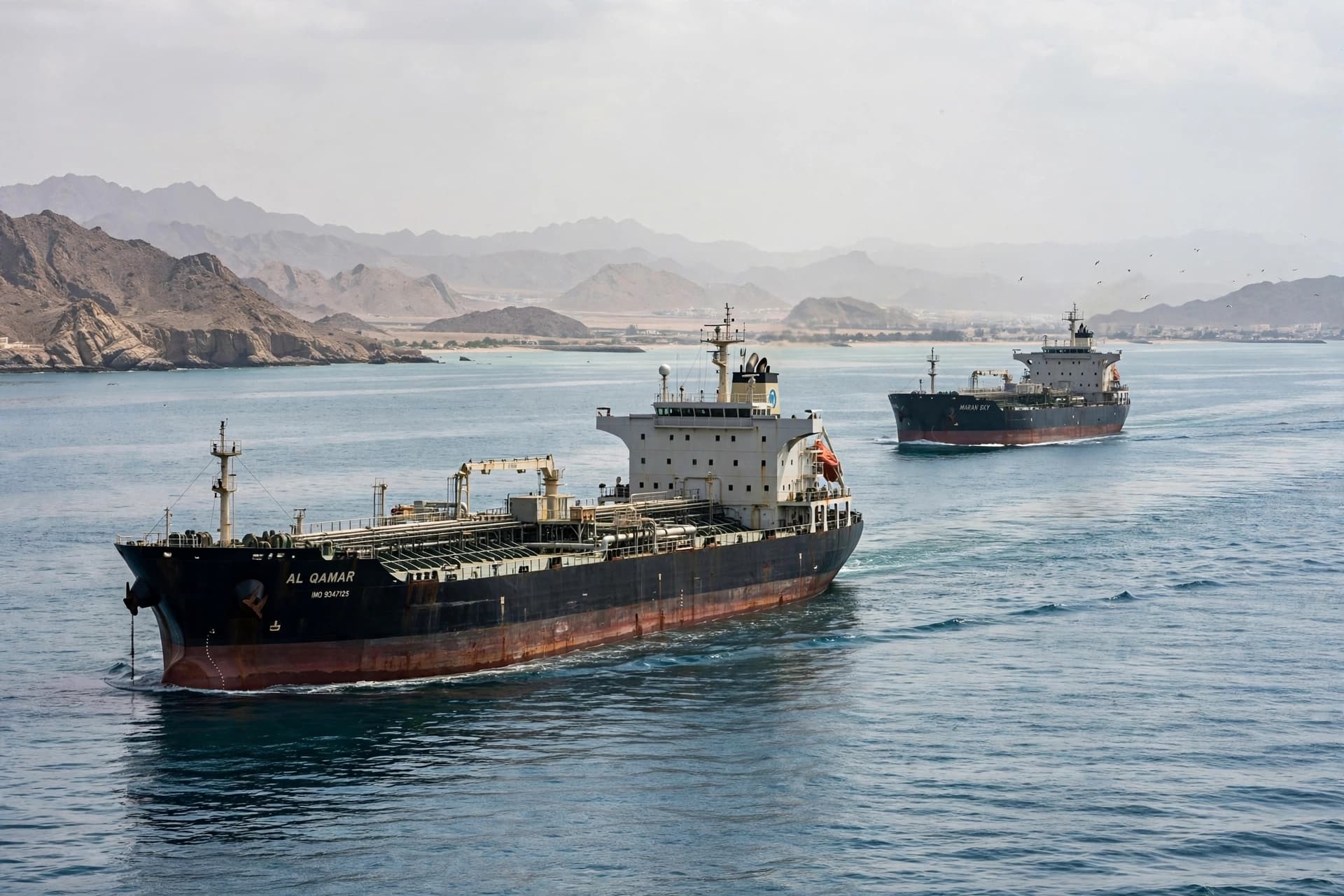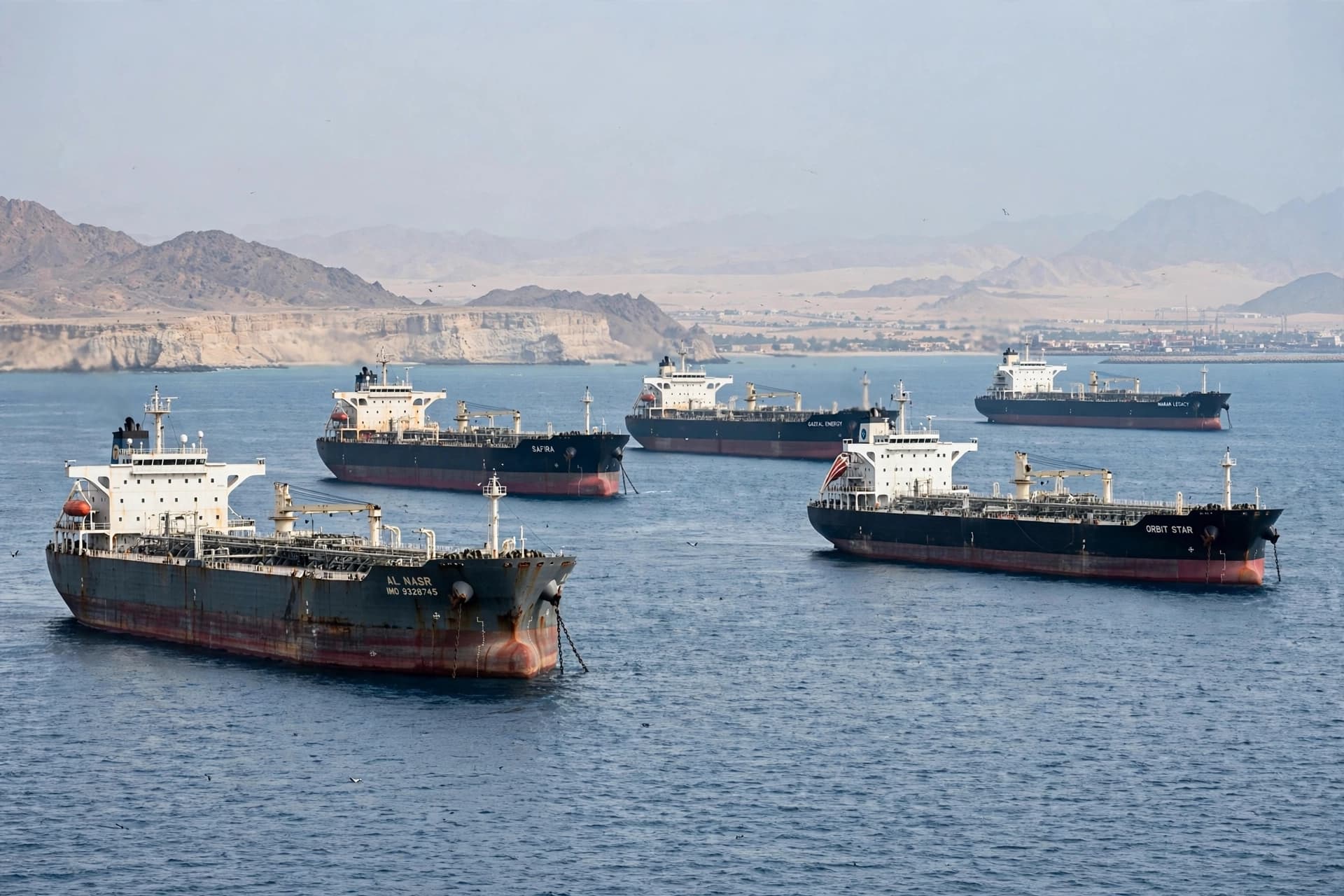
Far from the loading docks where crude oil traditionally begins its journey, another kind of transfer is taking place at sea. Tankers meet in designated areas, cargoes are moved between vessels, and oil continues toward international markets without following the same route it once used. In the Gulf of Oman, that system is now facing a new limitation: capacity.
Reuters reported that ship-to-ship, or STS, oil transfers in the Gulf of Oman had reached capacity limits as Saudi Arabia increased crude shipments through routes affected by disruption around the Strait of Hormuz. The development reflects how quickly maritime infrastructure can become stretched when established routes are interrupted.
The pressure increased after attacks damaged Saudi Arabia’s East-West Pipeline, affecting exports from the Red Sea port of Yanbu. More than 60 million barrels of Saudi crude had reportedly been sold for STS transfer near Sohar, Oman, according to Reuters, creating additional demand for vessels capable of receiving and transporting the cargo.
Ship-to-ship transfers are not new to the oil industry. They can provide flexibility when cargoes need to be moved between vessels or when port infrastructure is constrained. But the method depends on having enough suitable tankers, safe transfer locations and efficient scheduling. When demand rises sharply, the system can become congested.
Saudi crude shipments through Hormuz were expected to rise substantially in September compared with August. Reuters reported that Saudi exports through the strait were projected at around 3.6 million barrels per day, compared with approximately 900,000 barrels per day in August. That increase placed additional pressure on the tanker fleet and transfer infrastructure.
The consequences can be measured in shipping costs as well as waiting time. Reuters reported that very large crude carrier, or VLCC, charter rates had reached about $1.27 million per day. A shortage of vessels can therefore make the movement of each barrel more expensive even when crude itself remains available.
The bottleneck is not limited to Saudi Arabia. Other Gulf exporters, including Iraq and the United Arab Emirates, have also been using maritime routes that depend on available tanker capacity. As more exporters seek alternative ways to move crude, the same transfer points can become crowded.
Some buyers have consequently explored other locations for ship-to-ship transfers. Reuters reported that Chinese and South Korean buyers were considering alternative transfer hubs off India and Malaysia. Such decisions illustrate the geographical ripple effect of a disruption concentrated around one of the world's most important maritime corridors.
The changing routes also reveal how closely oil markets are connected to shipping markets. A barrel of crude has value only when it can reach a refinery or another buyer. When vessels become scarce, freight rates rise and transfer points become congested, the effective cost of that barrel changes even before it reaches its final destination.
At the same time, some of the pressure has been eased by the gradual recovery of broader Middle Eastern exports. Kpler data cited by Reuters showed regional crude exports approaching 80% of their pre-conflict level in September. But the recovery remains uneven, with different routes carrying different levels of risk and cost.
The Gulf of Oman therefore illustrates a quieter side of an energy disruption. The headline may concern oil prices or diplomatic negotiations, but behind those developments are ships waiting for space, crews coordinating transfers and traders searching for routes that can still function. At sea, the limits of infrastructure become visible one tanker at a time.
IMAGE DISCLAIMER: Images accompanying this article are illustrative and may not depict the exact vessels, transfer locations, or maritime operations described.
SOURCES: Reuters Kpler TankerTrackers.com Saudi Aramco Regional shipping and energy sources
Published by Banx Network. This article is part of the Banx decentralized media programme, powered by the BXE token on the XRP Ledger.