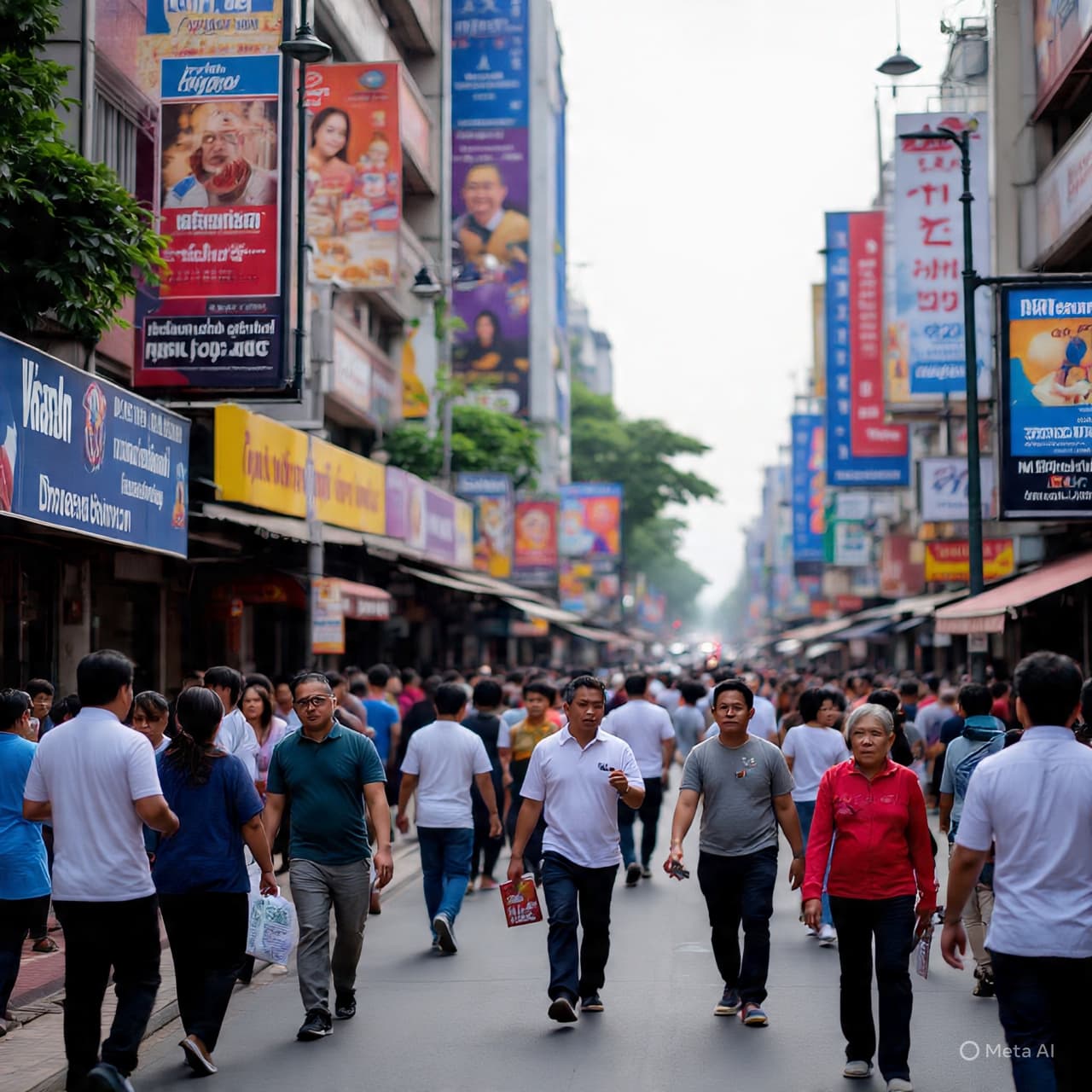
In the warm light of late afternoon, Yangon’s streets seem to breathe a familiar hum the distant honk of buses, barefoot children weaving through the crowds, and roadside tea stalls unfurling their plain metal trays. Yet there is another rhythm here now, a quiet shadow threading itself through the ordinary. Like wind drawn through a half-open window, it is ever-present, misunderstanding no corner, forgiving no misstep. This is the pulse of a nation poised between memory and dread, where the promise of an election is no longer a song of hope, but a whispered measure of fear.
For the first time in half a decade, ballots are being cast in Myanmar. What might have once been greeted with sunrise joy an opportunity for collective voice now carries a brittle weight. Five years after the military seized power in a coup that ended a hard-won democratic chapter, these elections unfold in staggered phases under the watchful gaze of soldiers and strict surveillance. International observers have largely dismissed the process as neither free nor fair, and rights groups describe it as a façade meant to give an air of legitimacy to continued military control.
In downtown Yangon, the pace of life persists on the surface, yet the city carries a collective breath held halfway between hope and caution. Commuters hurry past campaign posters with polite indifference; the young avoid political discussions even in taxis for fear of who might be listening. One resident, speaking quietly, says that before the coup they felt they could speak openly. Now, she says, “we are always living in fear.”
Beyond the urban bustle, the broader country’s landscape tells another story one of conflict and exclusion. Vast swaths of territory remain outside junta control, war zones where ongoing fighting makes organizing or participating in any civic process almost impossible. Only a portion of the intended constituencies are voting, and several opposition parties, including the once-dominant National League for Democracy, are banned or marginalized. With so many voices silenced, many view the exercise less as a democratic mechanism and more as political theatre.
For those who do show up at polling stations, it is often not out of confidence but caution. In some areas, people fear conscription or reprisal if they refuse to participate; in others, the absence of choice makes the ballot seem hollow. The military-backed party claims dominance in early results, while the election’s credibility is widely questioned by Western governments and rights monitors alike.
And yet, woven through this fearful landscape is a thread of persistent resilience. Some young activists speak from afar of continued resistance, believing that meaningful change will not come easily, but is instead a path trodden by many small acts of courage over time. Even if the ballot boxes now seem gilded cages, in quiet corners of the nation the human pulse still seeks freedom’s light beyond the horizon.
As Myanmar closes this chapter of a staged election, the immediate impact is measured not in headlines, but in the everyday politics of survival: families adapting to economic hardship, neighborhoods choosing silence for safety, communities carrying forward fragments of hope in their hearts. In a place where fear has become a constant companion, the long march towards peace and genuine representation continues slow, painful, and deeply human.
AI Image Disclaimer (Rotated) “Visuals are created with AI tools and are not real photographs.”
Credible Sources Found The Guardian Al Jazeera Associated Press (AP News) Reuters Human Rights Network Japan (HRN) / International civil rights commentary reports Encyclopaedia Britannica background coverage
Published by Banx Network. This article is part of the Banx decentralized media programme, powered by the BXE token on the XRP Ledger.