Like frost lingering on a windowpane long after winter’s deep breath, the question of Russia’s immobilized assets has become one of those quiet, reflective dilemmas that sit at the edge of Europe’s collective consciousness. It is a story not just of money and law, but of strategy, connection and the slow thaw that follows deep uncertainty.
In halls of power from Brussels to Kyiv, leaders have walked a careful path between principle and practicality. For years, more than €200 billion in Russian assets have sat frozen in European accounts, a symbolic response to the war that began in February 2022. In that stasis lies the hope of eventual recompense a future where the cost of conflict might be repaid not only in abstract justice, but concrete support for a nation rebuilding and defending itself.
Recent deliberations at an EU summit brought this tension into sharper relief. European leaders agreed on a €90 billion interest-free loan to Ukraine, to be raised through joint borrowing rather than tapping the frozen funds. The decision was shaped by intricate legal and financial concerns, including resistance from member states worried about legal liabilities and broader market confidence.
Yet in the shadows of that practical compromise lies an unfinished narrative: the idea that one day perhaps “eventually,” as some voices suggest those immobilized Russian assets could serve as part of the repayment mechanism for Ukraine’s war costs. That notion hangs in diplomatic discussions like a horizon line, visible but distant, a promise of closure that remains tethered to complex legal and political terrain.
Officials on both sides of the debate have spoken in tones that reflect this complexity. Some see a moral and logistical logic to linking frozen assets with reparations, others urge caution to protect financial stability and legal norms. The resulting compromise borrowing now, holding the frozen assets in limbo underscores a broader theme of contemporary European policymaking: balancing solidarity with prudence in an era of uncertainty.
For Ukraine, the outcome provides a lifeline for the near term, ensuring continuity in funding for defence and public services. For the European Union, it represents a delicate act of solidarity that avoids overreach but keeps alive the possibility of linking immobile wealth to future restitution. In both cases, the decisions are marked by care, hesitation, and a shared sense of responsibility that is not easily resolved.
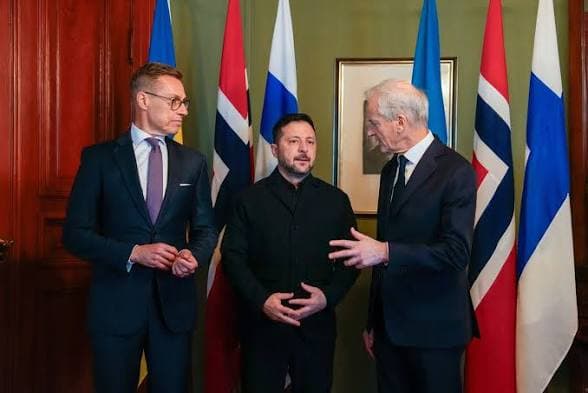
AI IMAGE DISCLAIMER (rotated wording)
“Visuals are created with AI tools and are not real photographs.”
SOURCE CHECK (5 credible media names — no URLs):
Reuters The Guardian Associated Press (AP) Euronews Sky News
Published by Banx Network. This article is part of the Banx decentralized media programme, powered by the BXE token on the XRP Ledger.