There are cities where history does not sit in the background, but lives in the very shape of the streets. In Prague, stone and spire hold the memory of past gatherings—moments when people have come together not only to observe, but to be heard.
On a recent day, that memory found its echo once more.
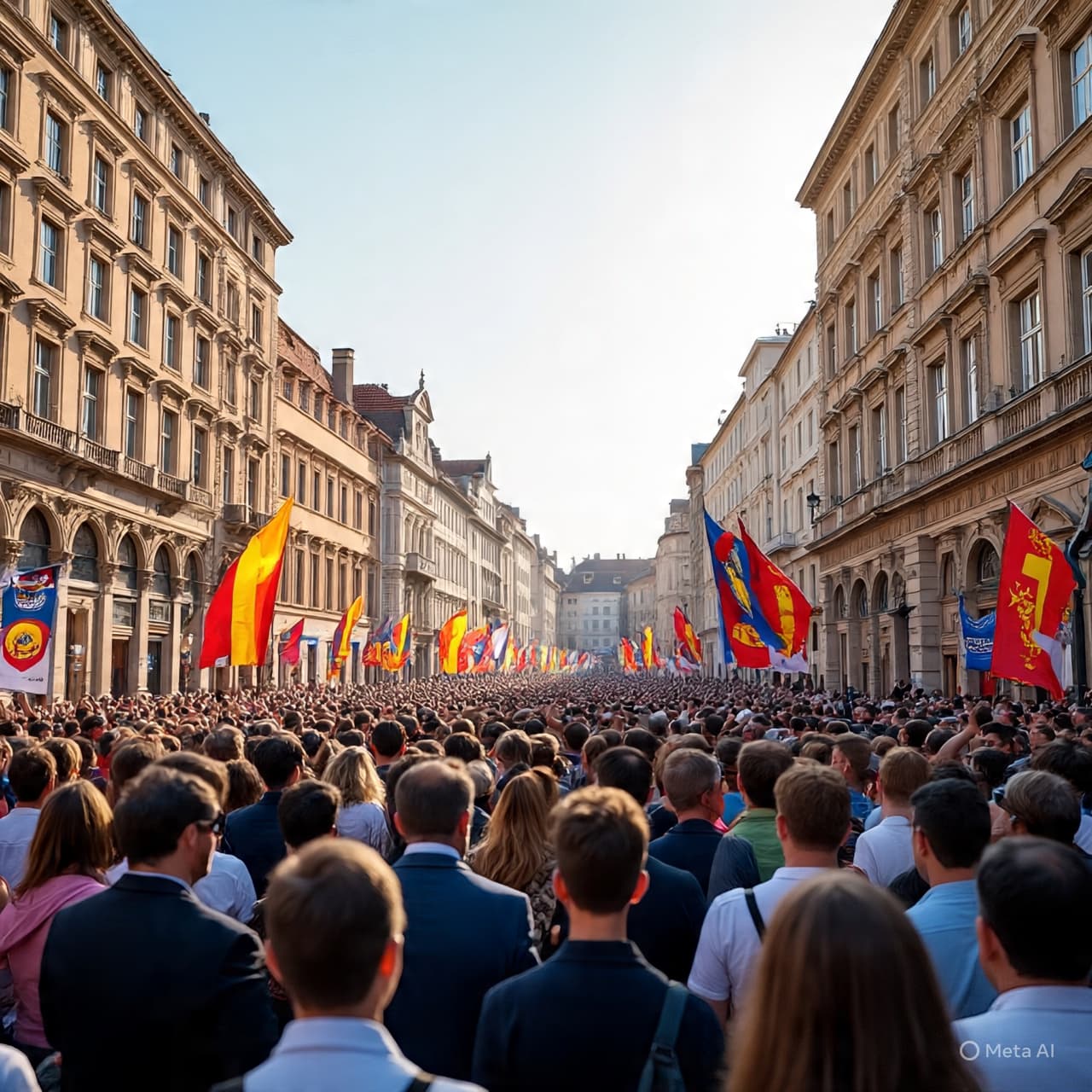
Tens of thousands of protesters filled central squares, their presence turning familiar public spaces into places of collective expression. The movement was directed toward the newly formed government led by Prime Minister Andrej Babiš, whose leadership has long drawn both support and criticism within the country.
The crowd moved with a quiet determination. Banners were raised, voices carried across open spaces, and the city’s usual rhythm adjusted to accommodate the scale of the gathering. It was not a moment defined by urgency alone, but by continuity—a continuation of civic engagement that has marked Prague at different points in its history.
Concerns among demonstrators have centered on issues of governance, accountability, and the direction of leadership under Babiš. While the specifics vary across those gathered, the shared act of assembling has become its own statement—one that reflects both disagreement and participation within the democratic process.
Authorities monitored the rally, maintaining order as the demonstration unfolded. There were no immediate reports of major disruption, and the event proceeded largely peacefully, shaped more by presence than by confrontation.
In cities like Prague, such gatherings carry layers of meaning. They are not only responses to the present, but also reflections of the past—moments where public space becomes a meeting point between history and current sentiment.
As the crowd gradually dispersed, the city began to return to its familiar pace. Yet the impression of the day remains, held within the memory of those who stood together and within the spaces that briefly carried their voices.
Tens of thousands of people rallied in Prague against the new government led by Prime Minister Andrej Babiš. The demonstration was largely peaceful, and authorities continue to monitor the political response to the protests.
AI Image Disclaimer
These visuals are AI-generated and intended to illustrate the scene conceptually.
Sources
BBC News Reuters Al Jazeera The Guardian
Published by Banx Network. This article is part of the Banx decentralized media programme, powered by the BXE token on the XRP Ledger.