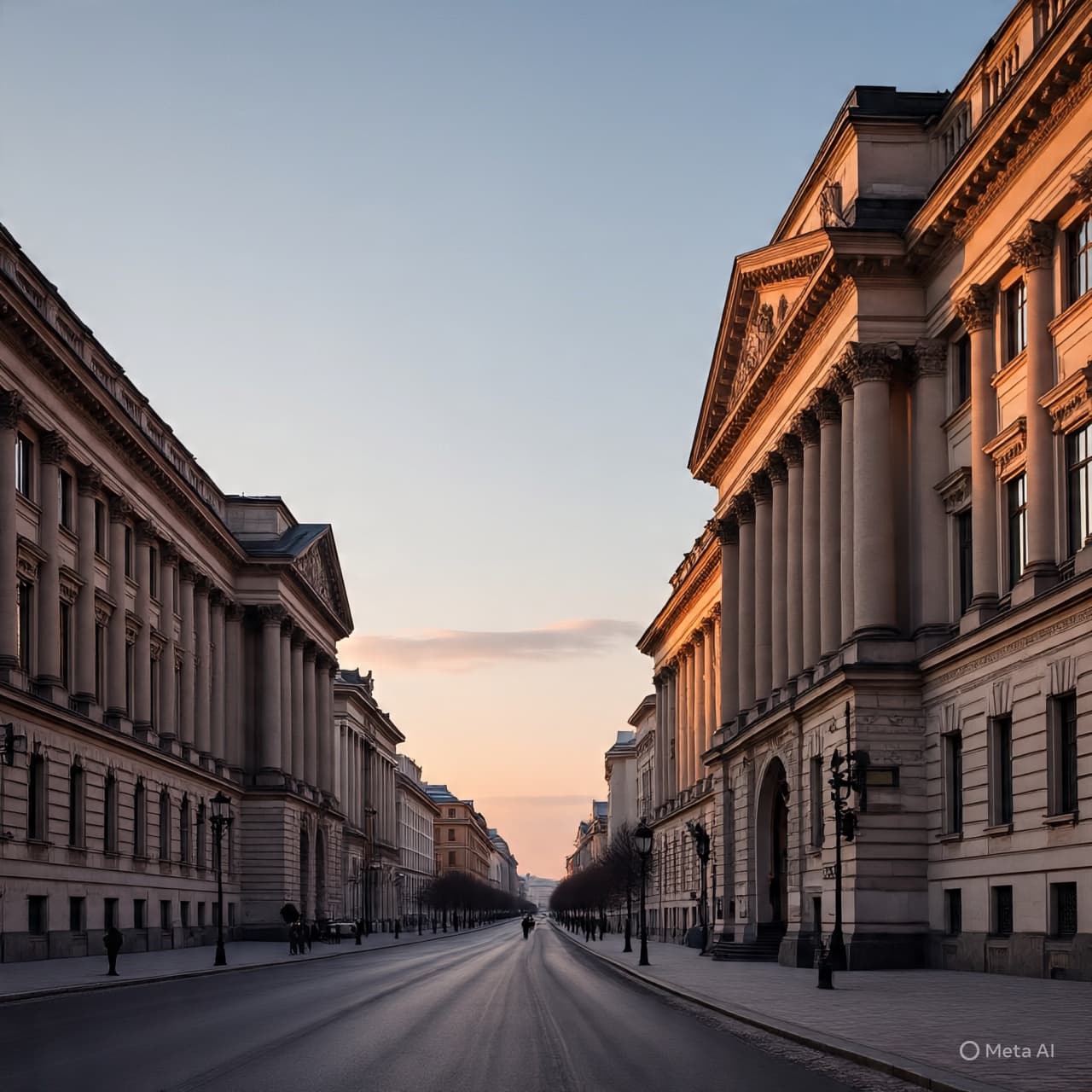
Morning settles softly over Berlin, the light pale and measured as it slips across stone facades and quiet government courtyards. The city, long accustomed to bearing the weight of Europe’s turning points, moves at its familiar pace—trams humming, footsteps echoing along wide streets shaped by history’s heavier moments. In this calm, old questions stir again, resurfacing not with urgency but with a careful gravity shaped by the present hour.
It is against this backdrop that Friedrich Merz, Germany’s chancellor-in-waiting and leader of the Christian Democratic Union, has spoken of a future once considered distant. In interviews and remarks this week, he acknowledged that Germany is exploring discussions with European allies about a shared nuclear deterrent—an idea that would see the continent relying less exclusively on the United States and more on collective responsibility. His words were measured, framed not as a declaration but as an opening, a recognition that Europe’s security landscape is quietly shifting beneath familiar assumptions.
The conversation emerges from a season of strategic unease. Russia’s war in Ukraine continues to cast long shadows across the continent, while uncertainty over Washington’s long-term commitments has prompted European capitals to reassess the architecture of their defense. France and the United Kingdom remain Europe’s only nuclear-armed states, and Merz has suggested that deeper dialogue with both—particularly Paris—could help anchor a European deterrent that reflects shared interests and mutual vulnerability. It is not a call for German nuclear weapons, but for participation in a broader protective framework shaped by consultation and consent.
For Germany, the notion carries historical weight. Since the end of the Second World War, the country has defined itself through restraint, embedding its security firmly within NATO and renouncing nuclear arms of its own. Any discussion of deterrence therefore unfolds slowly, layered with memory and caution. Merz has emphasized that NATO remains the cornerstone of German defense, and that any European initiative would complement, not replace, the alliance. Still, the acknowledgment alone signals how far the conversation has traveled from once-settled ground.
Across Europe, reactions have been thoughtful rather than reactive. Some leaders view the idea as a pragmatic response to a more fragmented world, while others stress the political and legal complexities involved. Questions linger about command structures, democratic oversight, and public consent—issues that resist easy answers and demand time. Yet the dialogue itself reflects a broader realization: that Europe’s security can no longer be treated as static, nor entirely outsourced to distant guarantees.
As evening light gathers over Berlin, the city resumes its quieter rhythms. Cafés fill, offices empty, and conversations drift from the abstract to the ordinary. The idea of a shared nuclear umbrella remains just that—an idea, cautiously spoken, carefully framed. But in a continent shaped by borders that have shifted and promises that have been tested, even tentative words carry resonance. They suggest a Europe listening closely to its own uncertainty, considering not only how it has been protected, but how it may one day protect itself.
AI Image Disclaimer Illustrations were created using AI tools and are not real photographs.
Sources Reuters Financial Times BBC News Politico Europe Associated Press
Published by Banx Network. This article is part of the Banx decentralized media programme, powered by the BXE token on the XRP Ledger.