
Key Highlights
- Location:Northwest Cameroon, where steep hillsides are prone to landslides.
- Impact:Communities affected by severe landslides due to heavy rainfall.
- Response:Emergency teams deployed to assist in recovery efforts.
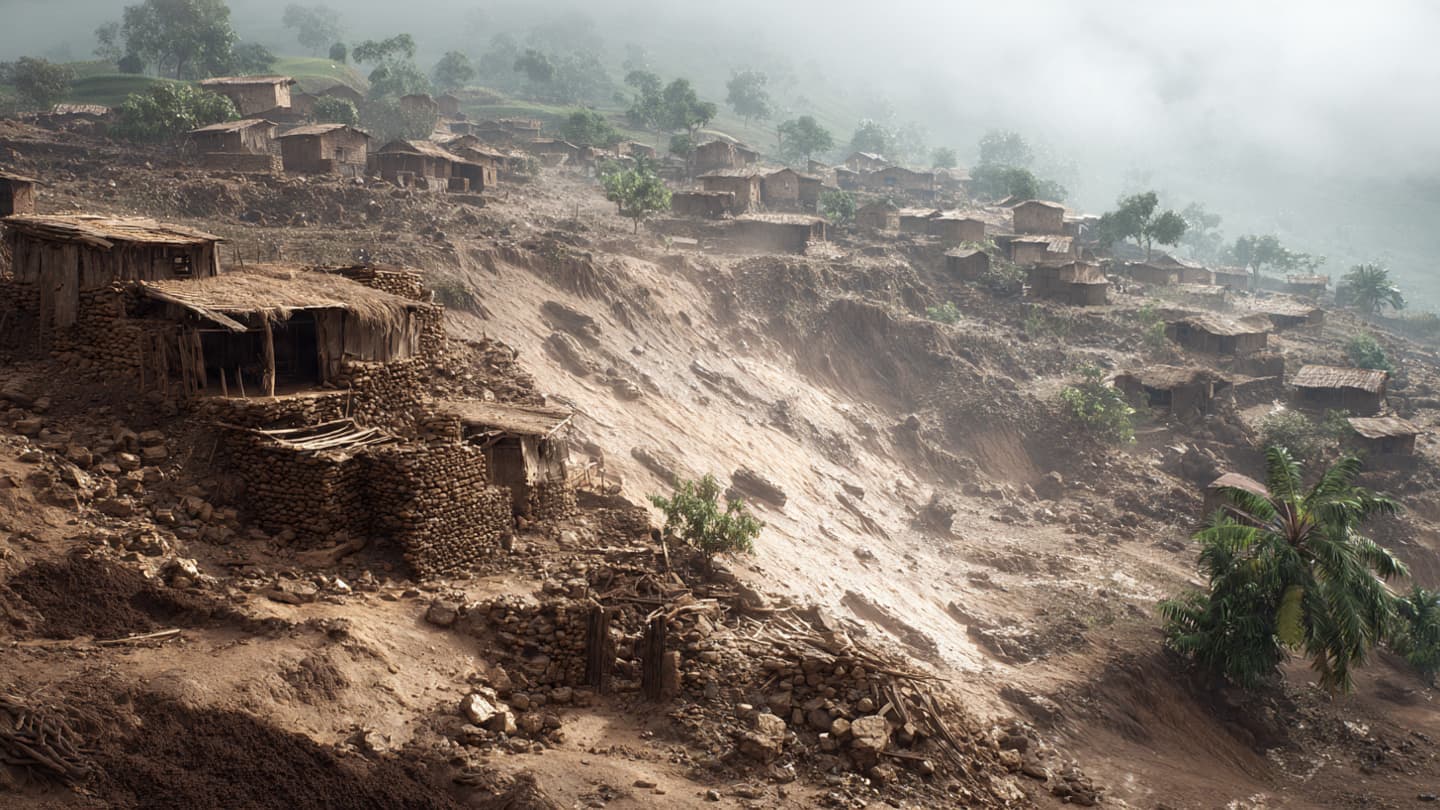
In Cameroon’s northwest region, the land rises and falls in steep contours, where villages often sit along slopes shaped by years of rain and erosion. During heavy rainfall, these familiar landscapes can change quickly, as soil gives way under sustained pressure. The recent landslides have highlighted the vulnerability of hillside settlements in this area, where the combination of heavy rains and unstable ground has led to devastating consequences.
Communities in the region have been severely affected by deadly landslides following prolonged and intense rainfall. These incidents occurred in areas where hillside settlements are particularly vulnerable to shifting ground conditions. Reports indicate that the landslides have resulted in significant property damage and have left many residents displaced, with homes collapsing into residential areas with little warning.
Emergency response teams were deployed to affected locations, navigating difficult terrain and blocked access routes. Some roads were rendered impassable due to mud and debris, which has slowed rescue and recovery efforts. Local authorities, alongside humanitarian organizations, are working tirelessly to assess the scale of the damage and coordinate search and recovery operations. The challenging terrain has complicated efforts to reach some of the most affected communities, further exacerbating the situation.
Residents described the sudden movement of earth during rainfall, leaving them with little time to react as sections of hillside collapsed. Many families have lost their homes, and the emotional toll on the community is profound. Local authorities and humanitarian groups have been assessing the scale of damage while coordinating search and recovery operations. The terrain has complicated efforts to reach some of the most affected communities, highlighting the urgent need for improved infrastructure in these vulnerable areas.
The northwest region has experienced recurring weather-related challenges, with seasonal rains often intensifying risks in areas lacking reinforced infrastructure. Informal housing on steep slopes remains particularly exposed, and the recent landslides have underscored the need for better urban planning and disaster preparedness in these regions. Support efforts are being organized to assist displaced families, including temporary shelter arrangements and basic aid distribution. However, access limitations continue to affect the speed of assistance, leaving many families in urgent need of help.
As recovery begins, attention remains focused on stabilizing affected zones and reducing further risk in areas where the ground remains saturated and unstable. The government and various NGOs are working together to implement measures that will help prevent future disasters and ensure the safety of residents living in these vulnerable hillside communities. The situation remains fluid, and ongoing assessments will be crucial in determining the long-term recovery strategies for the affected areas.
Published by Banx Network. This article is part of the Banx decentralized media programme, powered by the BXE token on the XRP Ledger.



