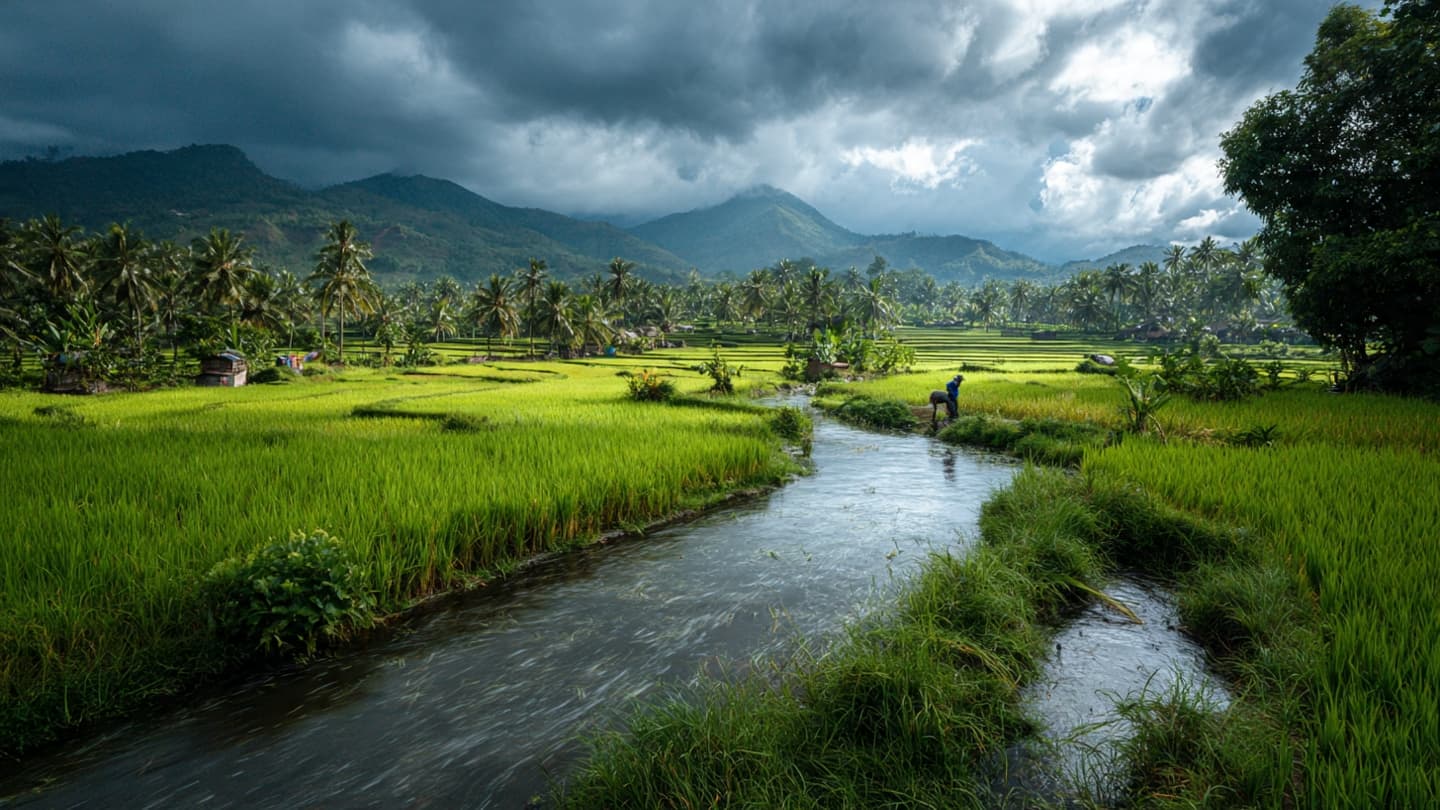
Before the first light reaches a rice field, the weather has already begun making decisions. Rain, heat, wind and humidity shape the possibilities of a harvest long before crops reach a market. In Indonesia, where agriculture remains closely connected to millions of livelihoods, changing weather patterns are becoming an increasingly important part of the country's food story.
Indonesia is developing climate-adaptation measures for agriculture as farmers face changing rainfall patterns, higher temperatures and more frequent extreme-weather events. Government agencies and international organizations have been supporting efforts to improve climate-resilient farming and strengthen food security.
Rice remains particularly important. Indonesia is one of the world's major rice-producing countries, and changes in rainfall or prolonged periods of heat can influence planting schedules, water availability and crop yields. Farmers therefore increasingly need information about weather patterns when deciding when and where to plant.
Water management has become one of the central challenges. Too little rainfall can reduce irrigation supplies, while intense rain can damage fields, wash away soil or flood crops. The same season can therefore produce very different conditions depending on location.
Technology is becoming part of the response. Satellite imagery, weather forecasting, soil monitoring and digital agricultural services can provide farmers with more information before making decisions. These tools do not remove uncertainty, but they can offer additional time to prepare for changing conditions.
The issue extends beyond crops. Indonesia's extensive coastline and large fisheries sector are also sensitive to changing ocean temperatures and weather conditions. Coastal communities depend on marine ecosystems that can shift as waters warm, while storms and changing currents can affect fishing activity.
Climate adaptation therefore involves more than a single agricultural technique. It can include drought-resistant seeds, improved irrigation, better weather information, crop diversification and stronger storage systems. Each measure addresses a different part of the chain connecting farms to consumers.
The economic dimension is significant. When harvests are disrupted, the effects can move beyond rural communities into food prices and household budgets. Maintaining stable food supplies requires not only sufficient production but also reliable transportation, storage and distribution.
Indonesia's geographical diversity makes adaptation particularly complex. Conditions in Java differ from those in Sumatra, Sulawesi, Kalimantan or the eastern islands. A farming practice that works in one region may not be suitable elsewhere, meaning that climate resilience often depends on local knowledge as much as national policy.
The work continues gradually, season by season. Fields are still planted, fishing boats still leave coastal villages and markets still open each morning. But beneath those familiar routines, Indonesia is adjusting to a climate that is becoming harder to predict. The response is increasingly focused on helping agriculture remain productive even as the conditions surrounding it change.
SEO-friendly Slug indonesia-climate-change-agriculture-food-security-adaptation
Hashtags #Indonesia #ClimateChange #Agriculture #FoodSecurity #Environment #Sustainability #Health
Image Disclaimer These visuals were produced using AI technology as illustrative representations and do not depict specific real farms, communities, or weather events.
Sources World Bank World Meteorological Organization FAO Ministry of Agriculture Republic of Indonesia
Published by Banx Network. This article is part of the Banx decentralized media programme, powered by the BXE token on the XRP Ledger.