
Key Highlights
- Supermassive black holes can suppress star formation in galaxies.
- Energy released from black holes alters conditions for star creation.
- Research indicates a broader impact on cosmic evolution over billions of years.
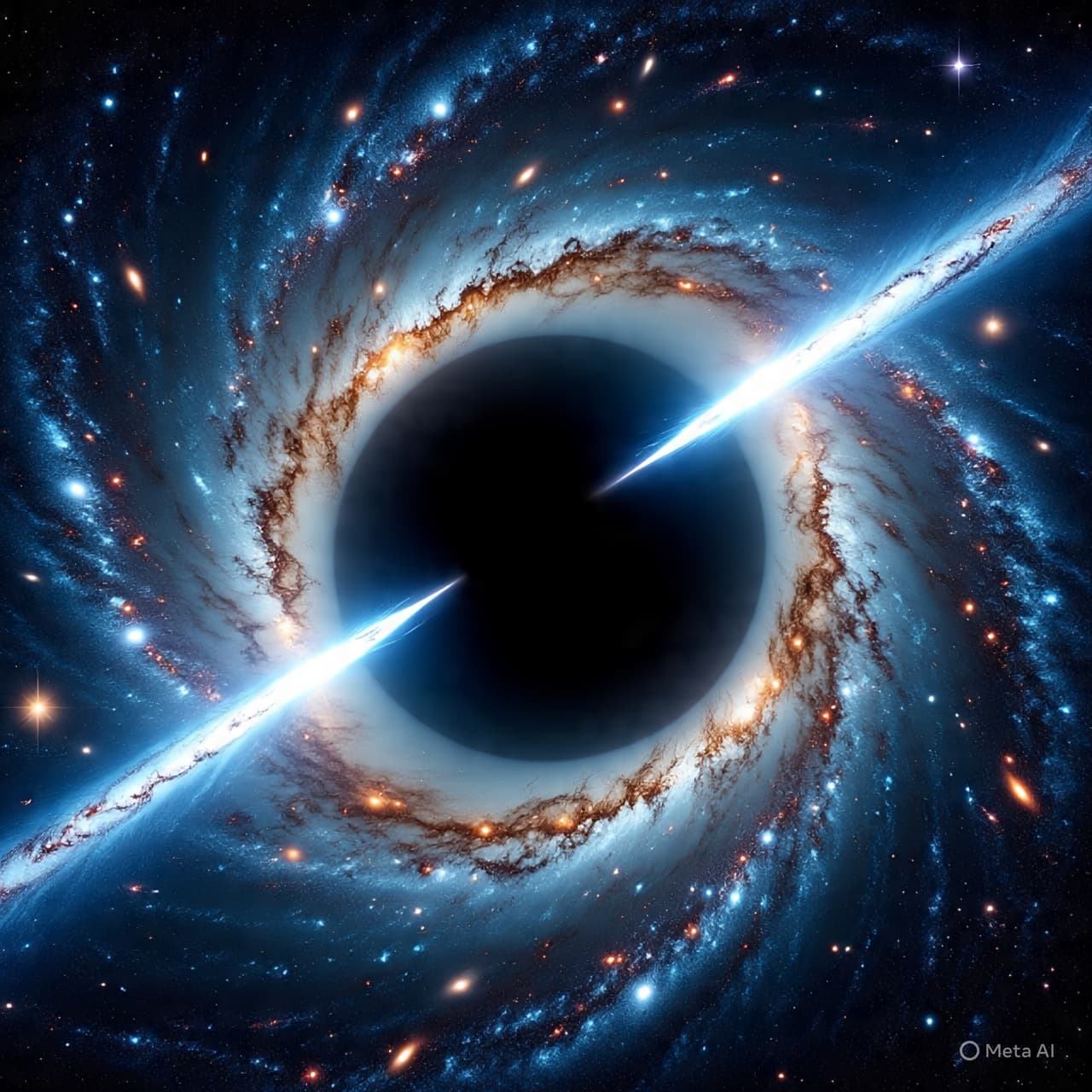
The universe is a vast expanse where light and creation often seem to dance in a delicate balance. However, in certain regions, this rhythm appears to slow, as galaxies that once brimmed with new stars begin to dim. At the heart of many of these galaxies lies a powerful yet enigmatic force: the Supermassive Black Hole. These colossal entities, with masses ranging from millions to billions of times that of our Sun, exert a profound influence on their surroundings, shaping the cosmic landscape in ways that scientists are only beginning to unravel.
Recent research in astrophysics has illuminated the connection between supermassive black holes and the deceleration of star formation across galaxies. This phenomenon does not occur through direct interaction but rather through the immense energy released as matter spirals into the black hole. As this matter accelerates and heats up, it generates powerful jets and radiation that can extend far beyond the black hole itself, impacting the surrounding galaxy.
The process of star formation relies heavily on the presence of cold, dense clouds of gas that collapse under the force of gravity. However, when energy from a central black hole heats these clouds or pushes them away, the conditions necessary for star formation become increasingly difficult to achieve. The gas may either disperse or remain too warm to condense, leading to a significant slowdown in the birth of new stars.
Observations published in reputable journals such as Nature, along with data from NASA and the European Space Agency, suggest that this effect is not confined to individual galaxies. Instead, it may play a crucial role in shaping star formation patterns across the universe, influencing the evolutionary trajectory of galaxies over billions of years. This insight underscores the intricate balance within cosmic processes, where black holes, often viewed as harbingers of destruction, also contribute to the structural integrity of galaxies.
The energy released by supermassive black holes acts as a form of feedback, regulating the conditions under which stars can form. This dynamic interaction reveals a quieter aspect of cosmic evolution, characterized by intervals of restraint where the pace of star formation slows. These periods are not permanent; rather, they shape the overall pattern of galactic evolution, determining how galaxies change over time.
Understanding the scale of these processes is challenging, as they unfold over millions and billions of years across vast distances. Yet, the connection remains clear: a central black hole influences the broader galactic system, acting as a gravitational anchor that shapes the distribution of light and matter.
As research progresses, scientists are refining their models to better describe how this feedback mechanism operates. By integrating observations from advanced telescopes and sophisticated simulations, each new piece of data enhances our understanding of how galaxies navigate cycles of activity and quietude. The implications of these findings extend beyond individual galaxies, offering insights into the fundamental processes that govern the universe's evolution.
In summary, studies indicate that the energy emitted by supermassive black holes can significantly suppress star formation by heating or dispersing gas within galaxies. This phenomenon plays a pivotal role in shaping the cosmic landscape and influencing how stars form across the universe over time.
Published by Banx Network. This article is part of the Banx decentralized media programme, powered by the BXE token on the XRP Ledger.



