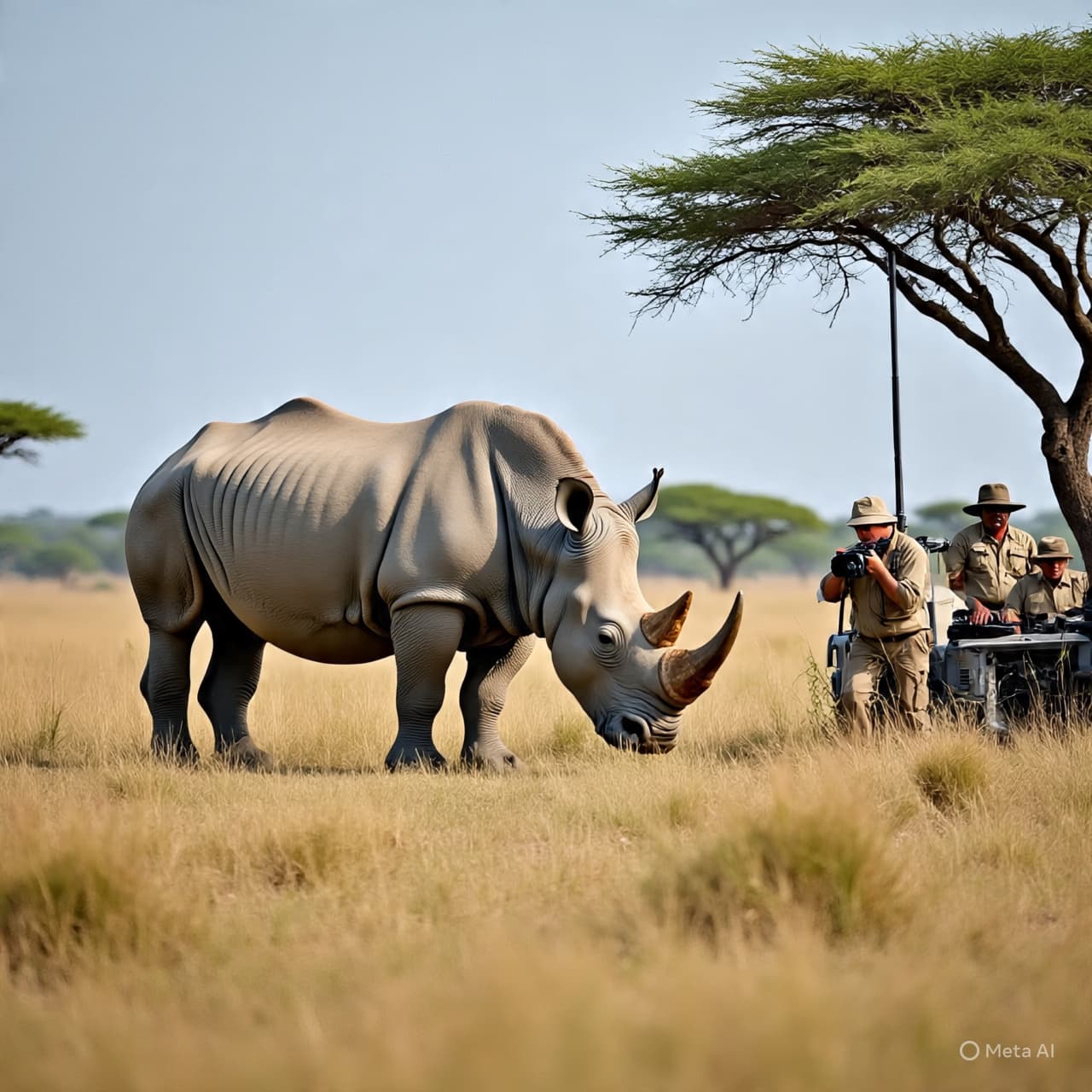
In the soft hush before sunrise, when the first amber blush of light slips between acacia branches and across quiet grasslands, there is a sense of poised possibility — a moment when the natural world seems both fragile and enduring. So too, in these early weeks of the year, has emerged a new kind of alliance between human curiosity and the wild’s instinctive rhythms. It is an alliance that, like those first quiet rays, reaches out to illuminate possibilities in the long journey of restoring landscapes once stripped of their fullness.
At the heart of this partnership lies a shared belief: that understanding and supporting the return of a species can ripple outward to strengthen entire ecosystems. The Duke University Nicholas School of the Environment and African Parks, renowned for its protected area management across the continent, have joined in a research collaboration that builds on one of Africa’s most ambitious contemporary conservation efforts — the rewilding of southern white rhinoceros.
The partnership is animated by a simple yet powerful idea: bringing scientific rigour to the practice of rewilding — the intentional reintroduction of species into ecosystems where they once belonged — and using those insights to strengthen future conservation actions. In this case, the subject is the Rhino Rewild project, a decade-long initiative designed to reintroduce up to 2,000 southern white rhinos into protected areas across Africa. African Parks plans to relocate roughly 300 rhinos a year to secure habitats, helping to replenish populations and reinforce the species’ role in shaping savanna ecology.
Thanks to an anonymous $2 million gift split between Duke and African Parks, this collaboration will bring faculty, students, and conservation practitioners together to collect and analyze ecological data tied to these reintroductions. Drones, satellite monitoring, and field surveys will help researchers observe how rhinos — once a defining presence in many African grasslands — interact with soil, vegetation, waterholes, and other wildlife. By assessing ecological outcomes, the partnership aspires to refine rewilding approaches so that they can be deployed with greater effectiveness and confidence.
For scientists at Duke’s Nicholas School, the opportunity is both scholarly and deeply practical. The partnership opens doors for students and faculty to engage directly with conservation work on the ground, translating classroom learning into real-world discovery. Through social science research, the alliance will also explore how wildlife restoration affects adjacent communities — a reminder that people and ecosystems are part of the same evolving story.
Across Africa, African Parks has spent decades building collaborative frameworks with governments, local communities, and technical partners. The organization manages 24 protected areas in 13 countries, covering millions of hectares of savannas, wetlands, and forests. These landscapes not only support iconic species but also provide habitats for a kaleidoscope of lesser-known wildlife and are integral to local livelihoods and regional tourism.
Rhino Rewild itself began when African Parks acquired the world’s largest captive rhino breeding operation — encompassing about 2,000 animals — with the intention to phase out captive breeding and return these majestic creatures to the wild. Early efforts have already moved hundreds of rhinos into secure reserves, aided by veterinary teams, tracking technologies, and community-based wildlife stewardship. Over time, these rhinos are expected to reestablish ecological processes that underpin healthy grassland dynamics and support biodiversity.
Yet the scientific questions behind these translocations extend beyond counting noses or tallying rhino numbers. They ask: How does the presence of large herbivores alter plant communities and water distribution? Do rhinos help shape landscapes in ways that make them more resilient to drought or other stresses? What patterns emerge when the movements of these animals intersect with patterns of human land use? By examining these threads, the Duke–African Parks research partnership hopes to weave a richer understanding of how rewilding can best serve both nature and people.
The effort also reflects a subtle shift in conservation thinking — away from isolated interventions toward integrated, evidence-informed strategies. It acknowledges that restoring lost biodiversity is as much a matter of careful observation, documentation, and adaptation as it is about courage and commitment. It honors both the scientific and the intuitive dimensions of conservation: measured assessment and reverent attention to the rhythms of life in the wild.
In the quieter moments before fields stir into motion, the grasses listen for the steady footfalls of returning giants. Soon, those footsteps may be charted not only on open plains but in datasets, maps, and research papers that contribute to a larger conversation about coexistence and restoration. In this convergence of minds — academic and ecological — there is a hopeful cadence: that through partnership, patience, and principled inquiry, landscapes once diminished can find a renewed balance.
The partnership between the Nicholas School of the Environment and African Parks was announced in early 2026 and is supported by an anonymous donor gift of $2 million to fund collaborative research on rhino rewilding and its ecological outcomes. It will involve faculty, students, and African Parks researchers working across protected areas where southern white rhinos are being reintroduced, with the aim of informing future conservation practices and strengthening ecosystem restoration efforts.
AI IMAGE DISCLAIMER Visuals are created with AI tools and are not real photographs.
SOURCES ATTA® Advisors / ATTA Media Network Duke Today Rhino Rewild (African Parks initiative) African Insider / AFP reporting African Parks annual reports
Published by Banx Network. This article is part of the Banx decentralized media programme, powered by the BXE token on the XRP Ledger.