

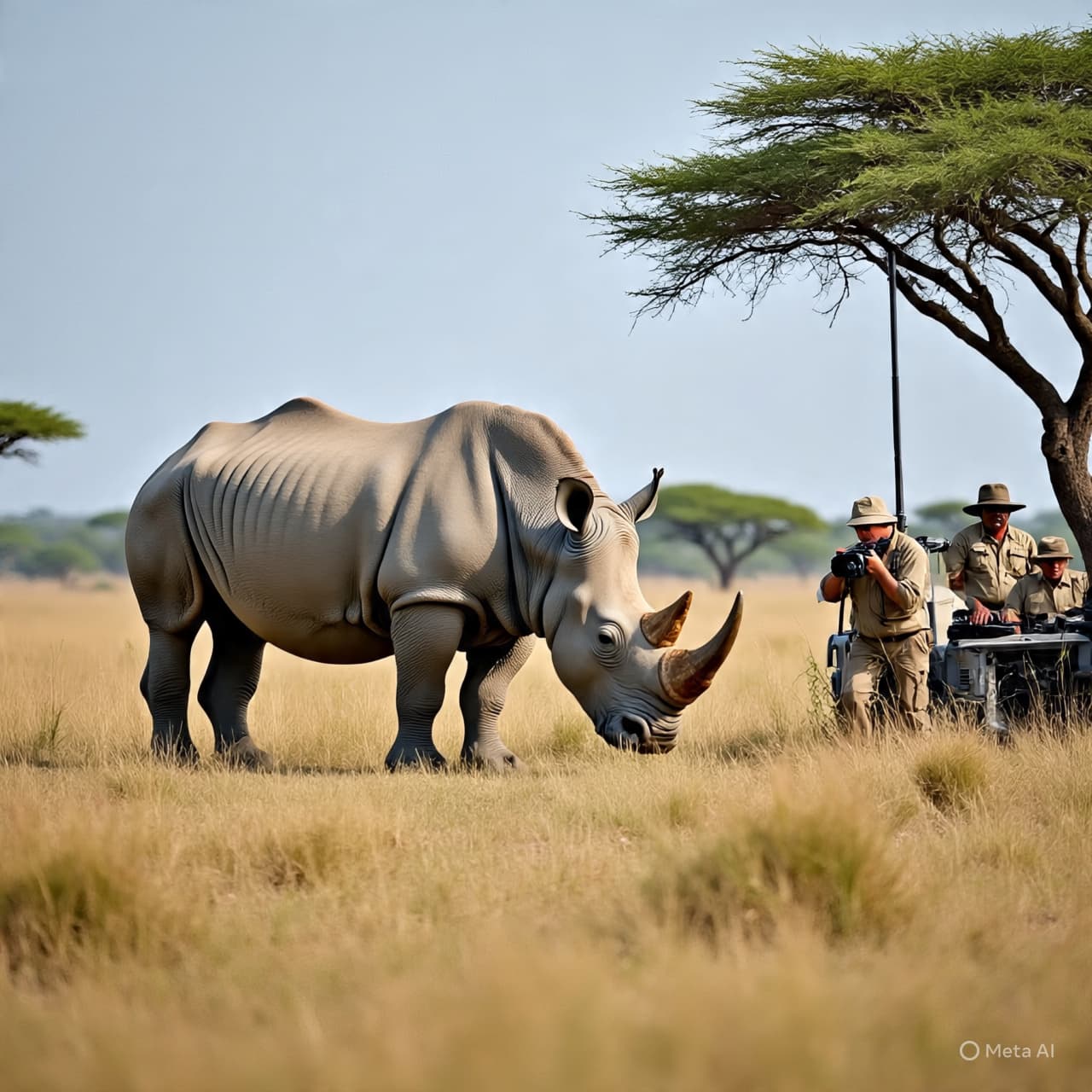
Key Highlights
- New Partnership:Duke University collaborates with African Parks for rhino rewilding.
- Funding:An anonymous $2 million donation supports the initiative.
- Ecological Impact:The project aims to restore ecosystems and engage local communities.
In the soft hush before sunrise, when the first amber blush of light slips between acacia branches and across quiet grasslands, there is a sense of poised possibility — a moment when the natural world seems both fragile and enduring. This sentiment mirrors the emergence of a new alliance between human curiosity and the instinctive rhythms of the wild. This partnership, like the first quiet rays of dawn, seeks to illuminate the path toward restoring landscapes that have been stripped of their fullness.
At the heart of this collaboration is a shared belief: understanding and supporting the return of a species can ripple outward to strengthen entire ecosystems. Duke University’s Nicholas School of the Environment has joined forces with African Parks, a leader in protected area management across Africa, to embark on a research initiative focused on one of the continent's most ambitious conservation efforts — the rewilding of the southern white rhinoceros.
This partnership is driven by a powerful idea: to bring scientific rigor to the practice of rewilding — the intentional reintroduction of species into ecosystems where they once thrived. The Rhino Rewild project, a decade-long initiative, aims to reintroduce up to 2,000 southern white rhinos into protected areas across Africa. African Parks plans to relocate approximately 300 rhinos each year to secure habitats, thereby replenishing populations and reinforcing the species’ ecological role.
Thanks to an anonymous $2 million donation, split between Duke and African Parks, this collaboration will unite faculty, students, and conservation practitioners to collect and analyze ecological data related to these reintroductions. Utilizing drones, satellite monitoring, and field surveys, researchers will observe how rhinos — once a defining presence in many African grasslands — interact with soil, vegetation, waterholes, and other wildlife. By assessing these ecological outcomes, the partnership aspires to refine rewilding approaches for greater effectiveness and confidence.
For scientists at Duke’s Nicholas School, this opportunity is both scholarly and practical. The partnership opens doors for students and faculty to engage directly with conservation work on the ground, translating classroom learning into real-world applications. Additionally, through social science research, the alliance will explore how wildlife restoration impacts adjacent communities, emphasizing that people and ecosystems are part of the same evolving narrative.
African Parks has spent decades building collaborative frameworks with governments, local communities, and technical partners. The organization manages 24 protected areas across 13 countries, covering millions of hectares of savannas, wetlands, and forests. These landscapes not only support iconic species but also provide habitats for a diverse array of lesser-known wildlife, integral to local livelihoods and regional tourism.
The Rhino Rewild initiative began when African Parks acquired the world’s largest captive rhino breeding operation, encompassing about 2,000 animals, with the intention of phasing out captive breeding and returning these majestic creatures to the wild. Early efforts have already relocated hundreds of rhinos into secure reserves, supported by veterinary teams, tracking technologies, and community-based wildlife stewardship. Over time, these rhinos are expected to reestablish ecological processes that underpin healthy grassland dynamics and support biodiversity.
However, the scientific inquiries behind these translocations extend beyond mere population counts. They probe questions such as: How does the presence of large herbivores alter plant communities and water distribution? Do rhinos help shape landscapes in ways that enhance resilience to drought or other stresses? What patterns emerge when the movements of these animals intersect with human land use? By examining these threads, the Duke–African Parks research partnership aims to weave a richer understanding of how rewilding can best serve both nature and humanity.
This effort also reflects a subtle shift in conservation thinking — moving away from isolated interventions toward integrated, evidence-informed strategies. It acknowledges that restoring lost biodiversity is as much a matter of collaboration and community engagement as it is about the species themselves, paving the way for a more sustainable coexistence between wildlife and people.
Published by Banx Network. This article is part of the Banx decentralized media programme, powered by the BXE token on the XRP Ledger.




