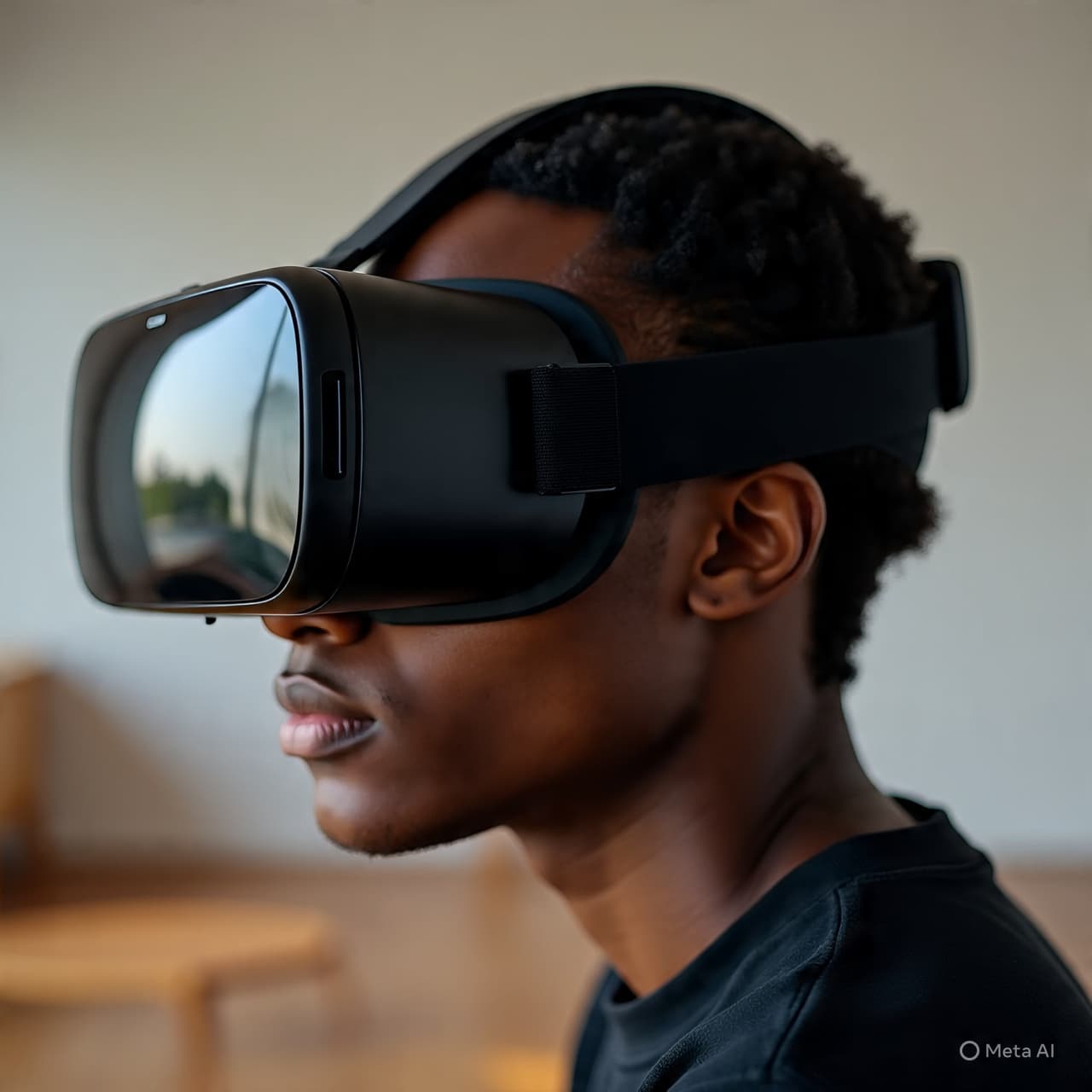
There is a particular stillness that comes with putting on a headset. The room fades, edges soften, and the familiar weight of walls gives way to something less certain. Oculus has lived in that space for more than a decade now, suspended between what technology promises and what people are ready to inhabit. Its strategy, often discussed in quarters and earnings calls, feels better understood as a long walk rather than a sprint—measured, sometimes wandering, and frequently misunderstood from the roadside.
When Oculus first emerged, it carried the urgency of invention. The early days were filled with prototypes, developer kits, and the hum of expectation that accompanies new frontiers. Virtual reality was framed as imminent, a doorway about to swing wide. But time, as it often does, slowed the moment. Adoption arrived unevenly. Hardware matured faster than habits. What followed was not retreat, but a recalibration—an adjustment of pace that would come to define Oculus’s longer strategy.
Under Meta’s stewardship, Oculus shifted from being a singular product into an ecosystem in progress. The Quest line reflected this change, untethered from powerful PCs and shaped instead for accessibility and repetition. Each iteration did not attempt to announce a final destination, but rather to lower the step into the experience. Comfort improved, friction eased, and the devices became less like equipment and more like objects meant to be picked up without ceremony. The ambition remained large, but its expression grew quieter.
This long strategy has often been mistaken for hesitation. Critics have pointed to slower-than-hoped consumer uptake, to content libraries that feel exploratory rather than definitive, and to a metaverse vision that seems perpetually over the horizon. Yet Oculus’s trajectory suggests a different reading. Rather than forcing virtual reality into daily life, the company appears to be waiting for daily life to make room for it. Fitness applications, collaborative workspaces, and social presence experiments arrive not as declarations, but as questions posed gently to users.
Investment patterns reinforce this patience. Billions have flowed into research, optics, hand tracking, spatial audio, and mixed reality—foundational work that rarely produces immediate applause. The emphasis has increasingly moved toward blending realities rather than replacing one with another, acknowledging that people prefer continuity over rupture. In this sense, Oculus’s strategy mirrors architecture more than spectacle: reinforcing beams, testing load, adjusting angles long before a skyline is visible.
There is also an acceptance, implicit if not always stated, that cultural readiness cannot be engineered on a release schedule. Gaming found its footing first, but productivity, education, and social interaction are advancing at their own tempos. Oculus has continued to seed these spaces, knowing that many will lie dormant for years before conditions align. The long view assumes that presence, once normalized, will feel less like novelty and more like infrastructure.
As of now, Oculus remains a work in progress rather than a finished argument. Its headsets are lighter, its software more stable, its ambitions still expansive. The strategy has not abandoned scale or significance; it has deferred them. Virtual reality, in this framing, is not late—it is early in a longer cycle than originally imagined.
Meta continues to position Oculus as a cornerstone of its future-facing investments, integrating mixed reality features and expanding developer tools while acknowledging near-term uncertainty. The company has stated that progress will be incremental and adoption uneven, with long-term payoff remaining the central objective rather than immediate dominance.
AI Image Disclaimer Illustrations were created using AI tools and are not real photographs.
Sources (Media Names Only) The Wall Street Journal The Verge Bloomberg Wired MIT Technology Review
Published by Banx Network. This article is part of the Banx decentralized media programme, powered by the BXE token on the XRP Ledger.