In the gentle hush of a calm sea at dawn, when light first brushes coral arms and gelatinous bells of jellyfish sway like quiet flags, one begins to sense that form and motion are intertwined in ways deeper than mere appearance. The sea’s creatures, with their astonishing variety of shapes, seem to embody nature’s poetry — a language written in curves and pulses that speak of life’s unfolding through time.
It is precisely this poetry that a new study seeks to apprentice itself to, not by cataloging gene sequences alone, but by finding the mechanical “grammar” that underlies how bodies take their shapes. Scientists working at the European Molecular Biology Laboratory and the University of Geneva have found that a simple set of mechanical rules — parameters describing how tissues bend, stretch, and generate force — can account for the distinct body forms seen across related species like jellyfish, corals, and sea anemones.
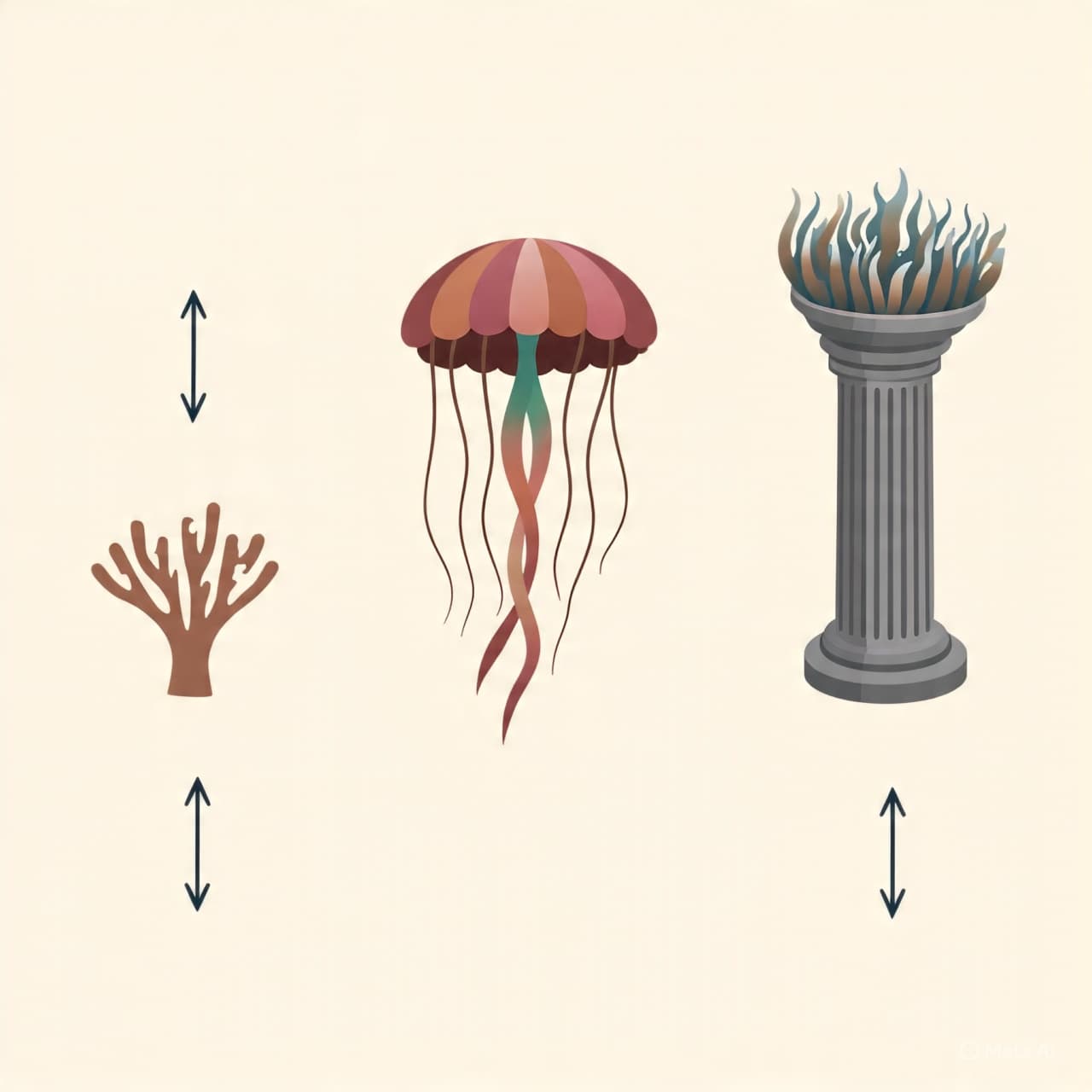
These animals, belonging to the phylum Cnidaria, share common ancestry yet display a dazzling range of forms: the umbrella‑like bells of jellyfish where mesoglea — the water‑rich, springy matrix between tissue layers — supports their gentle locomotion; the rigid coral polyps that build stony edifices rising from the sea floor; the varied contours of anemones waving tentacles in rhythmic dance. Traditional genetics provides part of the story, illuminating the instructions embedded in DNA. But genes alone cannot whisper how a lantern‑shaped larva stretches here, or a squat coral polyp spreads there.
Combining experimental observations with the subtle language of physics and mathematical modeling, the researchers distilled three mechanical modules — abstracted elements of internal force and tissue behavior — that can be “tuned” like dials to produce various elongations and asymmetries along the body axis. By adjusting these hidden parameters, their models recreate the spectrum of shapes seen among cnidarians. This blend of theory and empiricism echoes a century‑old insight proposed by naturalist D’Arcy Thompson, who argued that physical law and form are inseparable partners in life’s unfolding.
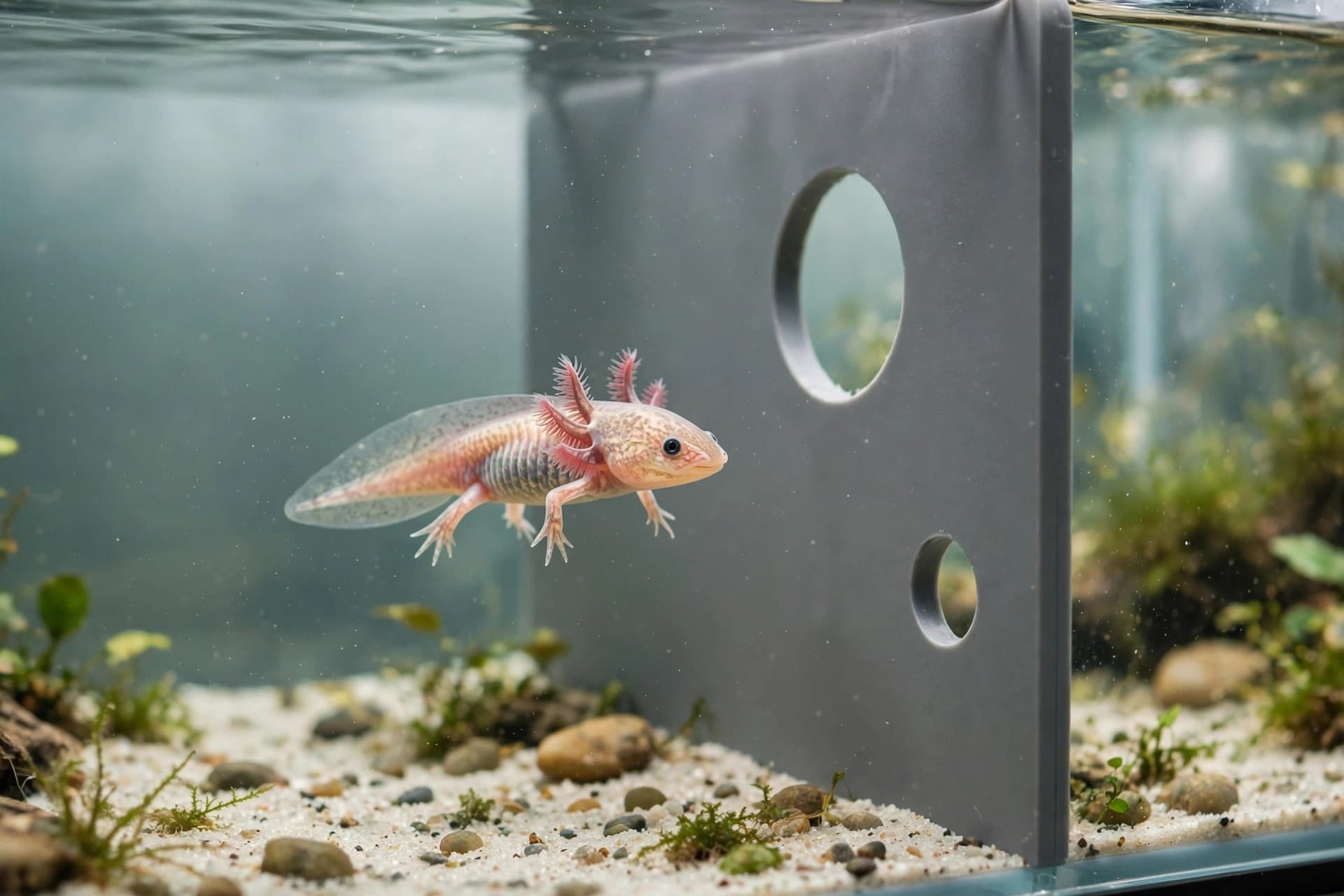
To test these ideas, the team gently perturbed the shape‑controlling modules in the sea anemone Nematostella. In doing so they witnessed larvae that are normally long and narrow take on a round form when a single mechanical parameter was altered. Only by adjusting multiple modules could more complex changes — reminiscent of different species — be coaxed forth. Such experiments suggest that these mechanotypes are not mere labels, but principled, predictive descriptors of biological form.
Within these unfolding patterns lies a humble truth: shape is not an arbitrary blossom of genetic whim, but an emergent property of forces at play deep within tissues, shaped by evolution over eons. Genes provide the potential, yes, but physics gives it form and nuance. In this light, the difference between a bell‑shaped jellyfish drifting on currents and a coral polyp anchored in place becomes a matter of how cells collectively push, pull, and resist — a dance of tension and relaxation written in living matter.
In scientific terms, the study proposes the existence of mechanotypes — combinations of tissue mechanical properties — that help predict and explain body shape variation in cnidarians. By identifying key mechanical modules controlling elongation and polarity, and testing perturbations experimentally, researchers show that these physical parameters can quantitatively influence morphogenesis. This work integrates physics and developmental biology to extend understanding of how form arises beyond genetic sequence alone.
AI Image Disclaimer: Visuals are AI‑generated and serve as conceptual representations.
Sources: Earth.com, Mirage News reporting on scientific research published in Cell.
Published by Banx Network. This article is part of the Banx decentralized media programme, powered by the BXE token on the XRP Ledger.