Singapore is a city that has learned to build upward because there is little room to build outward. Roads, apartments, offices and parks share a tightly measured island. Yet even in such a carefully planned landscape, some patches of forest remain places where the city appears to slow down.
One such place is Maju Forest, a 23-hectare area of secondary forest in western Singapore. The government announced plans to clear about two-thirds of it for high-density public housing, prompting an unusual public backlash and renewed discussion about the value of urban green space.
The debate reflects a familiar tension for rapidly developing cities. Housing demand requires land, while forests provide ecological functions that cannot easily be recreated once cleared. Singapore's challenge is intensified by its limited physical size.
The proposed housing would contribute to the country's efforts to expand public housing capacity. Singapore has long relied on high-density development and careful land-use planning to accommodate a large population within a relatively small territory.
But forests provide more than scenery. They offer habitat for plants and animals, help regulate local temperatures and absorb rainwater. Even secondary forests can support biodiversity and provide green corridors within an urban landscape.
The Maju Forest discussion has therefore attracted attention from environmental groups, researchers and residents. The government's response has included adjustments to the proposal, indicating that the planning process remains open to changes.
Singapore's approach to nature has evolved over decades. The city is internationally known for parks, tree-lined streets and efforts to incorporate greenery into urban design. At the same time, the island's continuing development means that some natural areas remain under pressure.
The situation is particularly relevant as cities adapt to hotter climates. Trees can provide shade and reduce heat around buildings and roads, making urban greenery part of climate adaptation as well as conservation.
For planners, the difficulty is that every hectare has multiple possible uses. Land can become housing, infrastructure, recreation space or habitat. Choosing one use often means reducing another, making urban planning an exercise in balancing needs that cannot all be maximized simultaneously.
The Maju Forest discussion does not offer an easy formula. Instead, it reveals the increasingly complex relationship between Singapore's physical growth and its remaining natural spaces. The island must continue providing homes while deciding which landscapes should remain part of the city's future.
For residents walking beneath the trees, the forest may seem far removed from national land-use calculations. Yet that quiet patch of green is now part of a much larger conversation about what Singapore should look like when today's housing needs and tomorrow's environmental needs meet on the same limited piece of land.
SEO-friendly Slug singapore-maju-forest-housing-environment-2026
Hashtags #Singapore #Environment #UrbanPlanning #Housing #Climate #Science #Sustainability #Forests
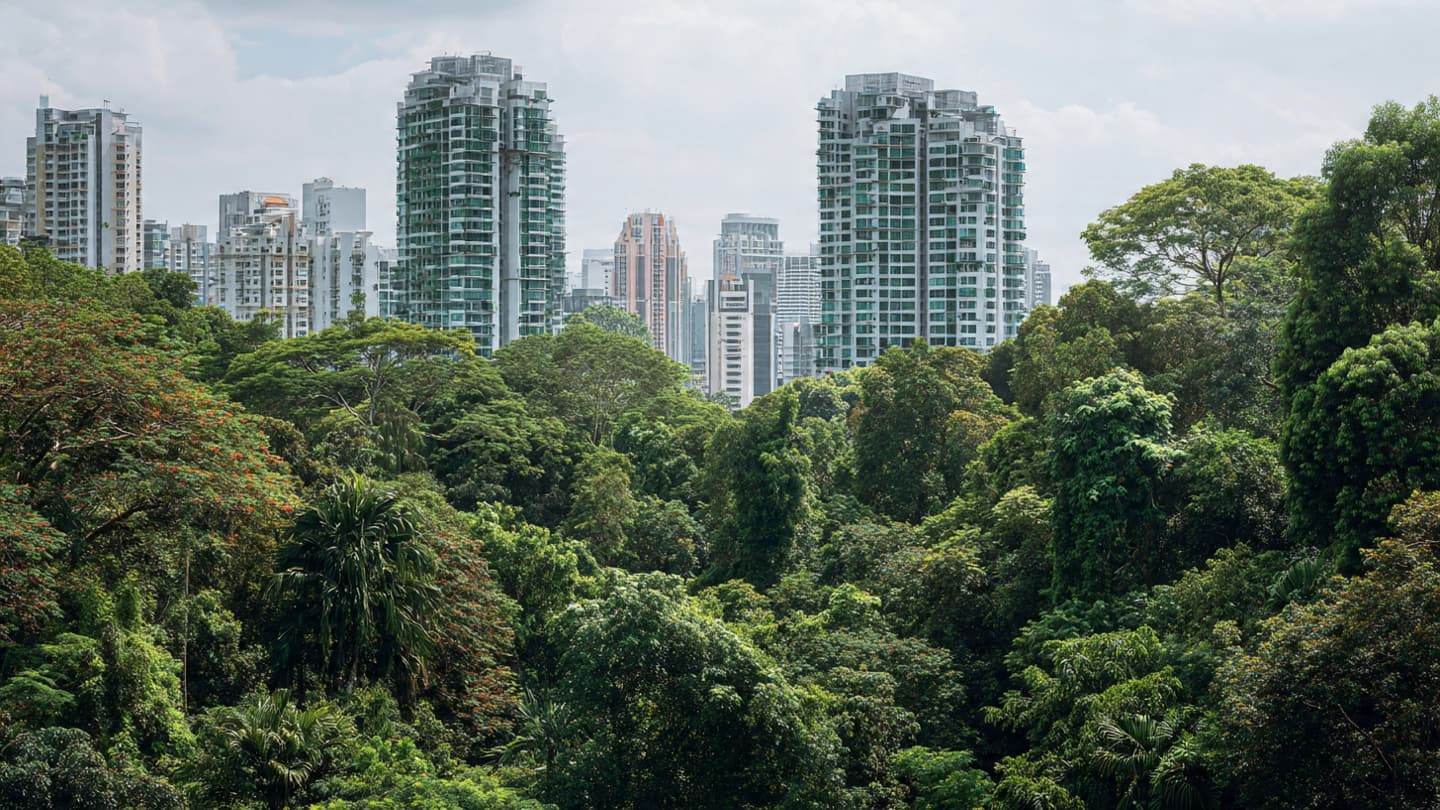
Image Disclaimer The illustrations are AI-generated conceptual representations of Singapore's urban and natural landscapes and do not depict the actual Maju Forest development site.
Sources Reuters National Parks Board Singapore Government of Singapore
Published by Banx Network. This article is part of the Banx decentralized media programme, powered by the BXE token on the XRP Ledger.