In the early light before cities fully stir, there is a moment when the air feels suspended between memory and forecast. The streets are quiet, the sky a pale wash of promise, and somewhere beyond the horizon, currents are shifting—oceans warming by degrees too subtle to feel, ice receding in increments too vast to see. Climate change rarely announces itself in a single dramatic gesture. It arrives in patterns: in seasons that drift, in storms that linger, in records quietly broken.
Across laboratories, coastal observatories, and policy forums, a growing chorus of scientists has begun to speak in measured but urgent tones. The world, they say, remains unprepared. Not for the science—much of that has been painstakingly assembled over decades—but for the scale and coordination required to meet what the science now makes clear.
Under the auspices of the United Nations, assessments by the Intergovernmental Panel on Climate Change have charted the trajectory of a warming planet with increasing precision. Each report synthesizes thousands of studies, mapping the interplay of greenhouse gases, land use, energy systems, and human vulnerability. Yet as emissions continue and temperatures edge upward, researchers argue that the global response remains fragmented—uneven across regions, sectors, and political timelines.
Calls for a comprehensive global assessment are not about rewriting established findings. Rather, they are about recalibrating collective readiness. Scientists emphasize that adaptation efforts—reinforcing infrastructure, safeguarding water supplies, preparing health systems—are advancing too slowly to match projected impacts. Meanwhile, mitigation strategies aimed at reducing emissions are still falling short of targets outlined in agreements such as the Paris Agreement.
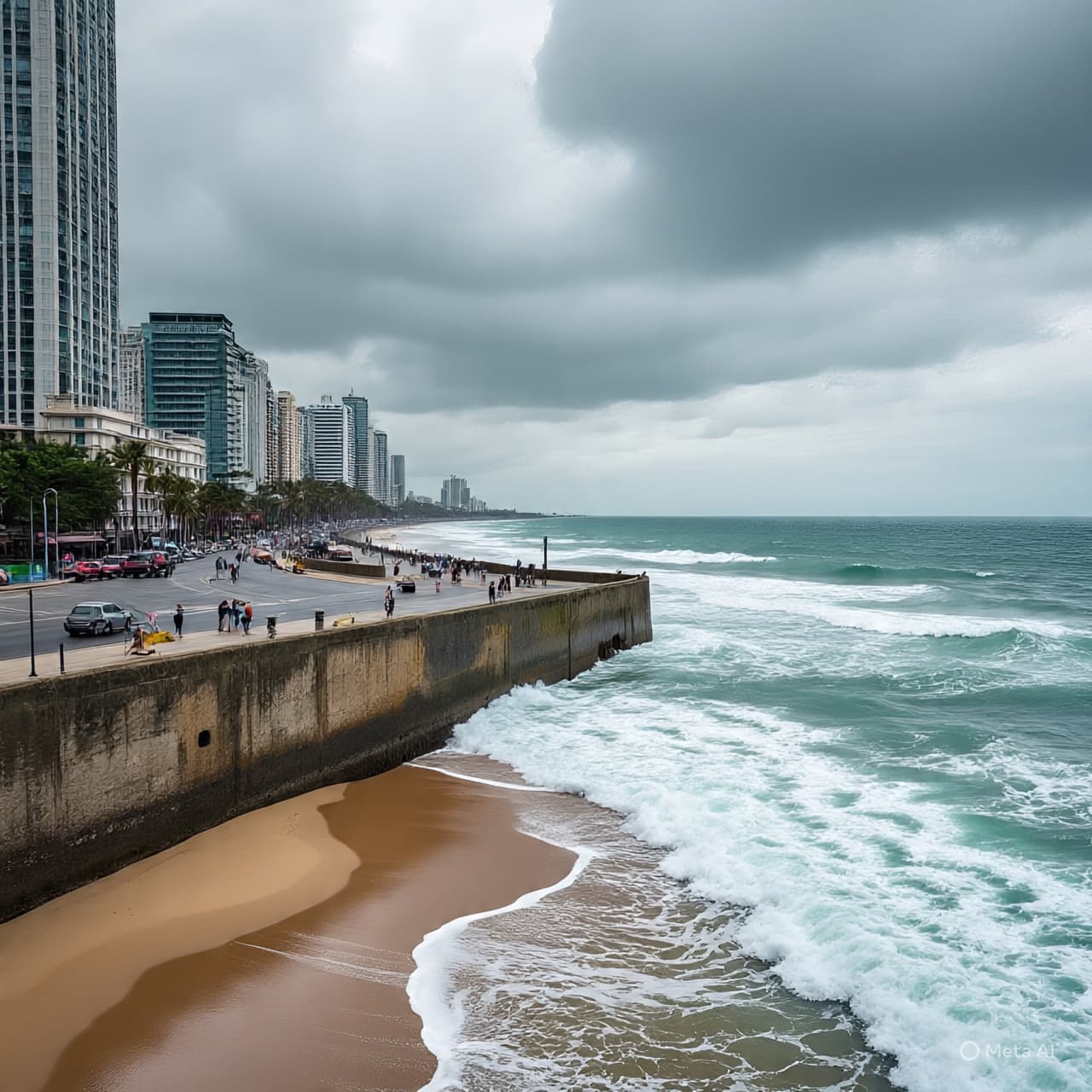
The concern is less about a lack of data than about alignment. Climate systems operate without regard for borders, yet responses are often defined by them. Wealthier nations may invest in sea walls and resilient grids, while vulnerable communities confront rising seas and intensifying drought with fewer resources. A global assessment, advocates argue, would measure not only atmospheric concentrations but institutional preparedness—how laws, economies, and social systems are adapting to a transformed climate.
Institutions including the World Meteorological Organization have documented consecutive years of record-breaking heat. Glaciers retreat; ocean temperatures climb; extreme weather events stretch emergency systems thin. These observations form a steady backdrop to scientific appeals: not a sudden revelation, but an accumulation.
There is also a deeper question embedded in the call. Preparedness is not solely technical. It is cultural and temporal. Democracies operate in electoral cycles; markets respond to quarterly reports; infrastructure is built for decades. Climate change unfolds across centuries while demanding decisions in the present tense. Bridging that temporal divide requires frameworks that integrate long-term risk into immediate governance.
Researchers envision an assessment that synthesizes mitigation progress, adaptation capacity, and socioeconomic vulnerability into a single, transparent portrait. Such a report could guide investment, inform policy, and clarify where commitments diverge from outcomes. It would not predict the future with certainty but outline the contours of plausible pathways.
In quiet coastal towns, in agricultural fields facing shifting rainfall, in urban neighborhoods where heat lingers into the night, the abstract becomes tangible. Preparedness is measured in cooling centers and crop varieties, in insurance frameworks and evacuation routes. It is also measured in trust—whether communities believe institutions can respond at the scale required.
The phrase “the world remains unprepared” is not an indictment so much as a reflection. It acknowledges the distance between understanding and implementation. The science has illuminated the terrain; the path across it remains uneven.
As another season turns, temperatures will be logged, graphs updated, reports drafted. A global assessment, if realized, would join this evolving archive—a mirror held up to collective effort. Whether it alters the trajectory depends not only on the clarity of its findings but on the willingness to treat them as guideposts rather than footnotes.
Morning gives way to afternoon. The air warms almost imperceptibly. The question lingers not in the sky but in the structures beneath it: how prepared we choose to be for what we already know.
Published by Banx Network. This article is part of the Banx decentralized media programme, powered by the BXE token on the XRP Ledger.