
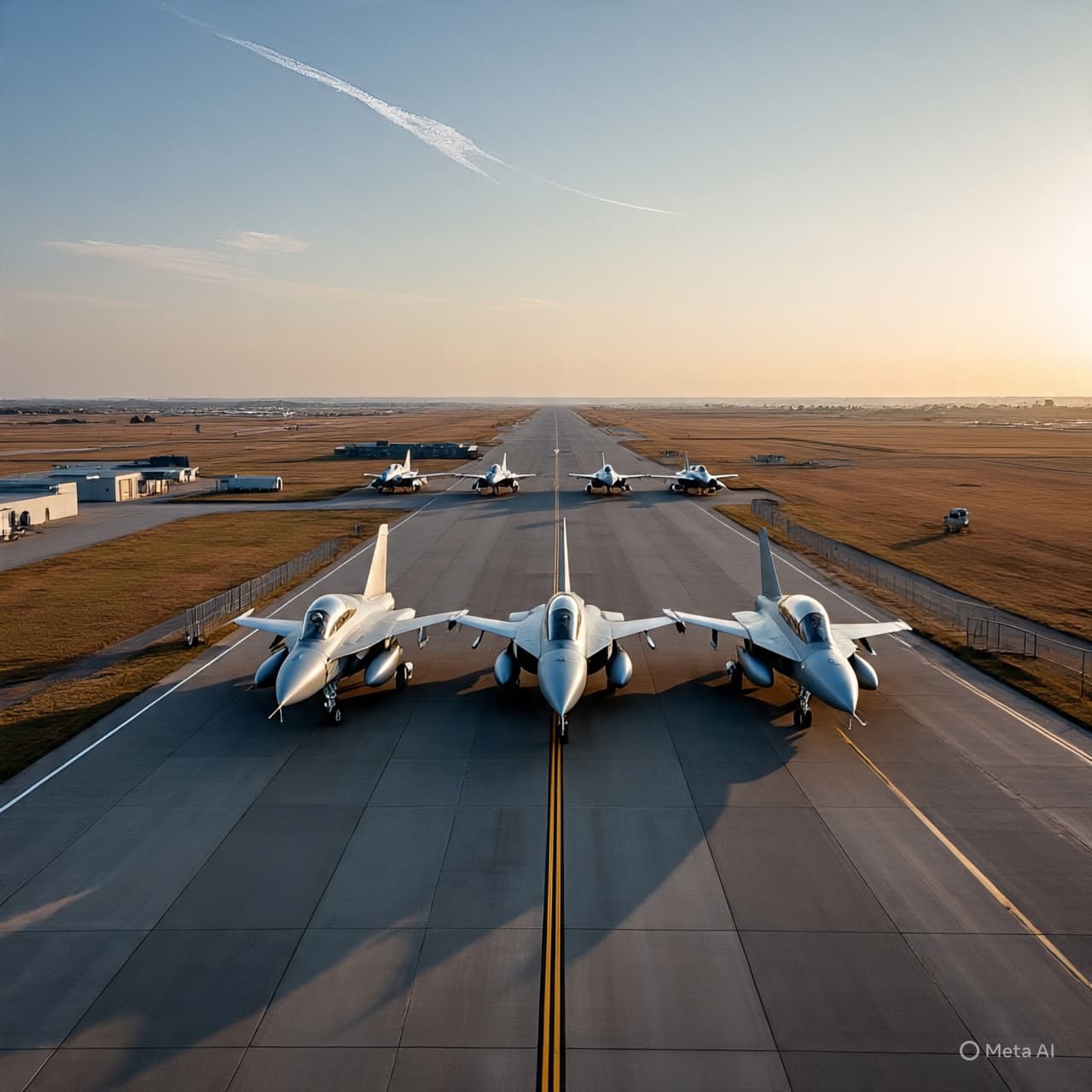
Key Highlights
- U.S. military operations against Iran are currently underway, targeting key military infrastructure.
- President Trump indicated the conflict could last four to five weeks, but may extend longer.
- Regional tensions are escalating, with retaliatory strikes reported and oil prices fluctuating.
In Washington, discussions about wars often revolve around time—weeks, months, or seasons—as if the mere measurement of duration could lessen their impact. Recently, President Donald Trump provided a forecast regarding the ongoing conflict with Iran, suggesting it might last four to five weeks. However, he also cautioned that it could extend “far longer,” a remark that complicates the narrative surrounding the conflict.
Military operations have already commenced, with the U.S. coordinating efforts with Israel to target Iranian military infrastructure, missile capabilities, and strategic facilities. U.S. officials have framed these actions as necessary to counter perceived threats and limit Tehran's influence in the region. The language used emphasizes deterrence and containment, suggesting a strategy focused on calibrated objectives rather than an open-ended occupation. Yet, the ambiguity of “far longer” serves as a reminder that conflicts often exceed initial expectations.
The atmosphere across the region has become increasingly tense. Reports of retaliatory strikes and drone launches have emerged, accompanied by resolute statements from both the U.S. and Iranian officials. Tehran has condemned the attacks as violations of its sovereignty and has indicated its readiness to respond. In Israel, Prime Minister Benjamin Netanyahu has acknowledged that while the campaign may take time, it is not expected to extend into years, reinforcing the notion of a conflict that is intended to be both forceful and limited.
However, the nature of time in conflict is notoriously unpredictable. Markets react swiftly to developments, while diplomatic efforts progress cautiously. Civilians, caught in the crossfire, count the days and nights with growing anxiety. Oil prices have fluctuated in response to the escalating tensions, and regional governments have issued travel advisories, urging restraint. Behind the scenes, diplomats are reportedly exploring avenues to prevent a broader escalation of the conflict.
Currently, the administration's projection of four to five weeks serves more as a marker of intent than a definitive deadline. It signals that the operation is envisioned as a finite engagement. Yet, history teaches that escalation can be durable. Air campaigns can expand, retaliatory actions can alter the landscape of engagement, and objectives can shift under pressure.
As evening descends over capitals separated by vast distances yet interconnected by the consequences of conflict, the pressing question remains: how long will this conflict last, and what form will it take as it unfolds? While weeks may seem fleeting in political discourse, they accumulate weight on the ground. In the uncertain space between forecast and reality, the world watches closely, measuring the gap between planned actions and potential outcomes.
Published by Banx Network. This article is part of the Banx decentralized media programme, powered by the BXE token on the XRP Ledger.



