In residential towers, life is layered—floor upon floor, each level holding its own routines, its own quiet rhythms. Above and below exist in a shared space, connected not only by walls and corridors, but by an unspoken understanding of care. What is held within one level does not fall into another; what is kept is meant to remain.
Yet sometimes, that understanding falters.
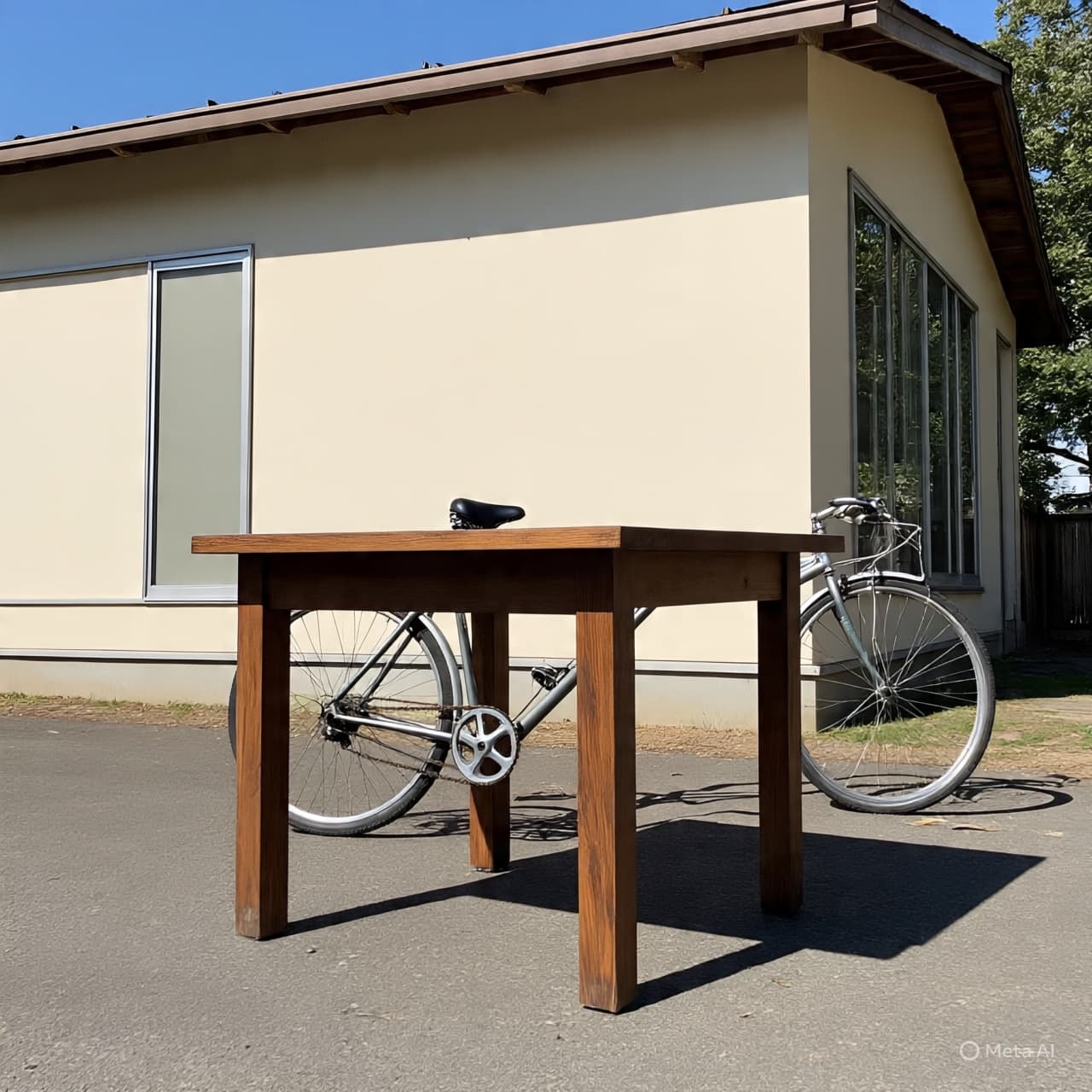
In Sembawang, within the vertical order of a housing block, two separate incidents disrupted that sense of continuity. Objects meant to rest in stillness—a wooden table in one case, a bicycle in another—were instead cast downward, breaking the expected boundary between above and below.
The acts themselves were brief, defined by the sudden movement from height to ground. But their implications extended beyond the moments in which they occurred, introducing risk into spaces ordinarily defined by predictability. For those nearby, the ordinary passage of time was interrupted, replaced by the awareness of what might have been.
Authorities moved to address both incidents, tracing their origins upward to the individuals responsible. Two men were arrested in connection with the separate cases, each involving the act of throwing objects from a height within the residential block.
Such cases often carry a particular weight, not because of what was lost, but because of what could have been. In places where many lives exist in close proximity, the margin between routine and harm can be unexpectedly narrow.
The block itself remains unchanged in structure, its floors still rising in quiet succession. Yet the events linger as a reminder of how quickly that quiet can be disturbed, and how the spaces we share depend on a fragile consistency of care.
Police in Singapore have confirmed that two men were arrested for rash acts after allegedly throwing a wooden table and a bicycle from a Sembawang housing block in separate incidents. Investigations into both cases are ongoing.
AI Image Disclaimer
Visuals are AI-generated and serve as conceptual representations.
Sources
The Straits Times
Channel NewsAsia
TODAY Online
Published by Banx Network. This article is part of the Banx decentralized media programme, powered by the BXE token on the XRP Ledger.