
Key Highlights
- Concealment Incident:A repeat offender hid drugs internally before a court hearing.
- Discovery Process:X-ray scans revealed concealed items, leading to charges.
- Ongoing Case:The matter remains under judicial review as proceedings continue.
In the early hours of a typical court day, the atmosphere is often thick with anticipation and the weight of unspoken stories. The corridors of justice, where the visible and the hidden converge, set the stage for a recent incident that underscores the lengths individuals may go to evade legal scrutiny. On this particular morning, a repeat offender arrived at court not just with legal documents but with a hidden agenda that would soon unravel.
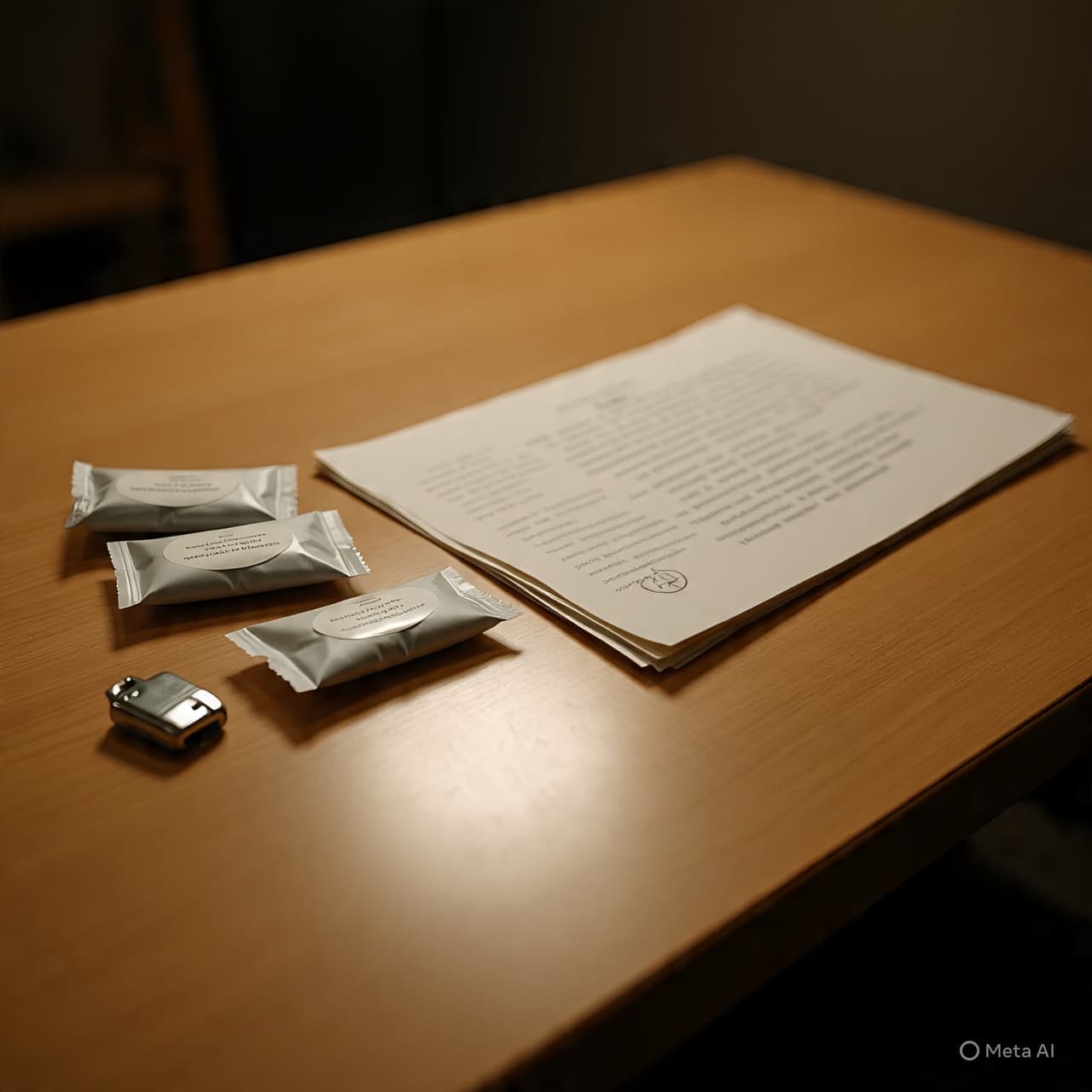
As the court session commenced, the offender's actions prior to entering the courtroom became the focal point of discussion. In a calculated move, he concealed controlled substances within his body, alongside innocuous items like a lighter and a court document. This act of concealment, while seemingly clever, was a desperate attempt to navigate the strictures of the justice system, which is designed to detect such illicit activities.
However, the mechanisms of the court system are often more astute than they appear. Following the offender's court mention, his bail was revoked, and he was remanded for further observation. During routine medical checks, custodial staff noted irregularities that warranted further investigation. An X-ray scan subsequently revealed the hidden items, transforming the narrative from one of concealment to one of exposure.
The items recovered included packets confirmed to contain methamphetamine and diamorphine, substances that carry severe legal repercussions. This incident highlights a broader trend observed in various jurisdictions, where individuals resort to increasingly sophisticated methods to transport illegal substances. The tension between human ingenuity and law enforcement's vigilance continues to evolve, as both sides adapt to the ongoing battle against drug trafficking.
In the courtroom, the language shifts from the personal act of concealment to the formalities of legal proceedings. Charges of drug possession are now on the table, and the offender's fate hangs in the balance as the case progresses. The courtroom transforms into a space where personal actions are scrutinized, and the implications of those actions are laid bare before the law.
As this case unfolds, it serves as a reminder of the complexities inherent in the justice system. The intersection of personal choices and legal consequences creates a narrative that is both compelling and cautionary. The offender's attempt to conceal his actions has not only led to legal ramifications but has also sparked discussions about the lengths individuals will go to in the face of legal challenges.
The matter remains before the court, with further proceedings expected to delve deeper into the circumstances surrounding the concealment and its implications for the offender's future. As the legal process continues, the story of this case will likely resonate beyond the courtroom, reflecting broader societal issues related to drug use and the justice system's response.
Published by Banx Network. This article is part of the Banx decentralized media programme, powered by the BXE token on the XRP Ledger.



