In the far north, where ice sheets stretch toward the horizon and daylight lingers or disappears depending on the season, Greenland exists at a measured distance from the noise of global politics. Yet distance has not meant detachment. In recent days, remarks made far beyond the Arctic Circle have rippled across European capitals, stirring a calm but firm response.
President Donald Trump’s suggestion that the United States could impose tariffs on European countries opposing any move related to Greenland has been met with a collective refusal. The reaction unfolded not as a dramatic rupture, but as a steady assertion of limits — an insistence that trade pressure has no place in questions of sovereignty or alliance solidarity.
In Paris, French President Emmanuel Macron described the idea as unacceptable, framing it as inconsistent with the spirit of partnership that has long defined transatlantic relations. His words reflected a broader European sentiment: that disagreements among allies must be addressed through dialogue rather than economic coercion. The message carried across borders with little variation in tone.
Nordic leaders, for whom Greenland is not an abstract concept but a geographic and historical reality, echoed that view. Sweden’s prime minister and officials in neighboring countries rejected the notion that threats could shape decisions tied to territory or security cooperation. In these responses, there was little theatrics — only a reiteration that sovereignty is not a bargaining chip.
Within the European Union, officials emphasized that introducing tariffs into geopolitical disputes risks eroding trust at a moment when cooperation is already under strain from conflicts elsewhere and shifting global alliances. The concern was less about immediate economic impact than about precedent: what it means when trade is used as leverage against allies rather than competitors.
Britain’s leadership added its voice, calling the tariff threat wrong and out of step with the norms of alliance politics. The response underscored a shared belief that long-standing relationships depend on predictability and restraint, particularly among nations bound by security commitments.
Across these statements, Europe’s position has remained consistent. The issue is not framed as opposition to the United States itself, but as resistance to a method — the use of economic pressure to influence matters of sovereignty. The tone has been firm but measured, signaling that unity does not require confrontation, only clarity.
In straightforward terms, European leaders have rejected President Trump’s threat to impose tariffs over opposition to any U.S. move involving Greenland, calling the approach unacceptable and warning that it could damage transatlantic relations if pursued.
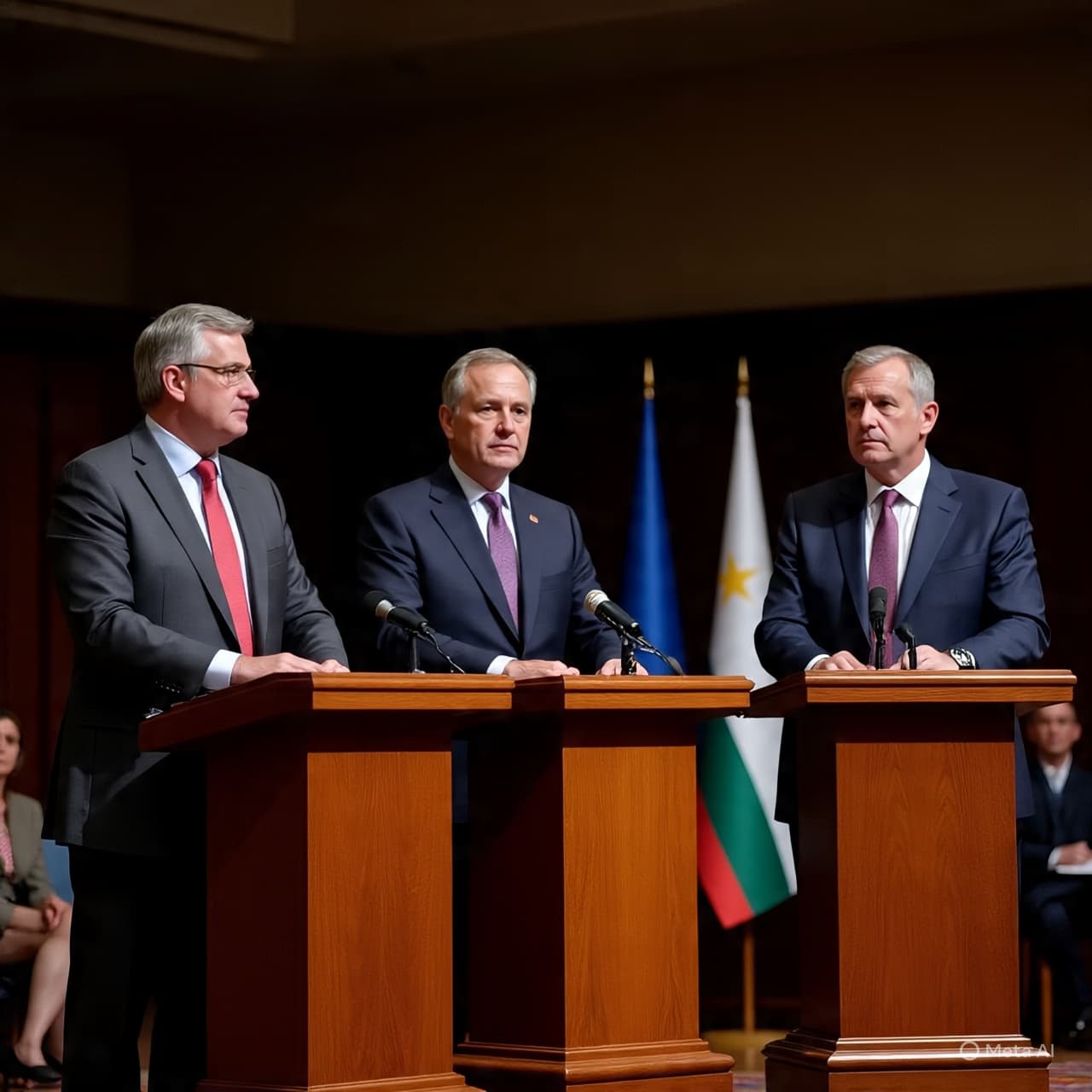
AI Image Disclaimer Visuals are AI-generated and serve as conceptual representations.
Sources (Media Names Only) Reuters Associated Press The Guardian
Published by Banx Network. This article is part of the Banx decentralized media programme, powered by the BXE token on the XRP Ledger.