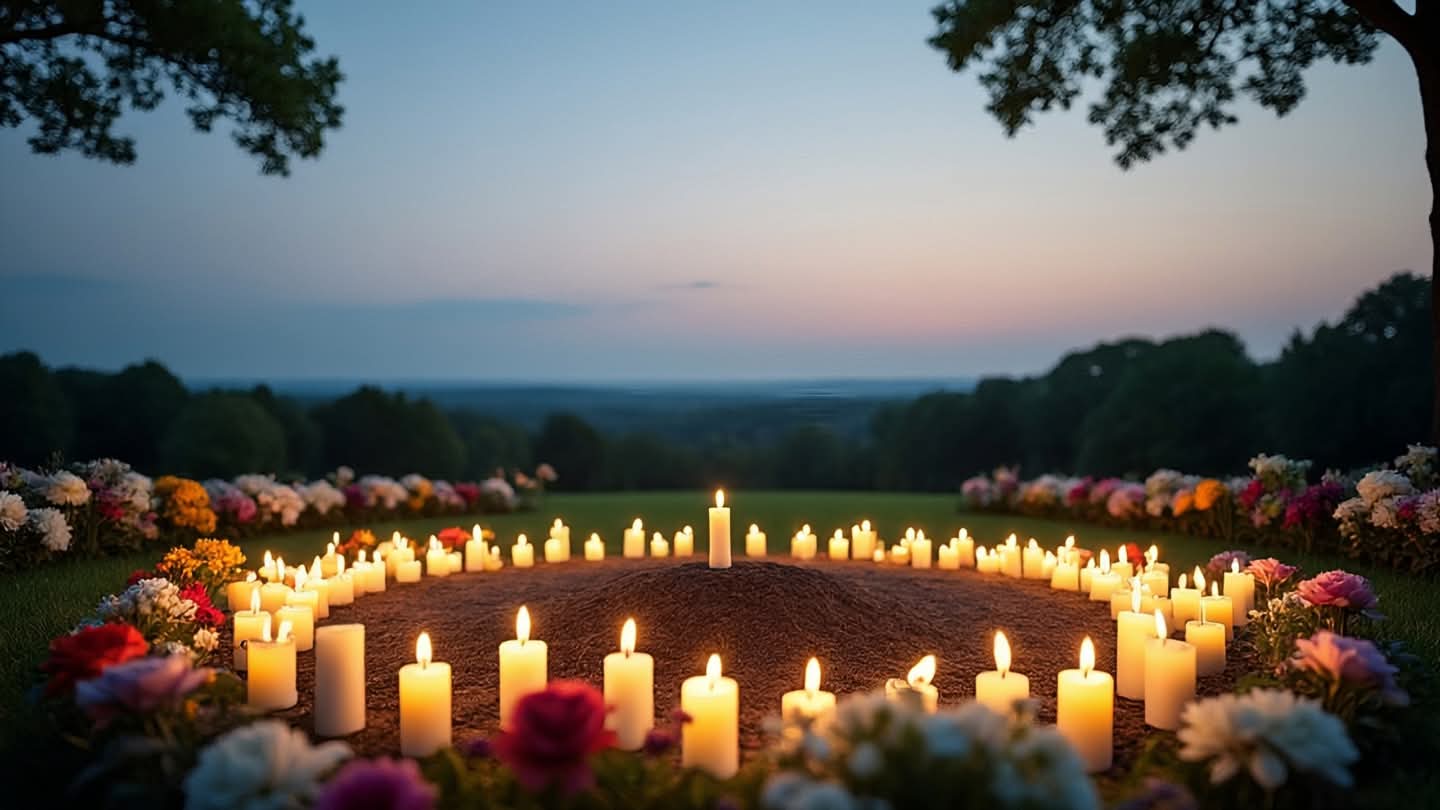
There is a particular stillness that settles over a homecoming. The kettle hums, the garden waits in familiar patience, and the streets carry on as though nothing beyond their borders could disturb the ordinary rhythm of dusk. Yet for those who have stood too long beneath falling shells and open skies streaked with smoke, quiet can feel unfamiliar. It is not silence that returns with them, but echo.
For four years, Richard Pendlebury has reported from the war in Ukraine for the Daily Mail, walking fields torn by artillery and towns emptied of their former noise. He has written of cities under siege, of families huddled in basements, of soldiers holding lines that seem at once fragile and immovable. The conflict, which began with Russia’s full-scale invasion in February 2022, has evolved from swift advances and stunned disbelief into a grinding war of attrition, reshaping landscapes and lives alike.
In his recent reflections, Pendlebury described the toll of sustained exposure to violence—not only on those who fight, but on those who chronicle. He wrote of bad dreams that follow him home, of nights unsettled by the memory of sirens and sudden blasts. The mind, he suggests, does not easily divide the world into frontlines and living rooms. The scenes overlap. The past intrudes.
His warning reaches beyond the personal. After years observing the trajectory of the war, Pendlebury expressed concern that the international community may be underestimating the scale of what could come next. The conflict has settled into a protracted struggle, marked by heavy casualties, shifting territorial lines, and the steady depletion of resources. Western governments continue to provide military and financial assistance to Ukraine, while Russia sustains its campaign through mobilization and industrial production.
Analysts have noted the strain on ammunition supplies, the pressure on defense industries, and the uncertainty surrounding long-term commitments. Discussions across Europe have increasingly turned to preparedness—of stockpiles, of civil defense systems, of political resolve. In Washington and European capitals, debates continue over funding packages and strategic priorities. Yet on the ground, the war remains immediate, measured not in appropriations but in impact craters.
Pendlebury’s perspective carries the texture of proximity. He has walked through villages where windows hang open to winter air, through hospitals where generators hum in place of steady power. His dispatches describe soldiers adapting to drone warfare and civilians adapting to darkness. Over time, the extraordinary becomes routine; destruction becomes a landscape feature rather than a headline.
The fear he articulates is not tied to a single event, but to momentum. A war that endures has a way of widening—drawing in resources, attention, and sometimes new actors. The question he raises is whether societies far from the front have allowed distance to dull urgency. Preparedness, he suggests, is not built overnight; it is cultivated through foresight and acknowledgment.
As governments weigh strategy and publics weigh fatigue, the correspondent returns home between assignments, carrying notebooks filled with testimony. The garden remains. The kettle hums. But sleep does not always come easily.
The war in Ukraine continues into its fifth year, with no comprehensive peace agreement in place. International support for Kyiv remains under debate in several Western legislatures, while Russian forces maintain pressure along multiple fronts. Officials across Europe have called for increased defense readiness amid concerns about the broader security landscape.
AI Image Disclaimer
Illustrations were created using AI tools and are not real photographs.
Source Check (Media Names Only) Daily Mail BBC News Reuters The Guardian Sky News
Published by Banx Network. This article is part of the Banx decentralized media programme, powered by the BXE token on the XRP Ledger.