Night in the region does not arrive all at once. It settles slowly, like a breath held too long, stretching across deserts and coastlines, brushing against cities where lights flicker not only from homes but from warnings. Somewhere between the hum of generators and the quiet of evening prayers, the sky becomes a place of listening—of waiting—for what may cross it next.
In recent days, that sky has carried more than silence. Missiles have traced their paths toward Israel, their movement swift and unannounced except for the sirens that follow them. The rhythm of ordinary life—traffic, conversation, the small rituals of evening—has been interrupted by the need to pause, to look upward, to seek shelter in the brief space between detection and impact. Reports describe injuries, damage to buildings, and interceptions that light the night in brief, sudden arcs.
Yet the movement of objects through the air is only part of the story. Alongside it, words have traveled—statements, denials, assertions—moving between capitals with a different kind of velocity. U.S. President Donald Trump spoke of “very good” and “productive” talks aimed at easing the conflict, suggesting that something, somewhere, was shifting toward resolution.
But from Tehran came a different current. Iranian officials denied that such negotiations had taken place, dismissing the notion of dialogue even as the region remained suspended between escalation and restraint.
Between these two versions—one of conversation, one of its absence—there is a quiet dissonance. It is not loud, like the sound of impact, but it lingers. It stretches across borders, shaping expectations and uncertainties alike. For those watching from within the region, the difference between words spoken and words denied can feel as consequential as the distance between launch and landing.
The conflict itself has unfolded over weeks, rooted in earlier strikes and responses that have expanded beyond a single line of engagement. Exchanges have reached not only Israel and Iran but also neighboring states, drawing a wider geography into its orbit. Airstrikes, drone attacks, and retaliatory actions have created a pattern that is both continuous and difficult to map neatly—an unfolding rather than a sequence.
Meanwhile, the broader effects ripple outward. Energy markets respond to uncertainty, shipping routes face disruption, and the Strait of Hormuz—long a narrow passage with global weight—remains a point of tension. The region’s atmosphere, already heavy with history, now carries an added density, shaped by both action and anticipation.
In this space, the distance between diplomacy and conflict feels unusually narrow. A statement can suggest movement toward calm, even as another rejects it. A pause in planned strikes can exist alongside the continuation of others. The result is not a clear direction but a kind of suspension, where multiple realities seem to unfold at once.
Iran launched new waves of missiles toward Israel on March 24, 2026, causing injuries and damage in several areas. The strikes came as U.S. President Donald Trump said talks to end the conflict were progressing, though Iranian officials denied that any negotiations had occurred. Fighting between Iran, Israel, and allied forces continues, with no immediate indication of de-escalation.
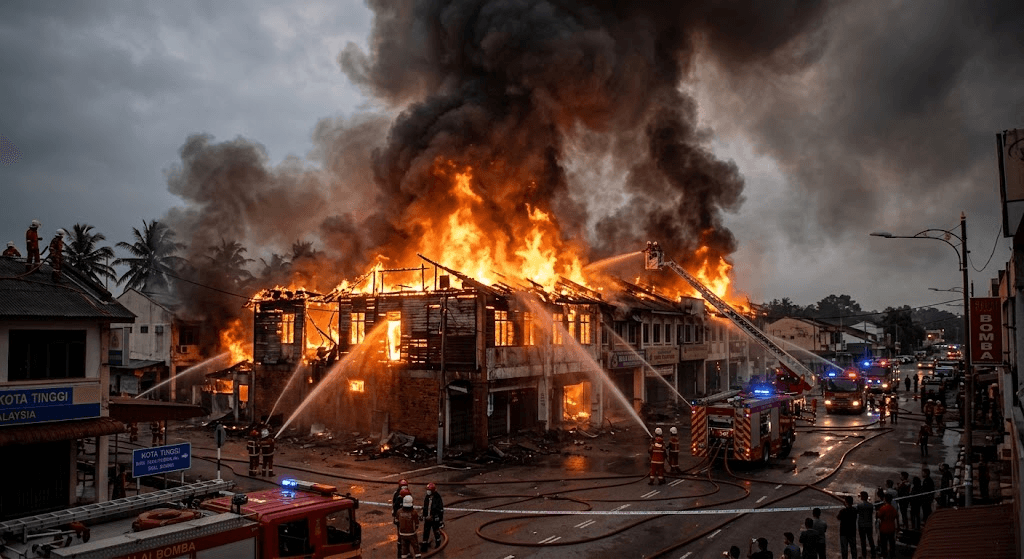
AI Image Disclaimer
Illustrations were created using AI tools and are not real photographs.
Sources Reuters Al Jazeera Associated Press The Guardian Euronews
Published by Banx Network. This article is part of the Banx decentralized media programme, powered by the BXE token on the XRP Ledger.