In the pale light of early morning above the Gulf’s placid blue waters, the horizon often seems to hold a promise of simple motion — tankers tracing slow arcs, wind and salt meeting sunlit decks, and the steady promise of energy moving from shore to shore. Yet beneath this calm surface, in the deep rhythms of trade and transport, there now lingers a sense of suspended motion, a quiet uncertainty born of conflict that has reached well beyond the fields of sand and sea.
It is not easy to think of energy in human terms, but for centuries the flow of oil and gas from the Persian Gulf has been a kind of pulse in the world’s larger circulatory system — unseen by many, taken for granted by most, yet essential to the hum of factories, the rise and fall of transport costs, and the warmth of homes across continents. In recent days, however, that pulse has faltered. Saad al‑Kaabi, Qatar’s Minister of State for Energy Affairs and head of QatarEnergy, has offered a stark reflection on this frailty: if the ongoing Middle East conflict continues, he suggested, the delicate choreography of Gulf energy exports could grind to a halt within weeks, with profound ripples felt far beyond the region’s shores.
Mr. al‑Kaabi’s words carried with them the weight of lived understanding — not hyperbole, but a description born of both regional proximity and economic responsibility. Qatar this week halted its liquefied natural gas (LNG) production, a source that once accounted for about 20 percent of global LNG supply, after a series of strikes on critical infrastructure. That halt was not merely an interruption in figures and charts, but a reminder of how swiftly modern networks can be shaken when their foundational links are disrupted.
The minister’s cautious voice extended beyond the momentary stoppage: if the conflict with Iran and its wider ramifications were to persist, all Gulf energy exporters could find themselves compelled to declare force majeure, effectively suspending contractual delivery obligations. In such a scenario, the global economy — a vast mosaic of interlocking industries and supply chains — would feel the shockwaves. Al‑Kaabi spoke of oil prices potentially climbing toward $150 per barrel, a figure that once seemed distant but now has returned into serious forecast territory, echoing through markets already sensitive to supply anxieties.
There is an innately physical rhythm to these concerns. A tanker unable to clear the Strait of Hormuz, a vital maritime artery through which roughly one‑fifth of the world’s crude and liquefied gas passes each day, affects more than just numbers on a board. It affects lives and livelihoods — from refineries charting new courses to consumers anticipating the pinch of higher transport and heating costs; from suppliers in Asia recalibrating demand forecasts to manufacturers in Europe reconsidering production schedules. Each link in this chain responds not in isolation but as part of a larger choreography of motion and pause.
For markets that have already tasted disruption — with benchmark crude prices surging toward multi‑year highs — the minister’s comments are not simply warning signals but reflections of an unfolding reality. Where once the Gulf’s output was seen as a steady current in the global flow of energy, it now carries the echo of geopolitical strain and its cascading economic implications. The profound interdependence of nations, natural resources, and distant conflicts has become visible in a way that both illuminates and unsettles: a reminder that in a world sewn together by trade routes and tankers, a rupture in one place can resonate everywhere.
And so, as the conflict continues and analysts watch prices and production with careful scrutiny, Mr. al‑Kaabi’s words stand as part of the broader economic narrative: energy exports from the Gulf, long a quiet force beneath the rhythms of global commerce, may be forced into a stillness that has far‑reaching consequences, with oil approaching $150 per barrel and geopolitical tensions still unfolding.
AI Image Disclaimer
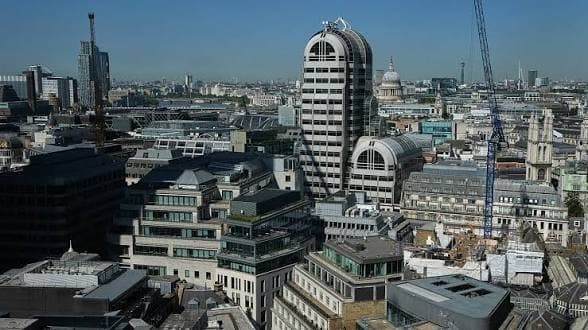
Illustrations were created using AI tools and are not real photographs.
Sources (Media Names Only)
Reuters Financial Times Business Standard The Peninsula Qatar Euronews
Published by Banx Network. This article is part of the Banx decentralized media programme, powered by the BXE token on the XRP Ledger.