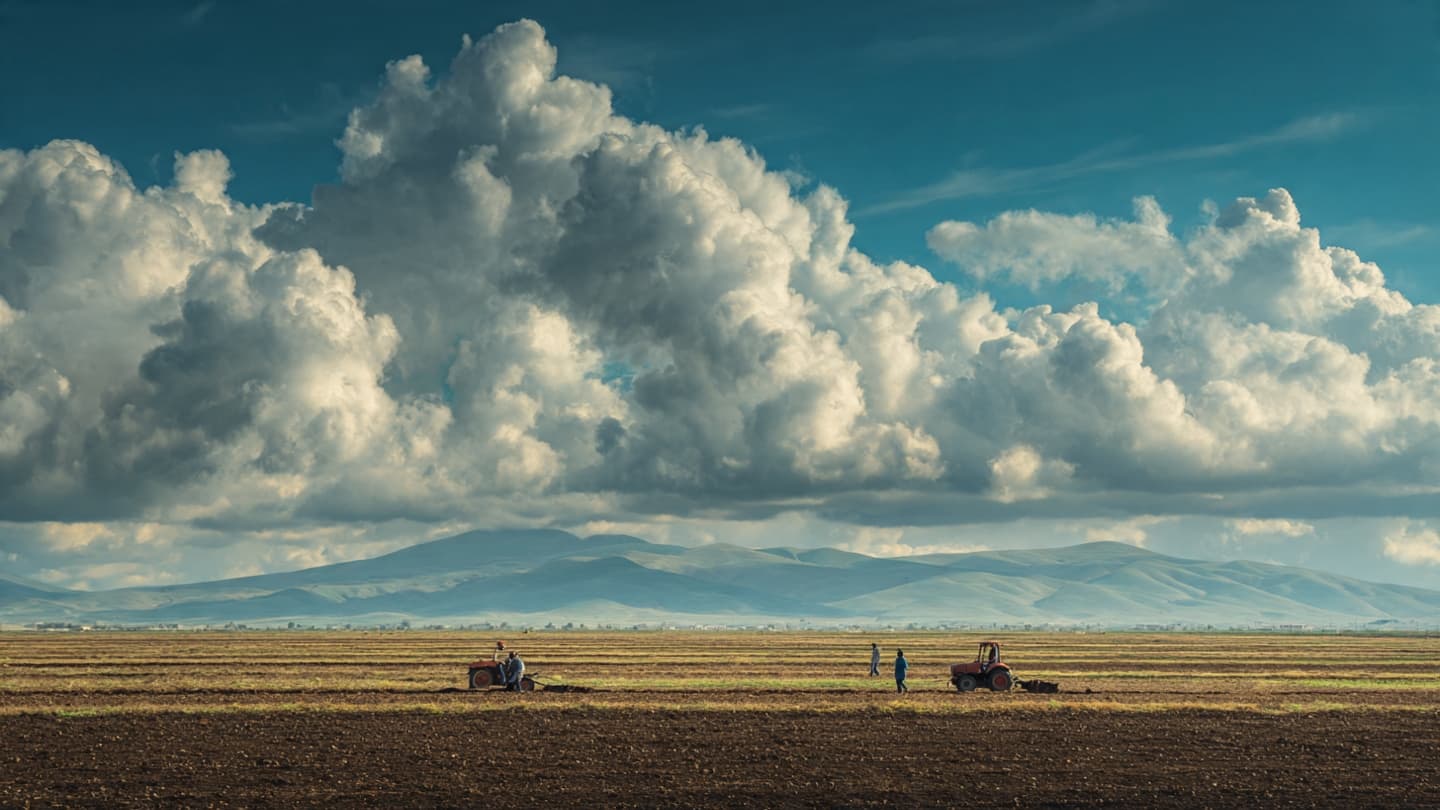
Across Iran’s agricultural landscapes, fields have long carried the memories of seasons, harvests, and generations of farming traditions. Today, those landscapes are responding to new environmental conditions.
Changing rainfall patterns and rising temperatures have influenced farming practices in several regions. Water availability has become a central factor in agricultural planning.
Farmers are exploring new approaches, including efficient irrigation, improved crop selection, and technology-supported methods.
Agriculture remains an important part of communities where farming traditions continue connecting people with the land.
Researchers are studying ways to strengthen agricultural resilience. Climate data and scientific tools are helping identify strategies for adapting to environmental changes.
The challenges faced by Iranian farmers are part of a global story. Many agricultural regions worldwide are experiencing similar pressures from climate change.
Adaptation requires both traditional knowledge and modern innovation. Combining these perspectives can help create more flexible farming systems.
The transformation of agriculture often happens gradually, through small adjustments made over many seasons.
As Iran continues navigating environmental changes, its fields remain a reflection of humanity’s ongoing relationship with nature.
AI Image Disclaimer These visuals are AI-generated conceptual images created to illustrate the topic and are not real photographs.
Sources
Food and Agriculture Organization World Bank International Water Management Institute Climate research publications
Published by Banx Network. This article is part of the Banx decentralized media programme, powered by the BXE token on the XRP Ledger.