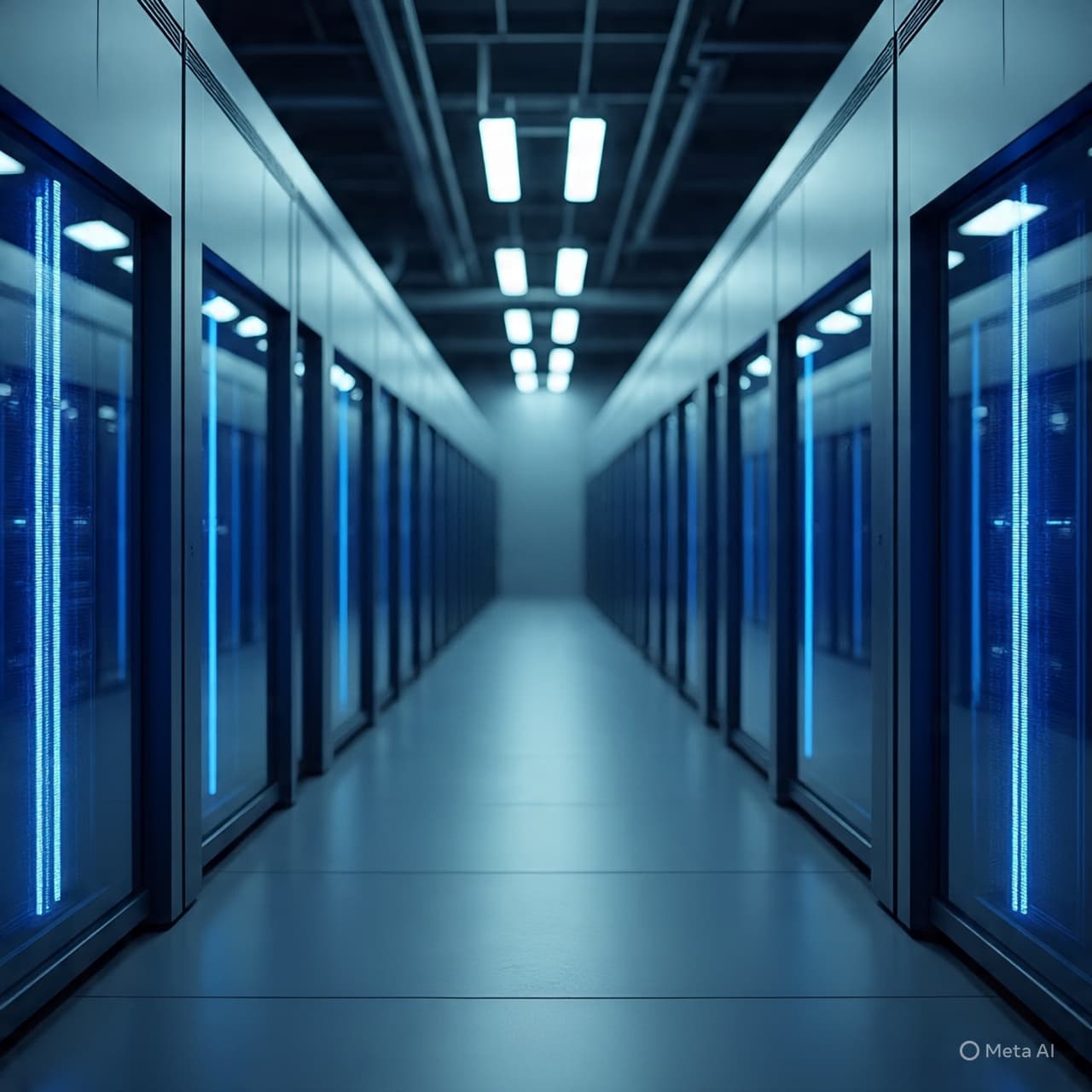
In the half-lit spaces where machines rest before their next task, there is a particular stillness that belongs only to unfinished work. It settles over server rooms, engineering floors, and long whiteboards marked with ideas waiting for their moment to return. For Tesla’s Dojo project, that quiet has lingered for months—a pause that felt less like an ending than a held breath.
Dojo was never introduced as a single product or a tidy roadmap. It emerged instead as a gesture toward scale, an attempt to gather the torrents of data flowing from Tesla vehicles and shape them into something teachable, repeatable, and precise. The name itself suggested training, discipline, repetition—an arena where artificial intelligence could learn through exposure to millions of miles of motion, hesitation, and decision.
Last year, the project appeared to recede. Tesla acknowledged that earlier versions of Dojo would not progress as originally imagined, as attention shifted toward custom AI chips designed to handle inference—the moment-to-moment judgments required inside vehicles and machines. Engineers moved on, priorities narrowed, and Dojo became a reference point rather than a destination.
Now, that stillness has begun to lift. Elon Musk has signaled that work on a new iteration, often referred to as Dojo 3, is resuming. The reason is not sudden inspiration but groundwork already laid. Tesla’s internally designed AI chips have reached a stage where large-scale training systems once again make sense. With silicon that reflects its own needs, the company is returning to the question it set aside: how much control over intelligence itself it wants to hold.
The revival speaks quietly but clearly about ambition. Training AI at scale is not merely a technical challenge; it is an assertion of independence. By building chips and systems tailored to its own data, Tesla aims to reduce reliance on external suppliers and general-purpose hardware. In doing so, it edges closer to a future where cars, robots, and factories share not only a brand, but a common computational backbone.
Yet the return of Dojo carries memory with it. The pause remains instructive, a reminder that custom hardware demands patience and precision. Designing chips, assembling supercomputers, and aligning them with real-world deployment is an exercise measured in years rather than quarters. The path is iterative, marked by revisions rather than declarations.
Around Tesla, the broader technology sector is tracing similar loops. Companies speak increasingly of sovereignty over compute, of chips as strategy rather than components. In that landscape, Dojo’s revival feels less like a surprise and more like alignment with a larger current—one where artificial intelligence is shaped as much by where it is trained as by what it learns.
In straightforward terms, Tesla says it is restarting work on its Dojo AI supercomputer as progress on its in-house chip designs allows renewed investment in large-scale AI training, reflecting broader ambitions to expand its role in the chip and artificial intelligence markets.
AI Image Disclaimer Visuals are AI-generated and serve as conceptual representations.
Sources (Media Names Only) Reuters Bloomberg The Wall Street Journal Financial Times
Published by Banx Network. This article is part of the Banx decentralized media programme, powered by the BXE token on the XRP Ledger.