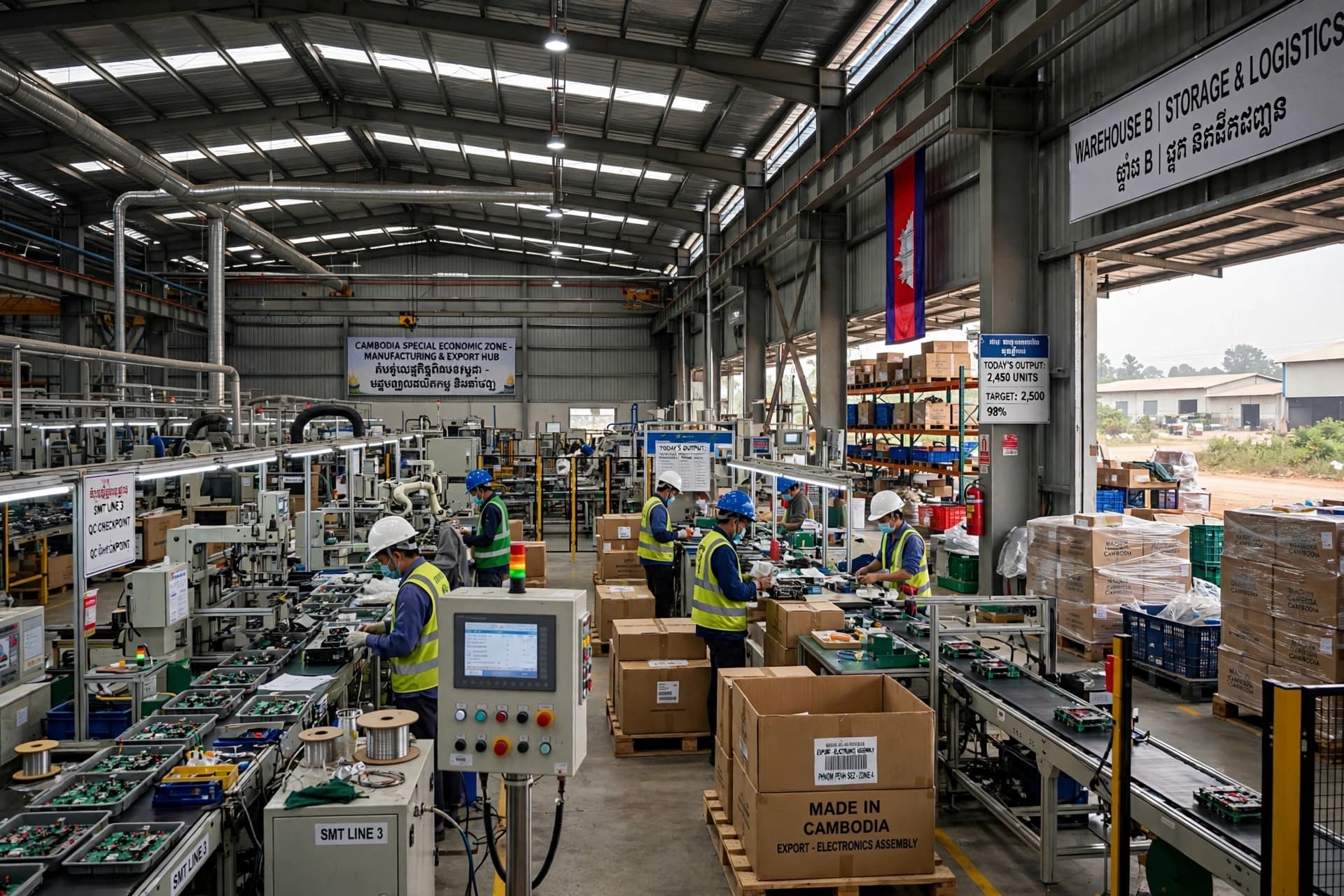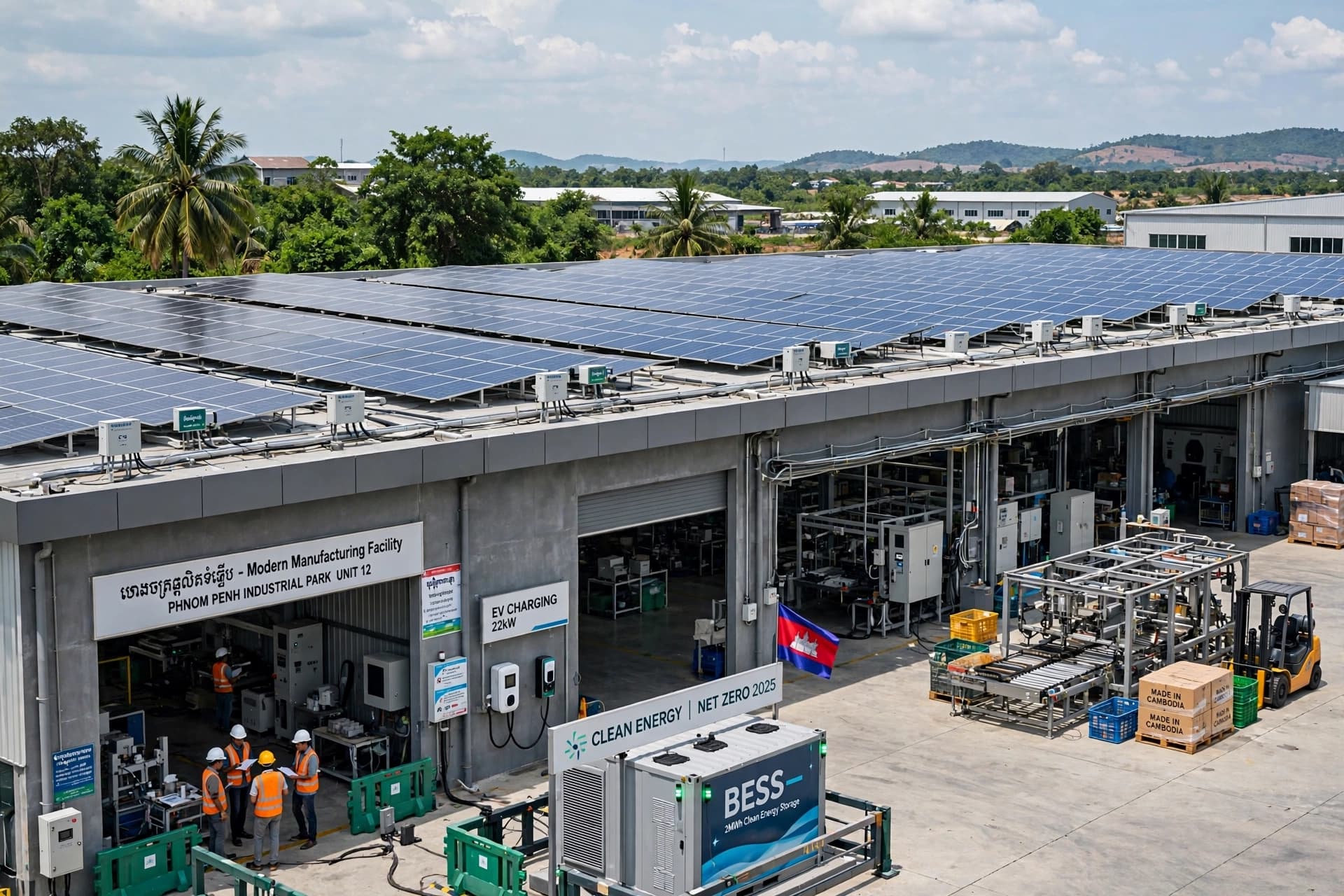
Energy is rarely visible when a factory is running normally. Machines turn, lights remain on, production lines continue, and products move toward markets. Yet behind that ordinary rhythm lies a constant question about where the electricity comes from, how much it costs, and how reliably it can reach industry.
During the closing of Clean Energy Week 2026, Cambodia’s Industry, Science, Technology and Innovation Minister Hem Vanndy said clean energy should be viewed as an enabler of the next generation of Cambodian industry rather than simply an additional cost.
The discussion places renewable energy alongside industrial efficiency and competitiveness. According to the minister, the clean-energy transition can support enterprises in producing more efficiently, competing in international markets, creating quality employment, and strengthening economic resilience.
Clean Energy Week brought together policymakers, development partners, civil-society organisations, and private-sector representatives. The event included discussions of technical innovations, policy approaches, and practical examples connected with Cambodia’s energy transition.
The conversation is taking place as Cambodia continues to expand its industrial base. Manufacturing requires electricity that is reliable enough to support production schedules and predictable enough for businesses to plan their costs. Energy therefore becomes part of a much larger industrial equation.
Natharoun Ngo Son, regional director of EnergyLab Asia, said Cambodia’s opportunity extends beyond simply generating more renewable electricity. He argued that the transition also raises questions about what the country produces, what it exports, and how much economic value can remain within Cambodia.
That perspective places clean energy within the wider movement toward industrial transformation. Renewable electricity can become part of factories, transport systems, commercial buildings, and other economic activities, while new technologies can change the way energy is generated, stored, and consumed.
The closing event also recognised several organisations and individuals for their contributions to Cambodia’s clean-energy agenda. Awards included a Clean Energy Champion Award, a Cleantech Award, and recognition for an impactful clean-energy project in Sihanoukville.
Australian Embassy Chargé d’Affaires Bridget Collier described clean energy as increasingly connected to Cambodia’s energy security, economic resilience, and long-term competitiveness. Her remarks reflected the broader focus of the event on cooperation between government, private companies, development organisations, and other stakeholders.
Cambodia has also set a target of obtaining at least 70 percent of its electricity from renewable sources by 2030, according to recent industry reporting. Achieving such a target requires more than installing generation capacity; transmission, storage, financing, technical skills, and industrial demand all become part of the transition.
The conversation around clean energy is therefore gradually moving beyond the question of electricity itself. In Cambodia, it is increasingly being discussed alongside factories, exports, employment, technology, and the structure of future economic growth. As the industrial landscape changes, the source of the energy powering it is becoming part of the same story.
Image Disclaimer:
The accompanying visuals are AI-generated conceptual illustrations and do not represent actual photographs of specific energy projects or industrial facilities.
Sources:
Kiripost Khmer Times Cambodia Industry Wire EnergyLab Asia Ministry of Industry, Science, Technology and Innovation
Published by Banx Network. This article is part of the Banx decentralized media programme, powered by the BXE token on the XRP Ledger.