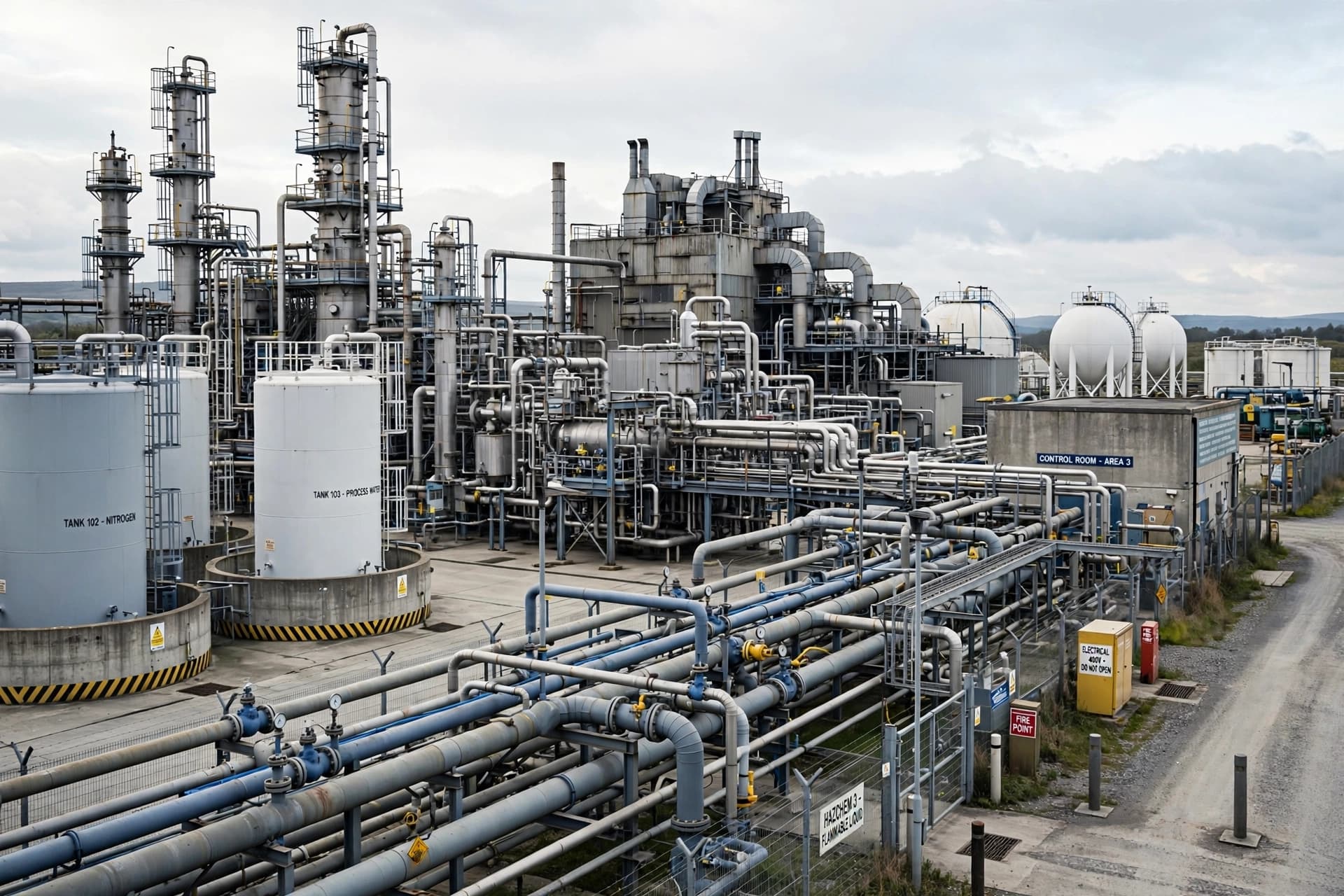
That pressure became particularly visible in September when chemicals company Ineos announced plans to mothball three plants in Hull. Reuters reported that the company attributed the decision largely to high European gas prices, which it said had made some manufacturing operations increasingly difficult to sustain.
The three facilities employ nearly 4,000 people and produce chemicals used in a wide range of products, including medicines, cosmetics, clothing, detergents and construction materials. The decision therefore illustrates how energy prices can travel through industrial supply chains far beyond the factory where production takes place.
Britain’s energy-intensive industries operate within a broader European market. Gas prices across Europe have remained substantially above those in the United States, creating a difference in production costs for companies competing internationally.
The issue has also become more complicated because industrial companies must consider not only the price of natural gas but electricity, carbon-related costs, transportation and other operating expenses. When several costs rise simultaneously, the pressure can become difficult to absorb through efficiency improvements alone.
For manufacturers, the consequences can extend beyond individual production lines. A temporary reduction in output can affect suppliers, logistics companies, contractors and workers connected to a facility. If high costs persist for long periods, companies may also reconsider where future investment should be placed.
The British government has been working on wider energy reforms, including plans for the Great British Grid, which is intended to improve electricity connections and support renewable generation. However, changes to infrastructure take time, while manufacturers must manage energy costs every day.
This creates a difficult transition. Britain is seeking to expand renewable electricity and strengthen domestic industrial capacity at the same time that companies are looking for energy prices that allow them to compete internationally.
The experience of energy-intensive manufacturers shows why the energy transition involves more than building new generation. Power must also be affordable, reliable and available in the places where factories operate.
For communities built around industrial facilities, these decisions carry a local dimension. A factory is not simply a building filled with machinery. It is connected to workers, suppliers, transportation networks and the wider economy of the surrounding area.
As Britain moves toward a more electrified and lower-carbon economy, the cost of that transition will remain an important issue for manufacturers. The balance between cleaner energy, reliable supply and competitive prices will help shape which industries expand, which adapt and which reconsider production.
The factory floor may appear distant from the wider energy market, but the connection is direct. Every shift, machine and production line ultimately depends on energy, making the price of power one of the quiet forces shaping Britain’s industrial future.
IMAGE DISCLAIMER
The illustrations are conceptual visualizations created for editorial presentation. They are not documentary photographs of actual Ineos facilities or specific industrial events.
SOURCES
Reuters — “Ineos to mothball three chemical plants as high energy costs hit production,” September 22, 2026.
Reuters — UK energy and industrial manufacturing coverage, September 2026.
Published by Banx Network. This article is part of the Banx decentralized media programme, powered by the BXE token on the XRP Ledger.