
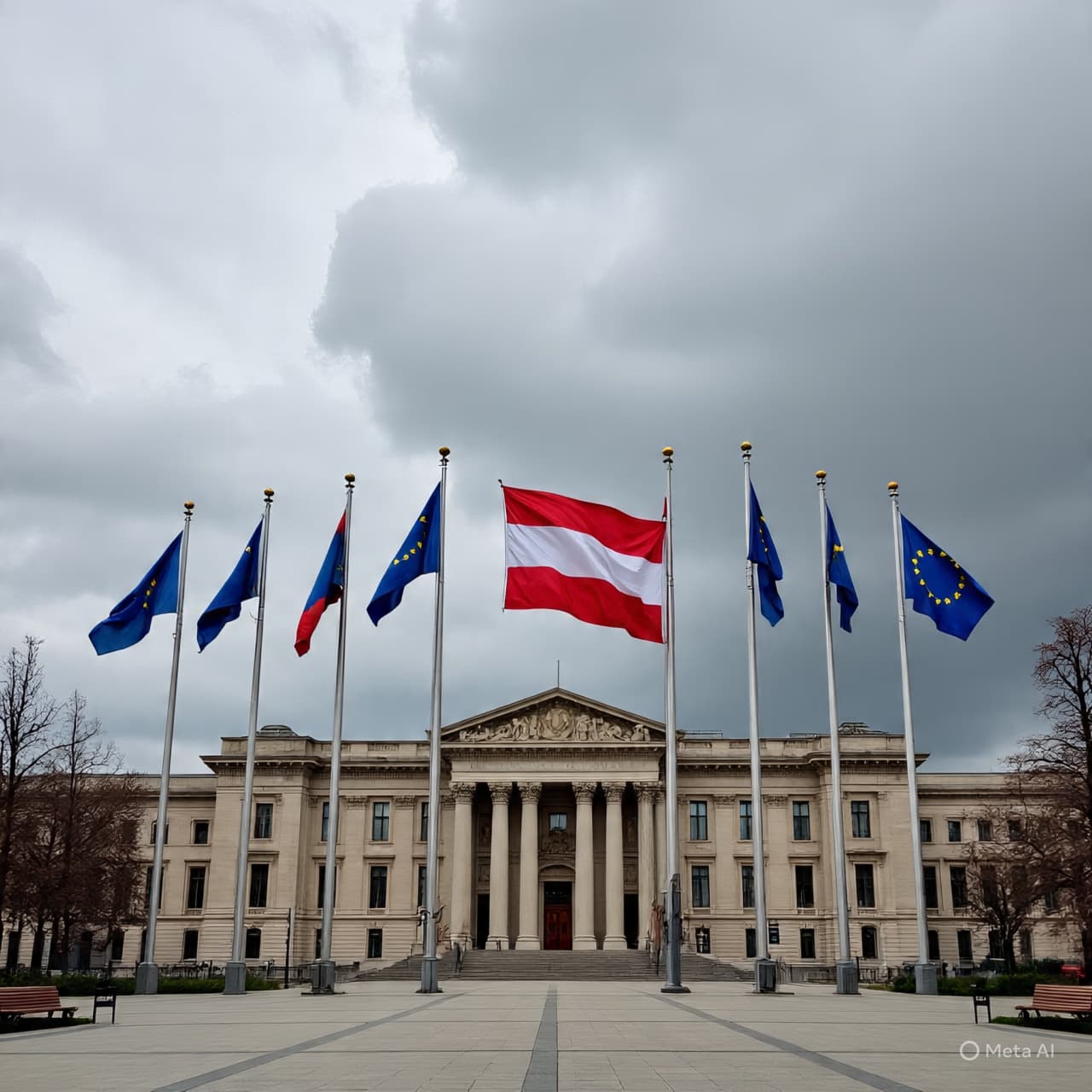
Key Highlights
- EU-Hungary Relations:Ongoing tensions due to differing stances on Ukraine.
- Leadership Dynamics:Anticipation for potential shifts in Hungary's political landscape.
- National Sovereignty:Hungary's unique political identity complicates EU expectations.
The political landscape in Europe is often marked by a delicate interplay between expectation and reality, particularly in the context of Hungary's relationship with the European Union. As the war in Ukraine reshapes alliances and tests the resolve of member states, Hungary has emerged as a focal point of concern and hope. The question now is not just about the current leadership under Viktor Orbán, but what the future may hold for Hungary and its alignment with EU policies.
The EU has long prided itself on its unity, a strength that has been tested by Hungary's increasingly cautious approach to supporting Ukraine. Orbán's government has resisted certain EU measures, particularly regarding military aid and sanctions against Russia, creating a backdrop of tension that complicates the bloc's collective response to the ongoing conflict. While this divergence has not fractured the union, it has introduced a subtle strain that is felt in diplomatic discussions and public statements.
As discussions about Hungary's political future gain momentum, there is a palpable sense of anticipation among some EU officials. The hope is that a future leader may align more closely with the EU's stance on Ukraine, thereby reinforcing the bloc's cohesion at a critical juncture. However, history teaches us that hope does not always translate into reality, and the complexities of Hungary's domestic politics must be acknowledged.
Hungary's political landscape is influenced by a variety of factors, including national sovereignty, economic priorities, and a distinct political identity that often diverges from EU narratives. The notion that a change in leadership would automatically lead to a shift in foreign policy is more of a possibility than a certainty. It hinges on a multitude of visible and subtle forces that shape voter sentiment and political discourse within Hungary.
The ongoing war in Ukraine serves as a significant backdrop for the EU's expectations. For many member states, support for Ukraine is not merely a policy choice but a reflection of shared values related to security and regional stability. While it is reasonable for the EU to hope for alignment among its members, the reality is that each country interprets its role through its own unique lens, complicating the pursuit of a unified front.
An underlying question persists: to what extent can external expectations influence internal political outcomes? The EU, despite its considerable influence, operates within the confines of national democracies. Leadership transitions are ultimately determined by domestic choices rather than external preferences. While the EU can encourage alignment, it cannot guarantee it.
In conclusion, the EU's outlook on Hungary's future leadership encapsulates a familiar tension between aspiration and reality. Political landscapes are rarely transformed overnight, and continuity often carries its own momentum, even amidst change. Currently, Hungary remains under Orbán's leadership, with no immediate transition on the horizon. The EU continues to engage with Hungary within existing frameworks while maintaining its broader support for Ukraine. Any future shift in Hungary's stance will depend on domestic political developments and the evolving dynamics within the European Union itself.
Published by Banx Network. This article is part of the Banx decentralized media programme, powered by the BXE token on the XRP Ledger.



