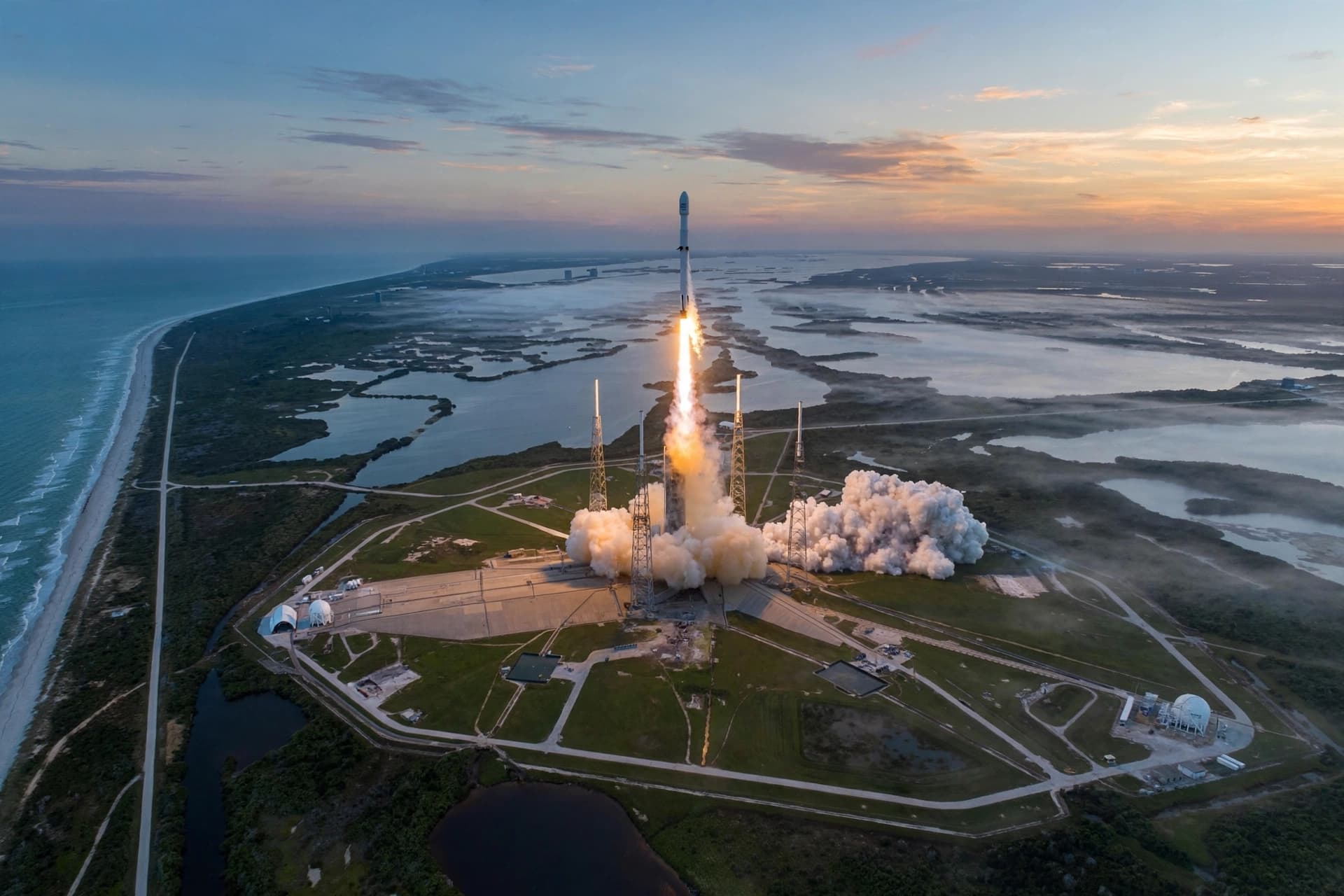
For centuries, the night sky has appeared calm and distant, a silent canopy of stars that seems untouched by human ambition. Yet behind that quiet glow lies an expanding network of machines — satellites circling the planet, sensors observing the Earth, and spacecraft venturing farther into the solar system.
These instruments collect a staggering stream of information. Every image of shifting clouds, every measurement of oceans or forests, and every signal from distant spacecraft adds another piece to an ever-growing puzzle of data.
Increasingly, the key to understanding that puzzle is artificial intelligence.
But the story of AI in space is not simply about powerful algorithms or sophisticated spacecraft. It is also a story about cooperation — about how governments, space agencies, and private companies must learn to work together as the scale of space activity expands.
In recent years, artificial intelligence has begun reshaping how space missions operate. AI systems can help satellites process enormous amounts of data, allowing spacecraft to analyze images and signals directly in orbit rather than sending everything back to Earth. This approach speeds up decision-making and reduces the burden on communication networks.
The need for such autonomy is growing rapidly. Thousands of satellites already orbit the planet, and projections suggest that the number could increase dramatically in the coming decades. With such a vast network, traditional methods of human-controlled operations become increasingly difficult to maintain.
Artificial intelligence offers a way to manage this complexity. Machine learning systems can help spacecraft navigate, identify geological features on distant planets, and analyze environmental changes on Earth. Some robotic systems on space missions already use AI to plan movements and gather scientific data more efficiently.
Yet the technological promise of AI also reveals a structural challenge.
Much of the world’s space infrastructure is no longer operated solely by governments. Commercial companies now launch satellites, build spacecraft components, and deliver data services used by industries and researchers worldwide. At the same time, national space agencies continue to lead many of the most ambitious scientific missions.
In this environment, artificial intelligence becomes a shared resource — one that depends on both public investment and private innovation.
Advocates for deeper cooperation argue that combining these strengths could accelerate progress. Space agencies often possess decades of scientific expertise, mission experience, and international partnerships. Private companies, meanwhile, bring speed, flexibility, and new technological approaches.
When these elements work together, AI applications can move from experimental concepts to operational tools more quickly.
For example, collaborative initiatives between research institutions, space agencies, and industry are already exploring ways to deploy AI directly aboard satellites, enabling spacecraft to filter data and prioritize the most important observations before transmitting them to Earth.
Such developments could transform how humanity observes the planet. Satellites equipped with intelligent systems might detect wildfires earlier, track environmental changes in near-real time, or identify patterns in climate data that would otherwise remain hidden within massive datasets.
At the same time, the integration of AI into space operations raises questions about governance, security, and transparency. Because both AI and space technologies can serve civilian and military purposes, their combination creates new policy challenges that traditional regulatory frameworks may not fully address.
For that reason, many experts emphasize that collaboration should extend beyond engineering and technology. It must also include shared standards, responsible development practices, and international dialogue about how intelligent systems should operate in orbit.
The path forward may therefore resemble a new kind of space partnership — one where public agencies, private companies, and research institutions contribute different strengths to a common effort.
Artificial intelligence will likely become one of the most influential tools shaping the next era of space exploration and satellite services. But its success may depend less on the sophistication of algorithms than on the willingness of institutions to work together.
For now, the conversation continues across laboratories, policy forums, and mission planning rooms. The goal is not simply to place smarter machines in orbit, but to build a cooperative framework capable of guiding them.
In that sense, unlocking AI in space may ultimately be as much about collaboration as it is about technology.
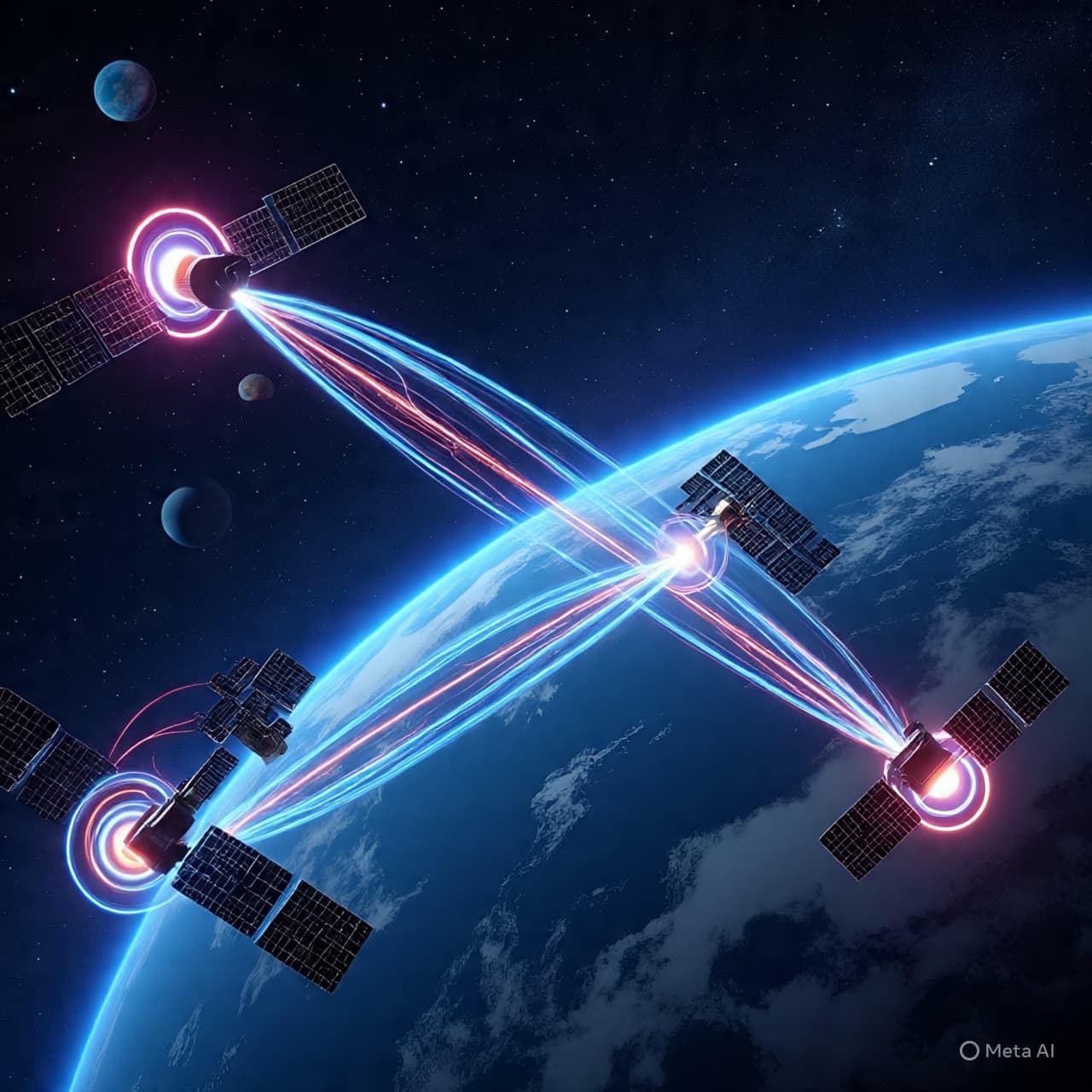
AI Image Disclaimer Graphics are AI-generated and intended for representation, not reality.
Sources SpaceNews Brookings Institution Acta Astronautica Frontiers in Space Technologies International Space University
Published by Banx Network. This article is part of the Banx decentralized media programme, powered by the BXE token on the XRP Ledger.