

Key Highlights
- Astronauts aboard NASA's Artemis mission experienced profound views of Earth.
- The Orion spacecraft is designed for deep space exploration.
- Observational moments reveal psychological impacts of space travel.
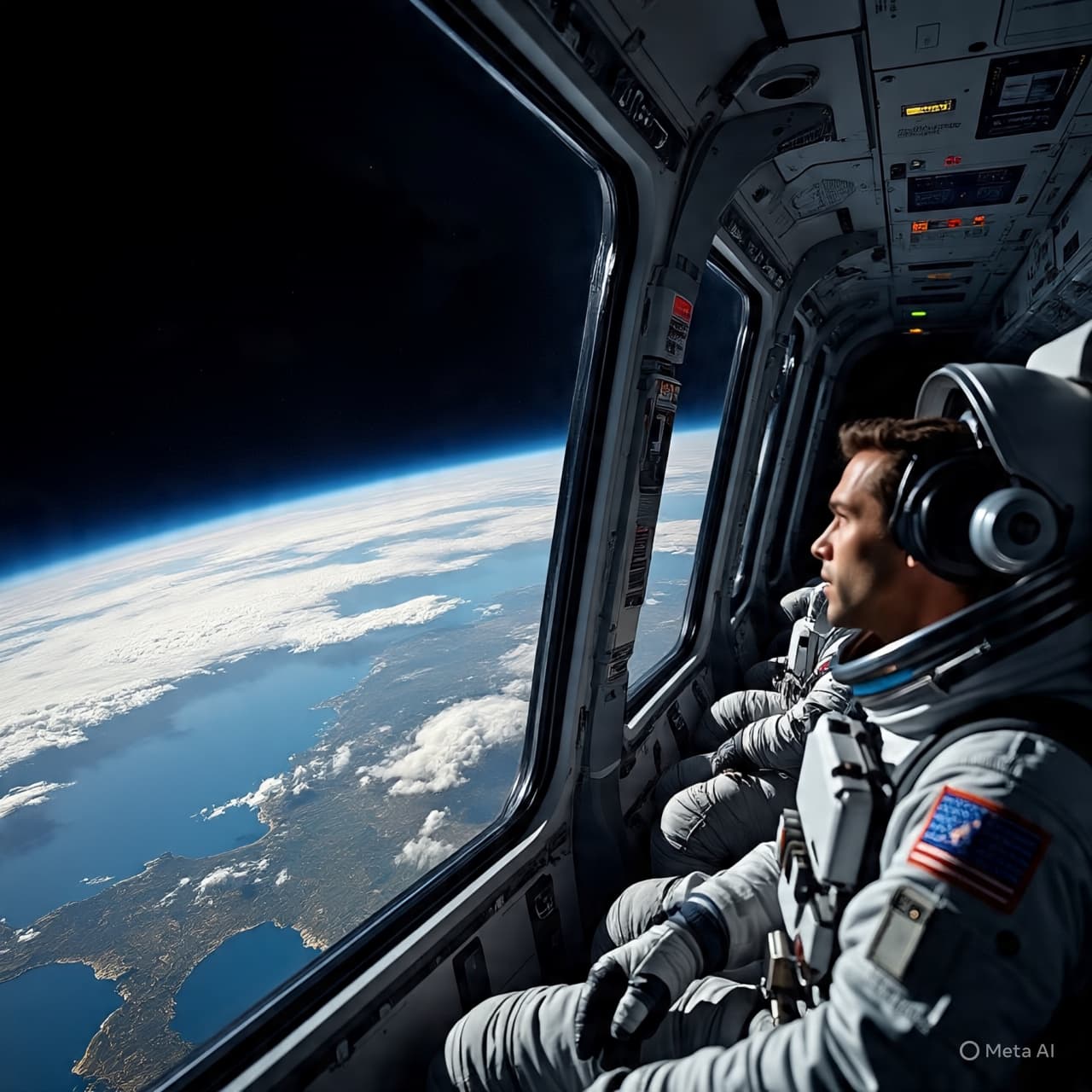
Astronauts aboard NASA's Artemis mission recently encountered moments in space that words struggle to capture. As they traveled beyond low Earth orbit, the crew paused to take in the breathtaking views unfolding beyond their windows. This experience was not part of a scheduled experiment but rather a spontaneous human response to the awe of perspective.
The Artemis program aims to return humans to the Moon, and while technical evaluations are ongoing, these observational moments provide valuable insights into the psychological dimensions of space travel. As the Orion spacecraft journeys further from Earth, astronauts witness the planet's curvature, where continents blur into colors and oceans reflect sunlight in mesmerizing patterns. This view serves as a poignant reminder of Earth's fragility and vastness.
Astronauts reported feelings of astonishment, even among those who have previously participated in orbital missions. The distance from Earth introduces a subtle yet profound shift in perception, echoing sentiments expressed by earlier Apollo astronauts. The experience of seeing Earth from space can evoke a sense of connection and responsibility, emphasizing the importance of preserving our planet.
NASA continues to evaluate timelines and logistics for future lunar missions, addressing questions surrounding safety, technology readiness, and mission design. The Orion spacecraft represents a new generation of exploration vehicles, equipped with advanced life-support systems, navigation capabilities, and heat shielding for re-entry. These engineering milestones are crucial for the success of future missions.
However, the focus on engineering often overlooks the human aspect of exploration. Moments like these highlight how space travel reshapes human awareness, offering perspectives that are unattainable on Earth. Understanding how astronauts respond to deep space environments can inform training, mission planning, and crew support systems, ultimately enhancing the overall experience of space travel.
As plans for lunar return continue to evolve, these quiet observations remain significant. They remind us that exploration is not solely about reaching destinations but also about understanding what it means to see the world from beyond it. The insights gained from these experiences can shape the future of human spaceflight, ensuring that the journey is as enriching as the destination itself.
AI Image Disclaimer Visuals are created with AI tools and are not real photographs.
Published by Banx Network. This article is part of the Banx decentralized media programme, powered by the BXE token on the XRP Ledger.




