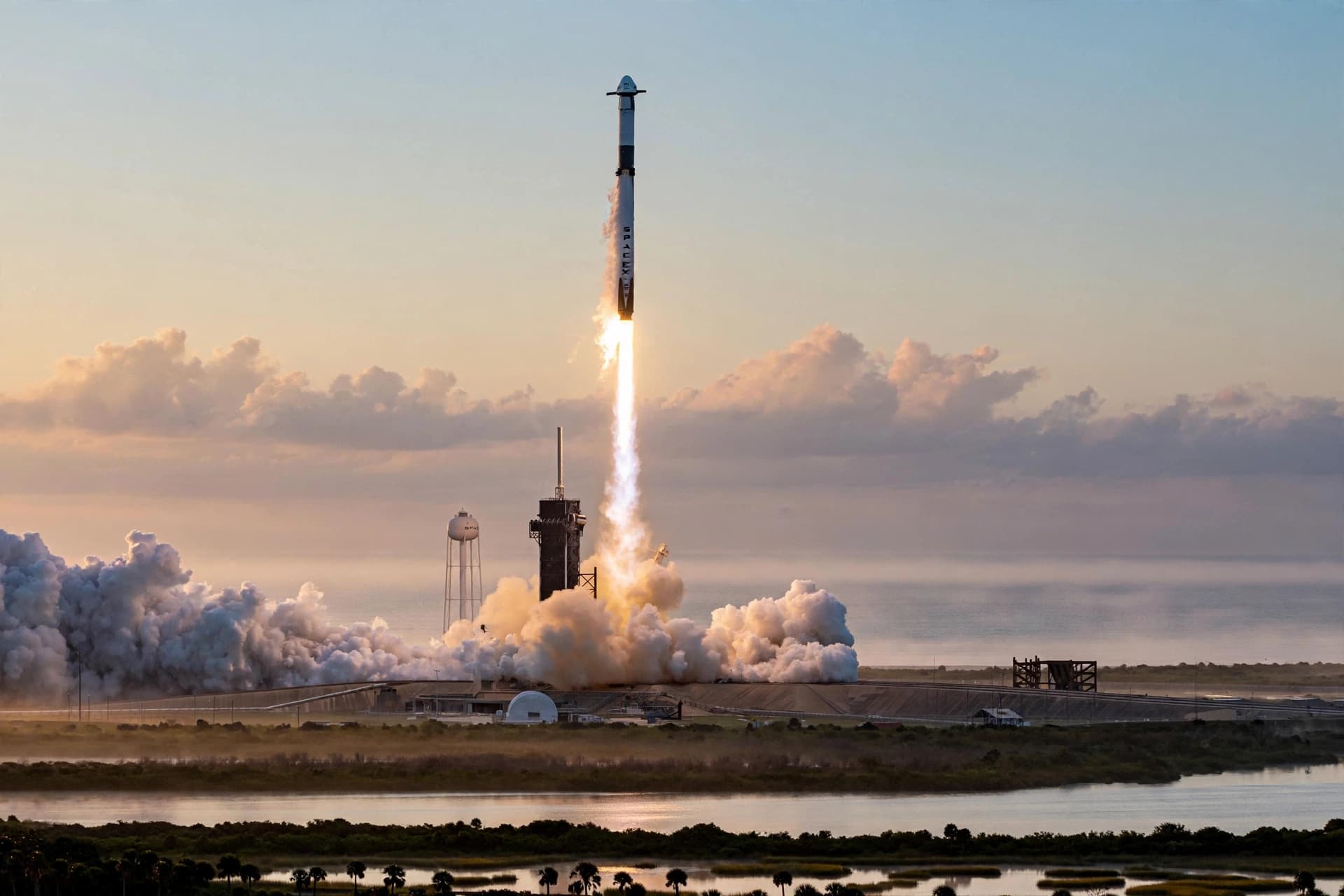
As dawn broke over the Kennedy Space Center, the chill of early morning air seemed almost to hold its breath, mirroring the tension that has gripped NASA and SpaceX teams alike. The Artemis 2 mission, humanity’s next bold step toward the Moon, waits in the wings, while Crew-12’s scheduled SpaceX launch balances delicately on the tightrope of timing and technical precision. There is a rhythm to these preparations, a choreography of metal, fuel, and human resolve that hums quietly beneath the hum of press conferences and media cameras.
The intricacies of launch windows are seldom visible to the casual observer. Artemis 2’s trajectory, engineered for months of calculations and simulations, dictates far more than its own liftoff. Crew-12, carrying astronauts eager to continue the legacy of low-Earth orbit research, now finds its schedule entwined with the lunar-bound spacecraft. A shift of hours here, a weather delay there, and the entire cadence of two missions can wobble like a pendulum. Engineers and flight directors monitor streams of data, translating the silent language of numbers into decisions that will ripple across the expanse of space.
Beyond the immediate mechanics, there is a subtle reflection on the nature of progress itself. The Moon has always been a mirror, reflecting human ambition and curiosity. The Artemis program seeks to extend that reflection, while Crew-12’s flight underscores the ongoing routine of exploration that sustains knowledge on Earth. The juxtaposition of a lunar mission and orbital work reminds us that even at the edge of our atmosphere, endeavors are interlinked, delicate, and deeply human.
As the sun climbs higher, the countdown clocks continue their quiet tick, a reminder that every successful journey is a negotiation between planning and unpredictability, between human ingenuity and the vastness of the cosmos. Artemis 2 and Crew-12 are bound together in this fragile ballet, each mission a testament to coordination, courage, and the enduring desire to reach farther than before.
AI Image Disclaimer: “Visuals are AI-generated and serve as conceptual representations.”
Sources: NASA, SpaceX, Ars Technica, The Verge, Space.com
Published by Banx Network. This article is part of the Banx decentralized media programme, powered by the BXE token on the XRP Ledger.