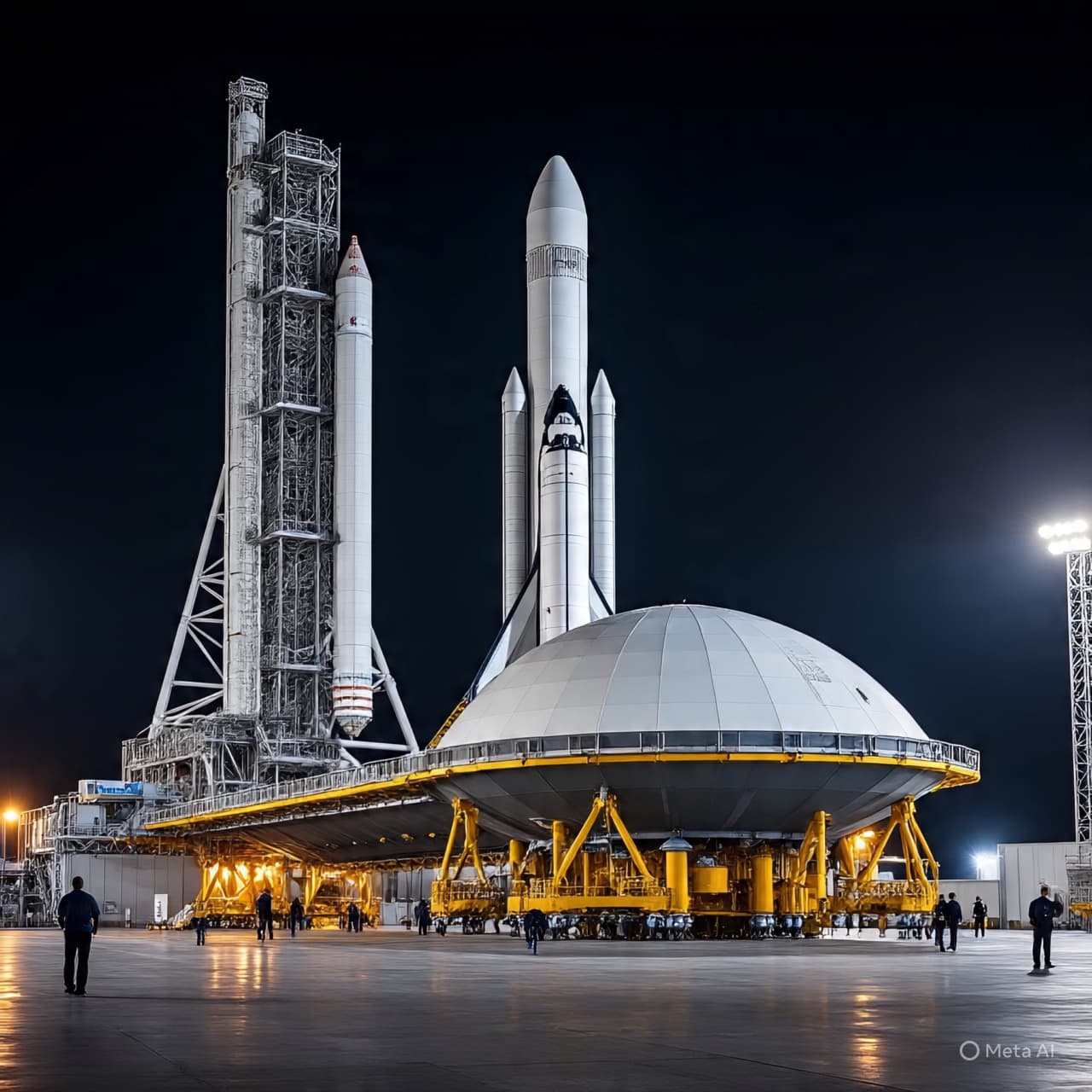
Before dawn touched the Cape Canaveral hangars, where rockets sleep upright like titans waiting for dawn’s summons, NASA quietly turned another page in its long-running lunar tale. The Artemis program — once charted as a clear highway back to the Moon — has taken a subtle bend, inviting observers to ponder not just timelines but patterns of careful exploration. What once seemed a straightforward ascent to the lunar surface now resembles a path with thoughtful pauses, reflective detours, and renewed craftsmanship.
In a statement that echoes with the cadence of both ambition and caution, NASA has announced a series of strategic realignments for Artemis missions. These adjustments reflect technical realities, safety priorities, and the intricate choreography of rocket engineering. At the heart of the revision is Artemis III, which was originally conceived as the next grand lunar landing chapter. Instead, this mission will now focus on rigorous in-orbit testing — including rendezvous and docking operations with lunar landers from commercial partners — in low Earth orbit before any feet touch the Moon.
This doesn’t mean the dream has dimmed. Rather, the agency sees this as a return to process and prudence, a methodical preparation that mirrors the Apollo era’s stepwise buildup. The venerable Space Launch System (SLS) rocket and Orion spacecraft — the twin pillars of Artemis — remain central, but a simplified and standardized configuration will be prioritized to support a more regular cadence of missions. NASA wants to reach a rhythm where a lunar flight can occur at least once a year, a tempo long sought by scientists, engineers, and space advocates.
Delays and hardware glitches — like issues with the rocket’s helium pressurization system — have prompted careful review, reminding planners that space exploration remains as delicate as it is daring. The newly revised approach builds in additional verification steps so that each successive mission extends knowledge while preserving astronaut safety and system reliability.
In this reshaped roadmap, the first actual lunar landing is now projected for Artemis IV in 2028, with Artemis III serving as a crucial proving ground. Leaders say the intent is not to slow momentum but to cultivate confidence, skill, and readiness for the era when humans once again walk upon another world.
There’s a deeper poetry to this adjustment: in returning to basics, NASA is reaffirming that exploration, at its best, is iterative — anchored in patience as much as in propulsion. And as Artemis’s missions unfold, this chapter may well be remembered not for a surface touchdown but for the subtle art of preparing to stand upon that distant lunar soil with certainty and grace.
AI Image Disclaimer (Rotated Wording) “Images in this article are AI-generated illustrations, meant for concept only.”
Sources Based on Source Role Major Media NASA News Release The Guardian (science) Reuters (science/space) CBS News AP News / AFP-style reporting via major outlets
Published by Banx Network. This article is part of the Banx decentralized media programme, powered by the BXE token on the XRP Ledger.