In the stillness before sunrise, when the star‑strewn heavens seem to hold their breath between night and day, one might imagine distant landscapes where the familiar rhythms of life — growth, decay, renewal — play out under unfamiliar skies. On distant worlds like the Moon and Mars, where the ground is silent and ancient dust reigns, the question of how life’s cycle might continue has drawn scientists to revisit something as elemental as waste itself. In such stark places, the very cast‑offs of life may one day help sustain it.
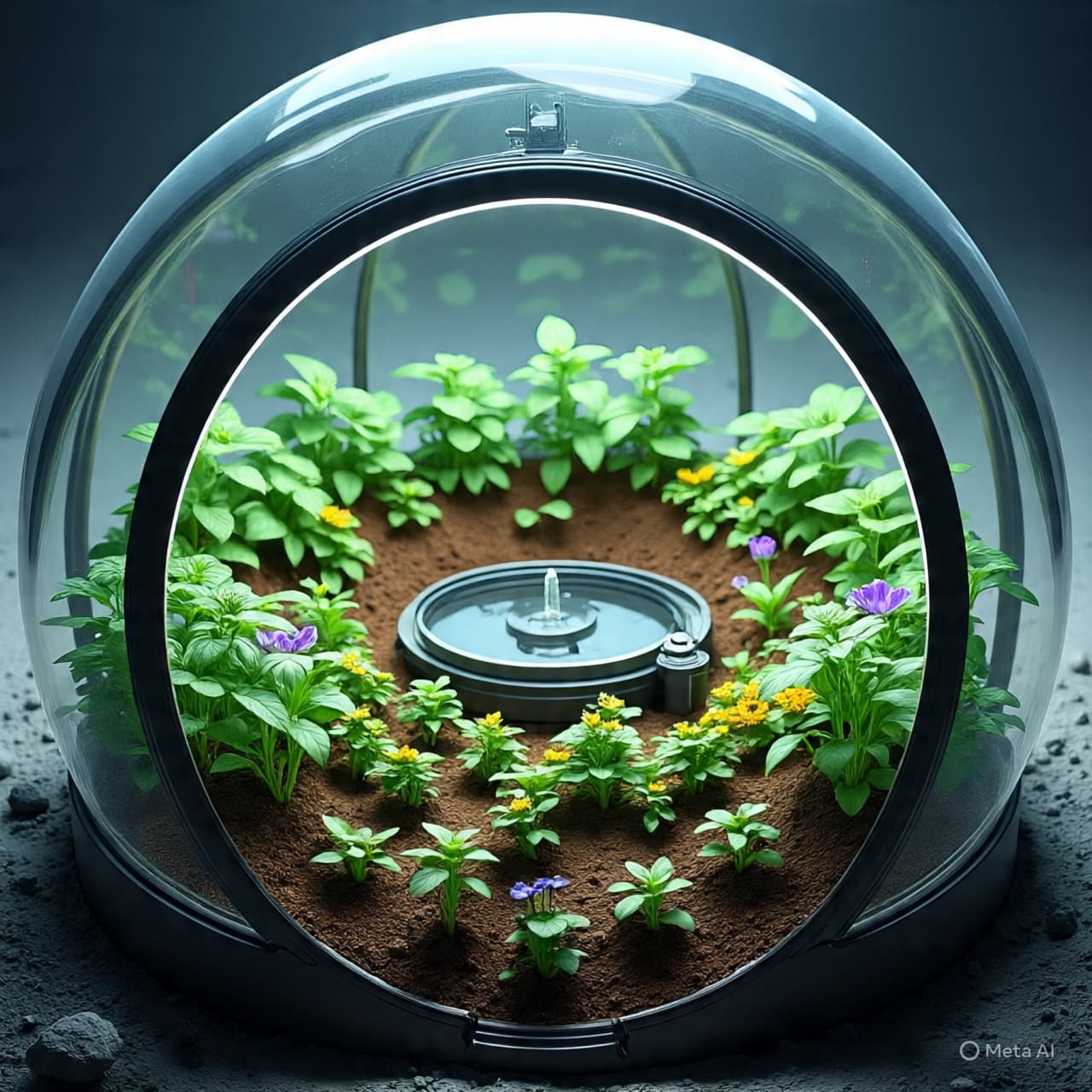
Here on Earth, soil is thick with the memory of life — organic matter woven through mineral grains, a tapestry of nutrients and microbes. But lunar and Martian regolith, stripped of organic life and shaped by millions of years of cosmic wind and radiation, is barren by comparison. It is a place without history, without the living richness that turns seeds into shoots. Yet researchers have begun to look at the products of human life — wastewater and solid waste — not as problem to be managed, but as potential currency in the transformation of sterile soil into something that might support crops. In laboratory experiments, scientists have treated human waste through closed‑loop systems, breaking it down into nutrient‑rich liquids and compounds that, when mixed with simulants of lunar or Martian dirt, release essential elements like nitrogen, calcium and magnesium that plants require. This treated effluent, acting as both fertilizer and weathering agent, helps unlock the hidden chemistry of sterile dust, softening its sharp mineral edges and making nutrients more available to roots that thirst for them.
In these experiments, the cycle of life and death — often relegated to the messy corners of human experience — takes on a new, reflective quality. What once was waste becomes nourishment; what once was barren regolith becomes a canvas for potential green. There is an elegant symmetry in the idea that in the dance of survival beyond Earth’s sheltered cradle, the very remnants of human existence might seed new growth. Yet this is not mere poetic thought. Recognizing the formidable challenges of sustaining long‑term human presence off Earth, researchers frame these developments within the broader ambition of bioregenerative life support systems, closed ecological loops in which every output — including human waste — becomes an input for renewal.
Such systems are already the subject of active inquiry in space biology and engineering. By reusing wastewater and organic byproducts from astronauts, habitat designers hope to reduce the need to import fertilizers and soil amendments from Earth — an endeavor prohibitively expensive and impractical over long distances. In addition to unlocking plant nutrients, the process of treating waste in space also opens broader questions about microbial stewardship and the balance of nutrients and salts in artificial soils. Growing food off Earth will demand careful management of both chemistry and living organisms, whether microbes that help cycle nutrients or plants themselves responding to an unfamiliar substrate.
In turning toward these distant plains, scientists do not shy from the complexity of the task. They acknowledge that Martian regolith, for example, contains toxic perchlorates and harsh mineral compositions that are not immediately conducive to plant life without modification and careful biological support. But the ongoing work suggests that, step by careful step, the possibility of cultivating food on extraterrestrial soils is not forever distant: human ingenuity may yet turn waste and barren dust into gardens under alien skies.
In this quiet progression from idea to experiment, from Earth’s fertile fields to the sterile dust of other worlds, we are reminded that even the most prosaic byproducts of life can carry the seeds of renewal when viewed through a lens of reflection and careful science. The future of space habitation may be written not only in rockets and habitats but in the subtle alchemy of cycles that bind life, death and growth together across worlds.
AI Image Disclaimer
Illustrations were created using AI tools and are not real photographs.
Sources
Earth.com Times of India Discover Magazine
Published by Banx Network. This article is part of the Banx decentralized media programme, powered by the BXE token on the XRP Ledger.