Across Argentina’s agricultural plains, the relationship between soil and water is written into every season. A field can appear abundant beneath a generous sky, yet a prolonged dry period can quietly alter everything beneath the surface. For scientists working on crop resilience, that uncertainty has become a question of biology: how can plants be helped to endure when water becomes harder to predict?
Argentine scientist Raquel Chan has received international recognition for research focused on improving crop tolerance to drought and other environmental stresses. Her work has centered on genes and biological mechanisms that can help plants maintain productivity under difficult conditions.
Chan, a researcher associated with Argentina’s National University of the Littoral and CONICET, has spent years studying plant biotechnology. Her research has contributed to understanding how plants respond to environmental stress and how those mechanisms might eventually be used in agricultural crops.
One important line of research involves the sunflower gene HaHB4. Scientists identified its potential role in helping plants respond to water scarcity, leading to the development of crop varieties designed to perform more effectively under drought conditions.
The work is particularly relevant for agricultural regions where rainfall patterns are becoming more variable. Drought can affect yields, planting decisions, livestock feed, and food prices, making water availability an issue that extends far beyond individual farms.
The science behind drought tolerance is complex. Plants respond to water stress through networks involving hormones, gene expression, root development, photosynthesis, and other physiological processes. Researchers therefore look for mechanisms that allow plants to continue growing while using available water more efficiently.
Argentina has a strong agricultural research ecosystem, combining universities, public research institutions, biotechnology companies, and farming communities. This environment has allowed laboratory discoveries to move toward field testing and, in some cases, commercial agricultural applications.
Yet drought-resistant crops are not a simple answer to every agricultural challenge. Crop performance depends on soil conditions, temperature, pests, rainfall timing, farming practices, and regional climate. A variety developed for one environment may not behave identically elsewhere.
Chan’s work nevertheless represents a broader scientific movement toward agricultural resilience. Instead of treating drought only as an external problem, researchers are examining the biological capacity of plants themselves, searching for characteristics that could help crops remain productive under changing environmental conditions.
From laboratories in Argentina to fields across agricultural regions, the journey is gradual. Each experiment, gene sequence, field trial, and harvest adds another piece to the picture. In that slow accumulation of evidence lies the promise of agricultural science—not a guarantee against drought, but another way of preparing crops for a world in which water and seasons may no longer behave quite as predictably as before.
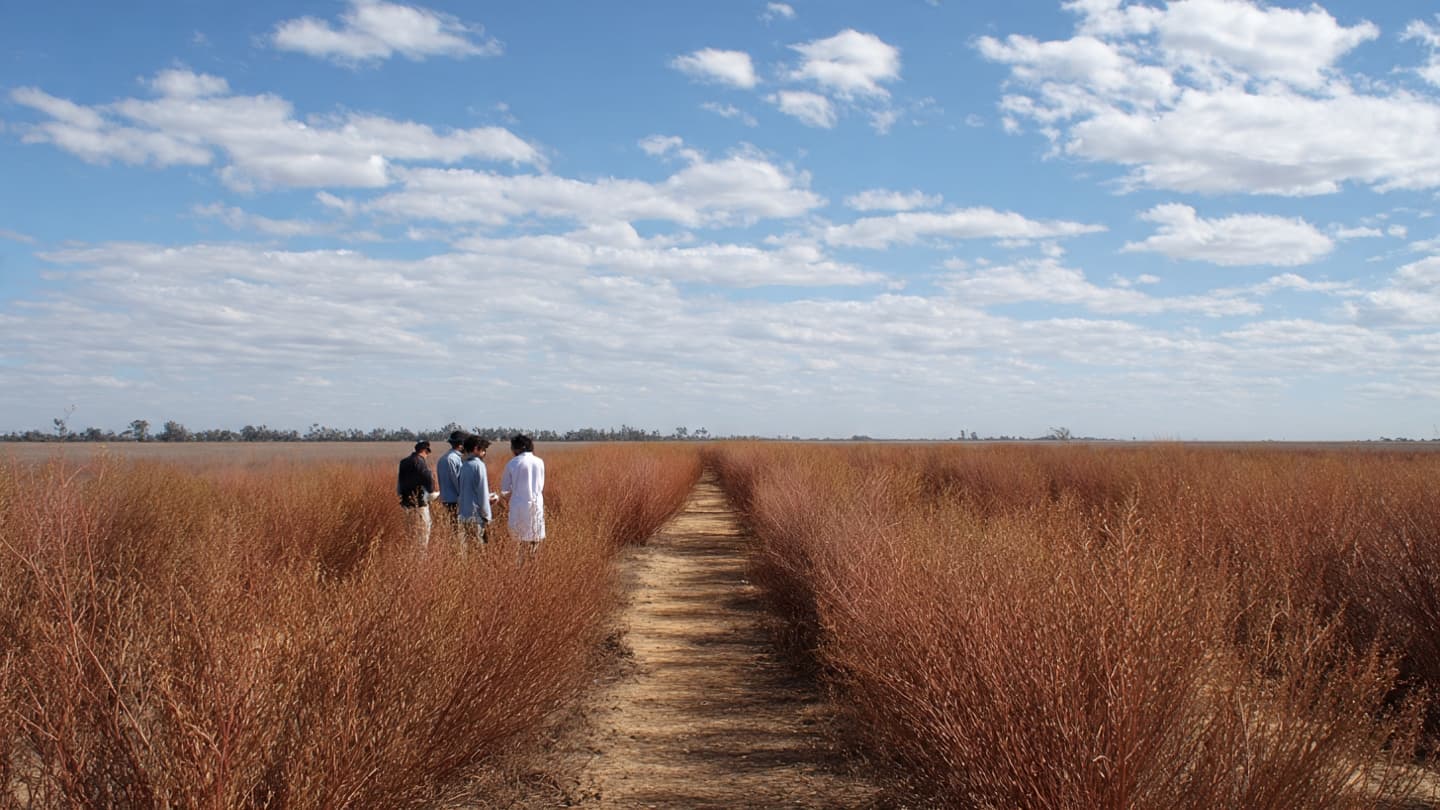
AI Image Disclaimer The illustrations were generated with AI for conceptual purposes and represent agricultural research environments and drought-resistant crops rather than authentic photographs of Raquel Chan or her research facilities.
Sources Buenos Aires Times CONICET National University of the Littoral International Maize and Wheat Improvement Center Nature Biotechnology
Published by Banx Network. This article is part of the Banx decentralized media programme, powered by the BXE token on the XRP Ledger.