Summer has long carried its own language—slow heat settling into the ground, afternoons stretching into stillness, the predictable arc of warmth giving way to evening relief. It is a season often understood not by dates alone, but by feeling: steady, lingering, and familiar. But in recent years, that sense of continuity has begun to fracture.
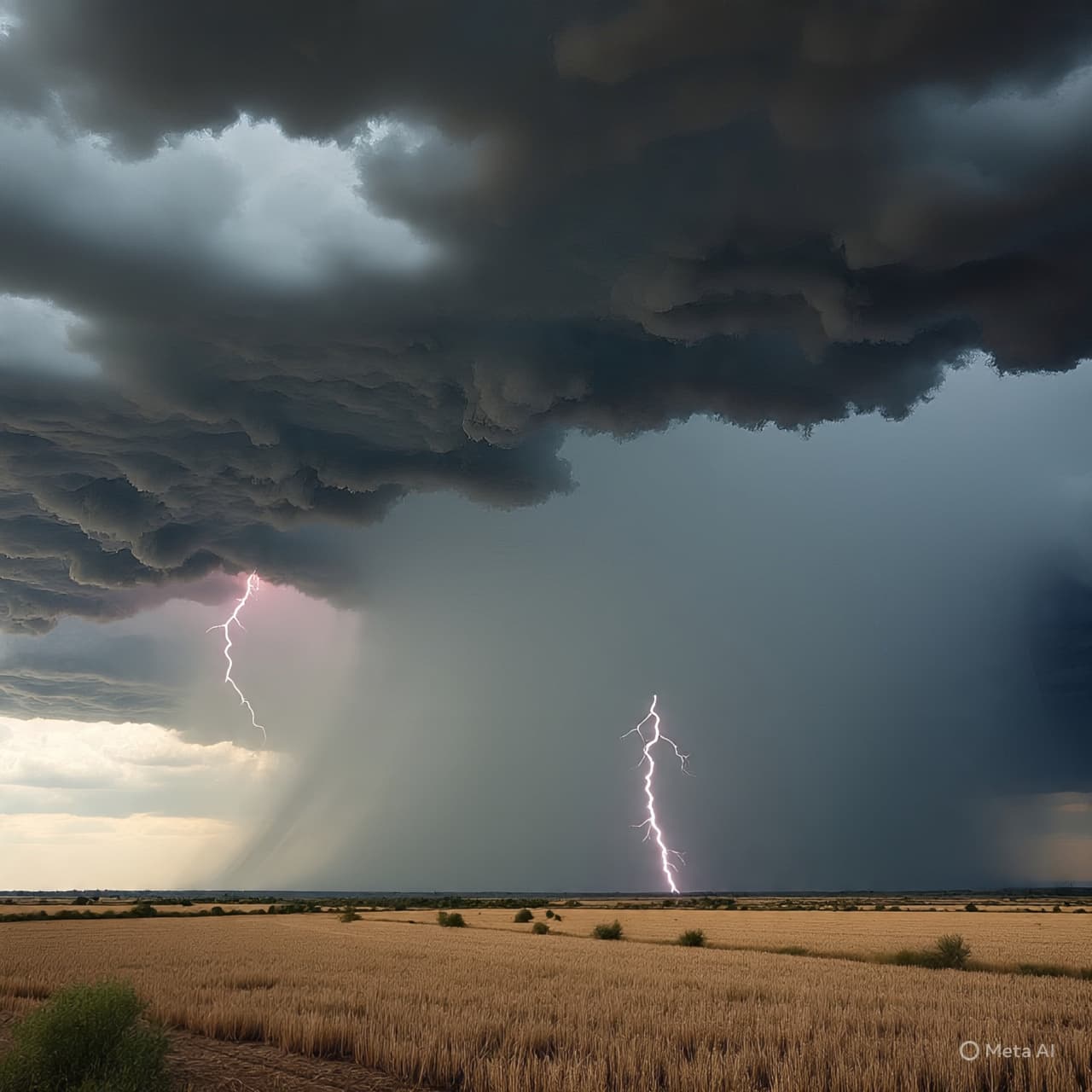
Across regions, weather patterns are shifting with increasing abruptness, a phenomenon scientists describe as “climate whiplash.” Periods of intense heat and drought are now more quickly followed by sudden storms, heavy rainfall, or sharp temperature drops. The transition, once gradual, has become compressed—less a change in season than a series of jolts.
These swings are not isolated. Researchers point to a warming atmosphere that holds more moisture and energy, creating conditions where extremes can develop and transition more rapidly. Dry soils harden under prolonged heat, only to struggle absorbing sudden rainfall, increasing the risk of flooding. At the same time, heatwaves intensify, placing additional stress on ecosystems, infrastructure, and human health.
The result is a summer that feels less predictable, its edges less defined. Farmers adjust planting cycles with greater uncertainty, cities prepare for both heat emergencies and flash floods, and communities find themselves navigating conditions that seem to shift overnight. What once unfolded over weeks may now occur within days.
Scientists emphasize that this pattern reflects broader climate change trends, where variability itself becomes a defining feature. It is not only that extremes are becoming more severe, but that the space between them is narrowing. The atmosphere, in effect, is accelerating the transitions, turning contrast into a constant.
For those experiencing it, the effect is both physical and psychological. A stretch of relentless heat can give way suddenly to storms that disrupt and displace, creating a sense that the season itself is unstable. Preparation becomes more complex, as planning for one condition must quickly give way to another.
Yet within this shifting landscape, there is also a growing effort to adapt. Urban planning increasingly considers drainage and cooling systems together; agricultural strategies evolve to manage both drought and excess water; early warning systems aim to provide communities with more time to respond. These responses, while incremental, reflect an acknowledgment that the old rhythms can no longer be relied upon.
As summer continues to arrive each year, it does so with a different cadence—less a steady unfolding, more a sequence of contrasts. The familiar warmth remains, but it is now accompanied by interruption, by the sense that change is not only coming, but arriving faster than before.
And in that acceleration, the season reveals something deeper: not just a shift in weather, but a transformation in how time itself is felt—compressed, unsettled, and increasingly difficult to predict.
AI Image Disclaimer
These images are AI-generated and designed to visually represent the concepts described.
Sources
Reuters
BBC News
The Guardian
National Oceanic and Atmospheric Administration
Intergovernmental Panel on Climate Change
Published by Banx Network. This article is part of the Banx decentralized media programme, powered by the BXE token on the XRP Ledger.