
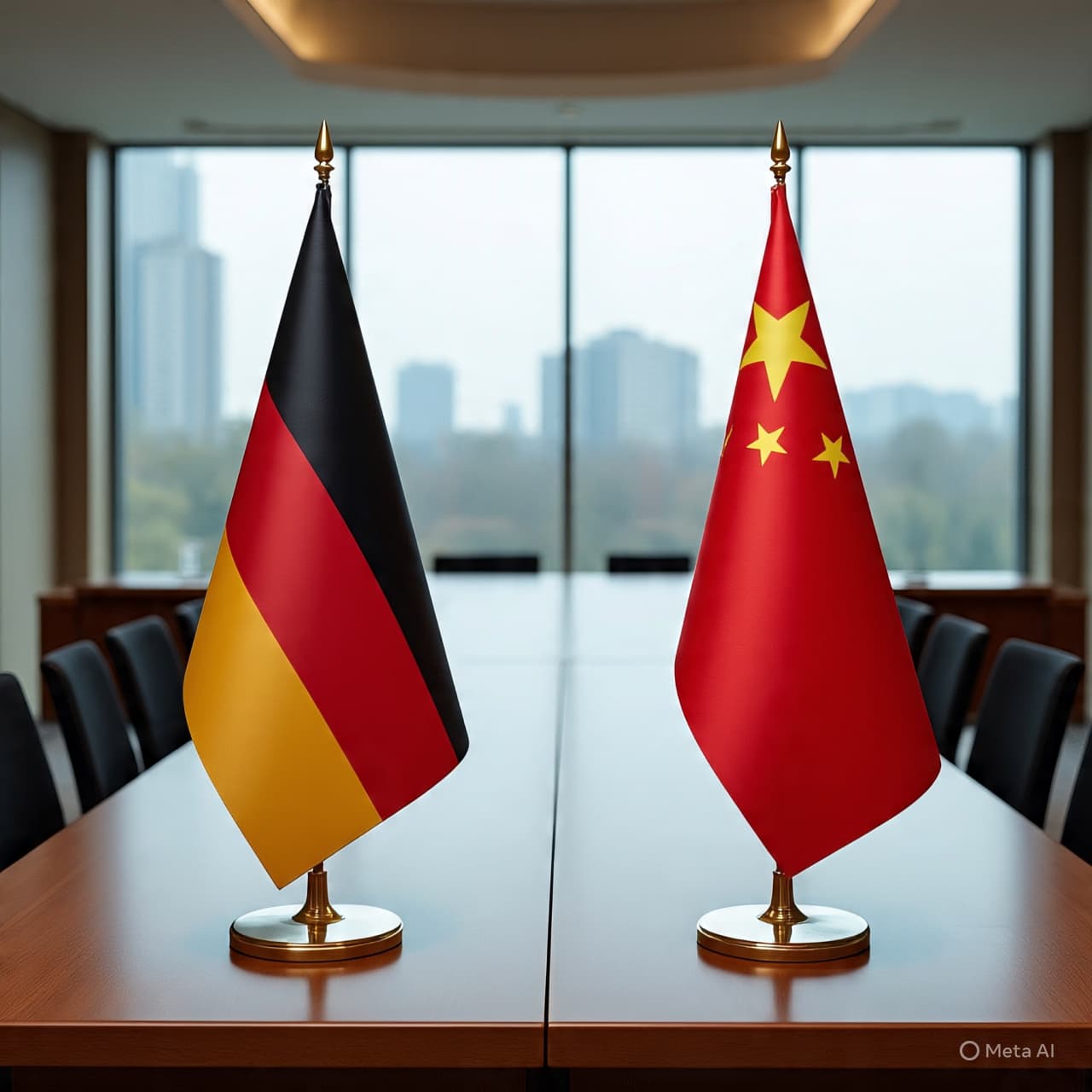
There are journeys in diplomacy that resemble a crossing over narrow ground, where each step must be measured and each word carefully weighed. As Germany’s leader travels to Beijing, the visit unfolds against a backdrop of global tension, economic interdependence, and strategic rivalry. It is not merely a state visit. It is a balancing act performed on a stage where two great powers cast long and sometimes competing shadows.
Chancellor arrives in China at a moment when Berlin’s relationship with Beijing is both indispensable and increasingly cautious. China remains Germany’s largest trading partner, a vital destination for automobiles, machinery, and chemicals that sustain Europe’s biggest economy. Yet political winds have shifted. Questions about supply chain dependency, industrial policy, and national security now shape conversations that were once dominated solely by commerce.
At the center of this careful choreography stands President , whose government has emphasized stability in economic ties while asserting a more confident geopolitical posture. Beijing seeks continued access to European markets and technology, even as it navigates mounting restrictions from Western capitals. For Germany, engagement with China is no longer a matter of pure pragmatism; it is tempered by the lessons of recent years, including disruptions exposed by global crises and the war in Ukraine.
Complicating this diplomatic terrain is the political presence of , whose return to the White House has reintroduced a sharper tone to transatlantic economic and security debates. Washington has pressed European allies to adopt firmer positions toward Beijing, particularly on advanced technology exports and strategic industries. Germany finds itself navigating between its security partnership with the United States and its deep commercial links with China.
The visit underscores this tension. German officials have described the trip as an opportunity to address trade imbalances, advocate for fair market access, and discuss global issues such as climate change and regional security. At the same time, Berlin is mindful of the expectations in Washington, where policymakers closely observe Europe’s approach to China. The result is a diplomatic language that seeks equilibrium: engagement without endorsement, cooperation without concession.
European partners, too, are watching. Germany’s stance often sets the tone for broader European Union policy. In recent years, Brussels has characterized China simultaneously as partner, competitor, and systemic rival — a trio of descriptors that reflects the complexity of the relationship. Scholz’s meetings in Beijing will likely be read as signals not only to China, but to fellow EU capitals about how Europe intends to position itself in an era of intensifying global rivalry.
Economically, German industry faces its own dilemmas. Automakers and manufacturers continue to rely heavily on Chinese markets for growth. Yet concerns about overcapacity, state subsidies, and strategic vulnerabilities have prompted calls for diversification. The word “de-risking” has entered Europe’s political vocabulary, suggesting a recalibration rather than a rupture.
The choreography of the visit is therefore delicate. Public statements emphasize partnership and mutual benefit. Private discussions may address more contentious issues — export controls, cybersecurity, and geopolitical alignments. In each conversation lies the recognition that the choices made in Berlin, Beijing, and Washington are increasingly intertwined.
As the meetings conclude, both sides are expected to reaffirm economic cooperation while acknowledging differences. No dramatic policy shift is anticipated, but the symbolism of the visit carries weight. It reflects a Europe seeking autonomy, a China seeking stability, and a United States asserting strategic competition.
Germany’s leader will return to Berlin with agreements to review and relationships to maintain. The tightrope remains. Between Beijing and Washington, diplomacy proceeds not in bold leaps, but in careful steps measured against the currents of a changing world.
AI Image Disclaimer Visuals are created with AI tools and are not real photographs.
Sources
Reuters The New York Times Financial Times Bloomberg Politico Europe
Published by Banx Network. This article is part of the Banx decentralized media programme, powered by the BXE token on the XRP Ledger.

.jpg&w=3840&q=75 "Romania Passes Controversial Integrity Law for Officials to Access EU Funds")
